Band Life: Romance, Friendship And Fallings-Out
By The Gloss
All feverish love affairs, fervent friendships and fallings-out, set to a soundtrack of music you’ve made yourselves? As an erstwhile band member, I know exactly how this one goes …
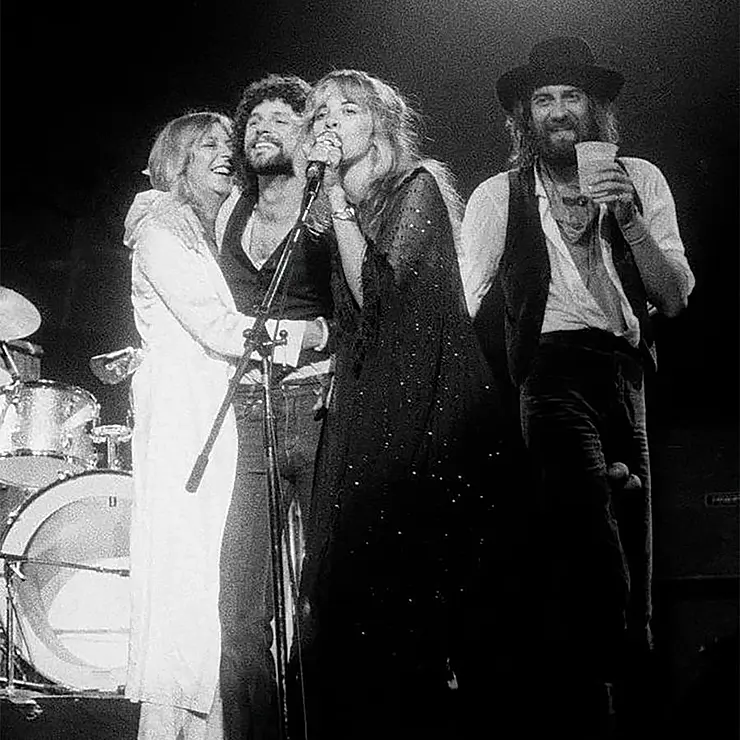
Fleetwood Mac’s members had a series of tumultuous relationships, but that didn’t stop them from producing some of the most era-defining music of the 1970s. Stevie Nicks and Lindsey Buckingham’s 1973 debut album “Buckingham Nicks” has been reissued, and the pair collaborated with Miley Cyrus on her new single, Secrets.
Whenever I hear that bandmates have got together as a couple, I’m never at all surprised. There’s something about the intimate, intense atmosphere of playing and writing music together, generally in a confined space, that lends itself to romantic tension. Playing in a band involves spending a lot of time just looking intently at other people, at their hands, at their mouths. If there is even a hint of sexual attraction there, and if the bandmates’ sexualities align, it feels almost inevitable that something will happen. Someone’s going to end up hooking up with someone.
My own marriage is proof of that. My husband and I met as students in Trinity in 1995 when we were 19, and first shared a stage in 1996, each playing in different college bands. But we didn’t get together until five years after that, after we’d started a band together. We ended up kissing after one of our gigs in 2001, and we’ve been together ever since. The band didn’t survive, a casualty of time and hitting our 30s and my own inability to commit as much attention to it as I should. But the relationship did, and over 20 years later I’m very, very glad I risked hooking up my bandmate.
And it really is a risk. There are many, many reasons why hooking up with your bandmate is a dangerous idea. I should know. I was in four bands between the age of 15 and 30, and I went out, albeit briefly in some cases, with a bandmate in three of them, including my now-husband. When an inter-band liaison goes wrong, it goes very, very wrong. It’s impossible to have a clean break with an ex when both of you still have to attend weekly band practices in a tiny room. It’s hard to forget about each other when you’re getting up on a stage and performing together on a regular basis.
“I wanted to evoke what it really feels like to be in a band, to get on stage and play gigs and feel the rush of adrenalin and power.”
So while I’m never surprised when bandmates get together, I’m always faintly surprised when the bands survive after their break up. In some bands that manage to keep going, like the brilliant Sleater-Kinney, whose founder members Carrie Brownstein and Corin Tucker were briefly a couple in the band’s early days, the split is amicable and the former lovers remain friends and bandmates. Debbie Harry and her Blondie bandmate Chris Stein were together for over a decade, but remained close after the split, with Harry nursing Stein through serious illness. Jack and Meg White of the White Stripes initially claimed to be siblings, until it was revealed they’d actually been married and divorced several years before the band’s breakthrough. No hard feelings, right?
In many cases, however, things can be a lot more complicated, with members writing songs about their break-ups which the person who broke their heart will then have to play in front of hundreds or thousands of people for years. Just think of Fleetwood Mac, whose members were engaged in a love … square? Pentagon? The band had already endured various interpersonal dramas, with guitarist Bob Weston being fired after sleeping with Mick Fleetwood’s wife, when Stevie Nicks and Lindsey Buckingham joined in 1974. Not long afterwards, married bandmates John and Christine McVie split up, and then so did Nicks and Buckingham. They all basically started writing songs about each other, and to top things off, Christine had a fling with the band’s lighting designer and wrote a song about him which her ex then had to play. All the bandmates constantly fought with each other and yet … they wrote some of the best songs of the 1970s as a result. Inter-band liaisons can be a dangerous move (for the band member’s emotional and mental health, at least). But musically they can be absolutely brilliant. No wonder the Fleetwood Mac inter-band drama and musical genius inspired Taylor Jenkins Reid’s brilliant novel Daisy Jones and the Six.
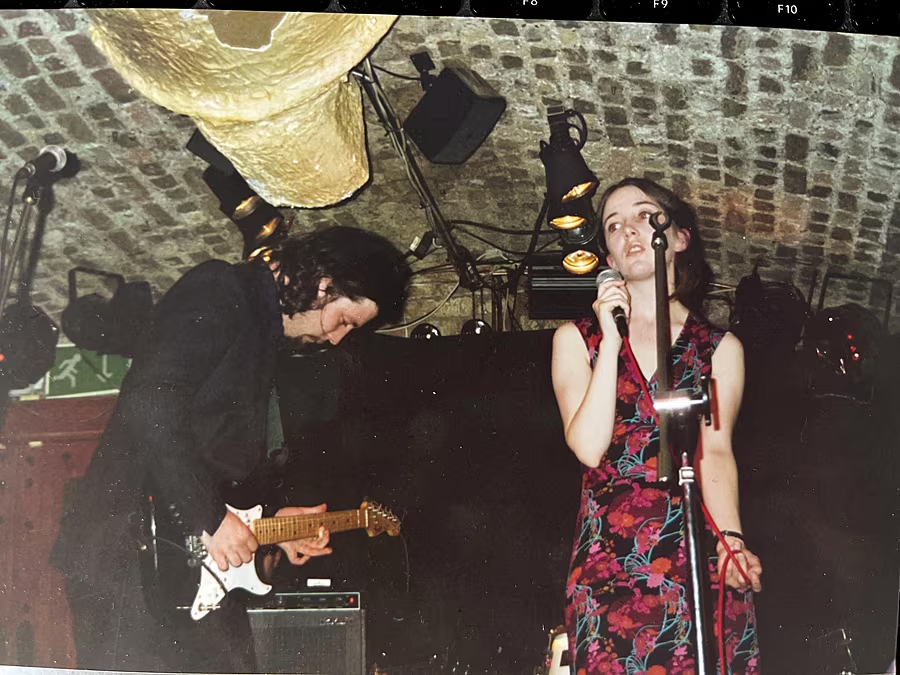
On stage, with my now husband, writer and journalist Patrick Freyne, in 2001.
My first novel for adults, Our Song, was partly inspired by my own experiences of being in a band and falling for a bandmate, and the complications this can bring. It’s the story of Laura and Tadhg, who were in a band in college where they developed a lot of complicated feelings for each other before falling out spectacularly and going their separate ways. Sixteen years later, Tadhg is a musical superstar and Laura is an unemployed ad copywriter. But then Tadhg gets in touch and asks if she wants to finish writing a song they started together back in their college days. And Laura realises that not only has she missed him, but she’s missed music too.
I wrote Our Song because I’ve always wanted to write a love story. But the love story isn’t just between Laura and Tadhg. From the start I knew I wanted to write a book about falling in love with a boy and falling in love with being in a band. I wanted to evoke what it really feels like to be in a band, to create music out of nothing with other people, to get on stage and play gigs and feel the rush of adrenalin and power that comes from putting on a good show. I wanted it to ring true to people who have been in bands, and I wanted people who’ve never dreamed of picking up an instrument to feel they understood what that felt like. I wanted to convey that sense of community, that sense you sometimes get when you’re up on stage. I wanted to evoke the mysterious alchemy that is a rock and roll band.
And there really is something magical about it. I think everyone instinctively sees that. The chemistry between bandmates doesn’t have to be sexual. We all know there are so many talented songwriters who created their best music when they were part of something bigger than themselves, whose solo material is never as good as the work they created when they were working with other people.
Because being in a band is about more than just writing songs. It’s about being in a gang. You can see that in Peter Jackson’s documentary Get Back when, even at the beginning of the end of the band, the Beatles’ affection for each other radiates out of the screen. You can see it in a band like Haim, sisters as well as bandmates, goofily dancing together and then rocking out. You can see it in an even younger band like Wicklow’s Florence Road, a literal garage band who write gorgeous power pop and recently opened for Olivia Rodrigo.
A few months ago I was at a party and got talking to the teenage daughter of my friends’ neighbours. She told me she played the guitar and wrote songs and later she played one for us. It was fantastic, and I asked her if she’d ever thought of starting a band. She hadn’t. She’d only considered being a solo musician. I didn’t tell her to start a band. I mean, what teenager wants to take advice from their neighbour’s middle-aged friend? But I couldn’t help hoping she’d give it a go and start a band. Because even at its messiest, even after the worst gigs, even when you’re tired and cranky after spending a day in a stuffy practice room, there’s nothing quite like it.
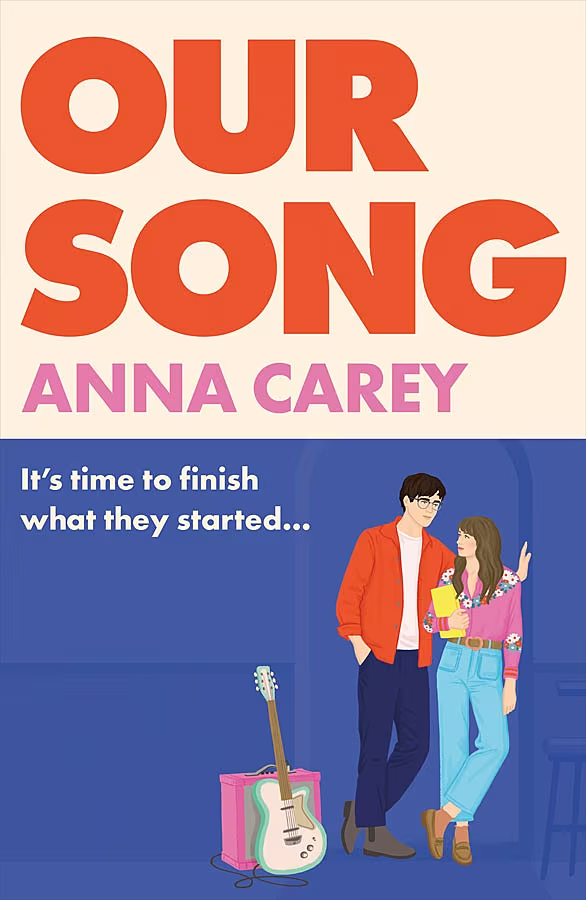
Our Song by Anna Carey (Hachette Ireland) is out now.