Relationship Struggles, Career Changes And Impulsivity: How Undiagnosed ADHD Affected My Life
By The Gloss
How an ADHD diagnosis in my 30s led to a life-changing sense of clarity – and an entirely new career path …
If I asked you to think about a person with ADHD, what would you imagine? Would it be the overly energetic young boy causing chaos in the classroom and climbing trees? This is what appeared in my mind when I was referred for an ADHD diagnosis at age thirty. I did not identify with this energy; I often struggled to even leave the house! However, when I started to research ADHD and how it appears in women and girls, it all started to make sense.
Since I was small, I wanted to be a singer and musician. In my teens and 20s, I gigged around Cork and thought this was what I would do for the rest of my life. But I started to struggle with performance anxiety. The lack of structure, stability and late nights started to take their toll, and I burned out. I felt like a colossal failure. I felt frustrated that other jobs I tried just didn’t fit.
I have had several career changes, with various degrees of success. I can attribute much of my career moves to my undiagnosed ADHD: high levels of boredom, feeling inadequate, imposter syndrome, perfectionism, and being driven by novelty. Motivating myself was exceptionally hard, especially when I felt overwhelmed.
helped me to put down the big stick that I was beating myself with – I wasn’t lazy, stupid or crazy. I realised I had been playing life on extra-hard mode, without any semblance of a manual.
You’re always told: “Seek help for your mental health”. From age 19 to 29, I sought professional medical help, and only then did the letters ‘ADHD’ enter my stratosphere. I never realised that my struggle to focus was an issue in itself. I always thought that I couldn’t focus because I had chronic poor mental health, and, of course, these are not mutually exclusive.
After years of getting advice from doctors, therapists and psychiatrists, and receiving a few misdiagnoses along the way, I was eventually referred for an ADHD test at the age of 30. Two years later, aged 32, I was diagnosed with combined-type ADHD.
When I was officially diagnosed, I was hit with a spiral of emotions as well as an unexpected grieving process. Why was this missed? What if I had known about this when I was younger? Could it have spared me the constant stress of not being able to get it together? I had to reconceptualise myself. I mourned the life I “could have had”. But that’s also why I’ve been able to move through it and forgive myself – I was fighting a battle I knew nothing about.
ADHD has explained the difficulties I had with paying attention, studying, finding and keeping jobs, relationship struggles, being able to stick to anything; impulsivity, forgetfulness, chronic sleep issues, constant cognitive hyperactivity, never being able to relax, emotional dysregulation and chronic boredom. It always felt like there was a disconnect between my intentions and actions. I had never realised that the compounding overwhelm I experienced over making even the smallest decisions felt like being buried alive could be explained by ADHD.
Bit-by-bit, I processed my diagnosis and started to feel acceptance. It helped me to put down the big stick that I was beating myself with – I wasn’t lazy, stupid or crazy. I realised that I had been playing life on extra-hard mode, without any semblance of a manual. Now, I could start to forgive myself for my “failings” and carve out a forward path. I still have ADHD and still struggle with it, but it’s significantly easier to manage now that I’ve learned skills and coping mechanisms.
My diagnosis was life-changing and led me to form my career as an ADHD coach. I feel privileged to support my clients in navigating their own neurodiversity. With late-diagnosed adults, I often see similar themes: struggling with overwhelm, distraction, imposter syndrome, burnout and emotional dysregulation. These reactions often occur when they can’t stay on top of responsibilities or new tasks. This leads to feelings of shame and frustration, even when they’re putting in their utmost effort.
ADHDers respond well to challenge, but when it clashes with the difficulties of unmanaged ADHD, for example, it can cause immense stress, especially working in a job where you have to be organised, punctual, prioritise tasks and meet deadlines. But once you can adapt and accommodate to work environments, ADHDers can be some of the most valuable employees. Often, coping mechanisms and masking, especially as women, mean that you may overwork or try ten times harder to try and mask your difficulties. Aside from its challenges, many strengths accompany ADHD like creativity, hyperfocus, resilience and determination.
Accessing diagnosis is a personal choice for many reasons; it can take several years to get an appointment in the public system. Private clinics can be very expensive and also have lengthy waiting lists. A diagnosis can help to alleviate shame and help to assist you in working with your brain instead of against it. ADHD is a complex condition that mustn’t be simplified. There’s a lot more to ADHD than occasionally being late or losing belongings; it’s a life-long, persistent pattern that affects work, education, relationships and daily life.
With late-diagnosed adults, I often see similar themes: struggling with overwhelm, distraction, imposter syndrome, burnout and emotional dysregulation.
Historically, more boys than girls received childhood diagnoses of ADHD and other neuro-developmental differences; this is because ADHD can have different presentations between boys and girls.
Female hormones significantly affect our neurotransmitters, particularly the relationship between oestrogen and dopamine. In the luteal phase of the menstrual cycle – the seven to ten days before your period starts – there’s a drop in oestrogen and an increase in progesterone. This can disrupt executive functioning when symptoms can worsen, and you may experience more brain fog, tiredness, lower moods, less motivation and disorganisation. This is why premenstrual syndrome (PMS) and premenstrual dysphoric disorder (PMDD) frequently occur in women with ADHD. Additionally, perimenopause and menopause can contribute to a delayed diagnosis as these hormonal changes can significantly exacerbate symptoms.
What are some of the signs that someone may have ADHD?
Describing ADHD is actually quite difficult. ADHD stands for attention deficit hyperactivity disorder, a neuro-developmental condition which affects the brain. It’s characterised by patterns of developmentally inappropriate symptoms of:
Inattention – difficulty paying attention, staying on task and being organised.
Impulsivity – difficulty waiting your turn and interrupting others.
Hyperactivity – restlessness, excessive movement, talking and fidgeting.
While the neurobiology is complex, at its core ADHD is associated with differences in executive functioning – the management system of the brain, particularly in the regulation of attention, behaviour and motivation.
These include skills like planning, monitoring ourselves, problem-solving, setting goals and following through.
Undiagnosed ADHD can greatly impact your life, but understanding and managing it gives you the opportunity to move forward and improve your quality of life.
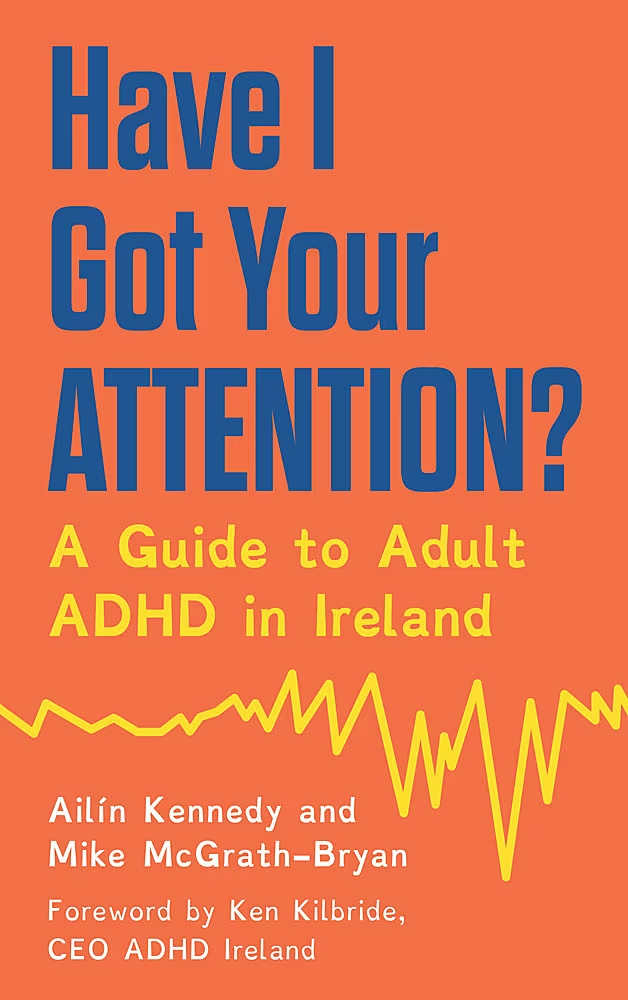
Have I Got Your Attention? A Guide to Adult ADHD in Ireland (Merrion Press) by Ailín Kennedy and Mike McGrath-Bryan is out now.
Resources: ADHD Ireland is a non-profit organisation to support the Irish ADHD community and their loves ones.
SEE MORE: The Signs That You’re Working For A Narcissist And How To Navigate It