
The Signs That You’re Working For A Narcissist And How To Navigate It
By The Gloss
The warning signs and how to protect yourself …
With The Devil Wears Prada 2 in cinemas, a whole new generation is being introduced to Miranda Priestly – and those of us who lived through the original are watching Meryl Streep‘s return with a complicated kind of recognition. Because for all its wit and wardrobes, it’s really a story about psychological survival at work. And for many, that story is not fiction at all.
“Miranda Priestly is a textbook portrayal of narcissistic leadership,” says Dr Sarah Davies, Chartered Integrative Counselling Psychologist and author of Narcissists At Work. “The grandiosity, contempt, arrogance and complete absence of empathy reflect patterns of behaviour that cause genuine, lasting harm in real workplaces every day.”

Dr Davies has spent the last 15 years treating clients whose careers – and confidence – have been dismantled by narcissistic bosses. The sequel, in which a new generation navigates Miranda’s continued reign, captures something real: narcissistic bosses rarely retire. They simply find fresh audiences.
The Warning Signs: More Than Just A Difficult Boss
There’s a difference between a demanding manager and a narcissistic one. High standards can push us to grow. Narcissistic behaviour operates on an entirely different level – one that, whether consciously or not, diminishes those around them. Key warning signs to spot are:
Grandiosity and the need for constant admiration. Miranda never doubts herself and she expects the same certainty from the world around her. In real life, this looks like the boss or colleague who dominates every meeting, dismisses and undermines others, demands praise and recognition, and wants to be in the centre of every conversation.
Lack of empathy. People are useful to a narcissist or they’re not. Dr Davies notes that this is often the quality that causes the most lasting damage: “When a person is genuinely incapable of recognising your humanity, it creates a particular kind of loneliness and sense of inadequacy that’s very hard to describe to someone who hasn’t experienced it.”
Credit-stealing and the shifting of blame. Narcissistic bosses are quick to take credit for any successes and equally quick to blame or redirect any failure. You may see your manager or colleague present your work as their own, then have the responsibility put on you when something went slightly wrong.
Public humiliation as a management tool. Miranda’s quiet put-downs are often more devastating than outright rage – a raised eyebrow, soft dismissal, a name she cannot quite remember. It can be being cut down in meetings, having your work mocked in front of colleagues, or receiving ‘feedback’ designed to wound rather than be constructive or helpful.

How To Protect Yourself
Name what’s happening. Narcissistic behaviour thrives in ambiguity. “Many of my clients spend months, sometimes years, questioning themselves before they realise that the problem was not and is not them,” says Dr Davies. Trust your own perception.
Establish quiet, consistent limits. Document your work. Respond to conversations in writing. Follow-up discussions or meetings in writing to have clear documentation and give them less room to change the narrative. Refuse to be available around the clock. You’re allowed to have boundaries at work.
Build a support network outside the relationship. Isolation is one of the narcissists’ most effective tools. Colleagues, mentors and friends outside the immediate working relationship are anchors to reality. Reminding yourself of your abilities and achievements can help counter the confusion or inadequacy this kind of dynamic can leave you with.
Seek professional support. The impact of sustained psychological pressure and abuse is real. It can lead to stress, anxiety, self-doubt, burnout and, in prolonged cases, symptoms consistent with trauma and PTSD. “It’s important to seek support to help make sense of and process this kind of experience,” Dr Davies says. “In fact, seeking help is one of the most grounded decisions you can make.”
Knowing When To Walk Away
Dr Davies is clear that there are moments when leaving becomes the healthiest decision available. Boundaries in the workplace are key to managing this and the impact it has on you; however, if your boundaries are repeatedly disregarded, the next step is taking protective action. “When you are consistently leaving work feeling worse about yourself than when you arrived, when your physical health is suffering, when you no longer trust your own judgement – these are signals worth taking seriously. Staying in a toxic environment out of loyalty or fear is not resilience. Recognising when a workplace is genuinely harming you and choosing to leave it is an act of strength – and sometimes it’s the best decision for your wellbeing and your career.”
Moving forward from this kind of experience is about letting go and stepping into your own agency. The likes of Miranda Priestly, for all their magnificent ferocity, do not have to have the last word.
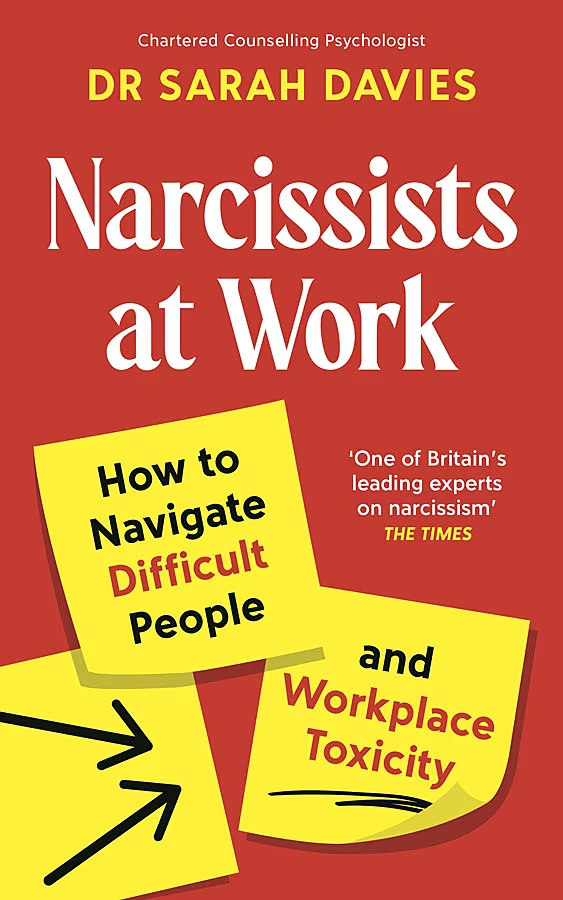
Narcissists At Work – How To Navigate Difficult People And Workplace Toxicity by Dr Sarah Davies (Souvenir Press) is out on June 4.
SEE MORE: Are You Dating A Narcissist? If So, You Need To Know About The Drama Triangle