Magic Touch: In Conversation With Designer Maria Grachvogel
By The Gloss
Fashion designer Maria Grachvogel’s sculptural approach to design has powered an impressive 30-year career …
When Maria Grachvogel was twelve years old, she started cutting and making clothes on her mother’s sewing machine, initially for a friend and then for herself. Today, the 57-year-old London-based designer, self-taught and still drawing and making her own patterns, is an established name in British fashion.
She is famously known for her “magic trousers”, designed to fit and flatter any shape, and celebrity fans include Emma Thompson, Scarlett Johansson and Angelina Jolie. Her career start was an unconventional one having studied finance initially so she could sustain a fashion brand. Her approach to design, the sculptural precision of her work and attention to proportion indicate a sensibility not just confined to clothing. “I think we have a unique design process,” she says.
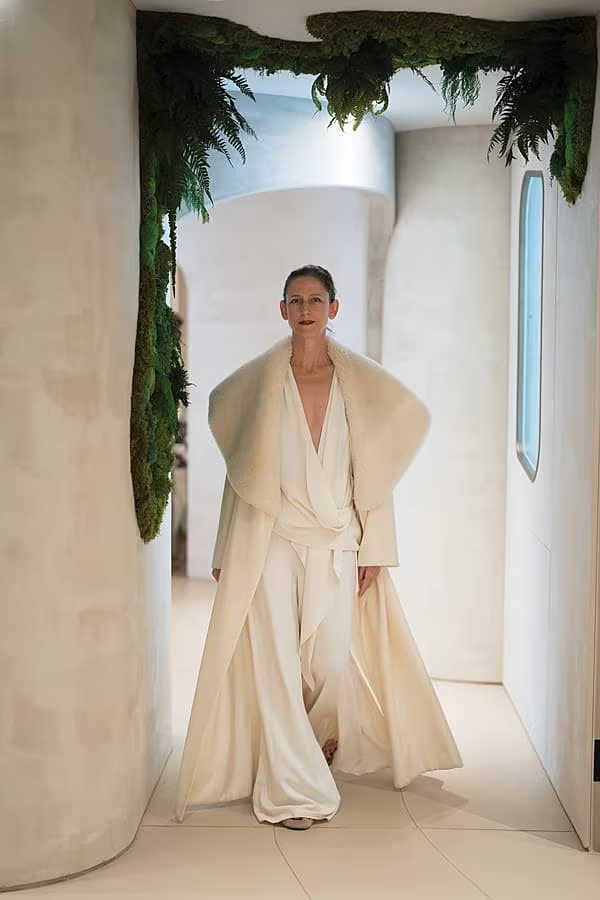
Photograph by Marcus Dawes.
We meet on Zoom where, tall, willowy and talkative, she is dressed in one of her jumpsuits stressing that everything she does is to enhance a woman’s body and how a woman feels about herself. “We don’t use a house model, and I try on everything myself and fit on a lot of different body shapes – looking at pieces on each, you see something different. And sometimes a little tweak can make it work across any body shape,” she explains.
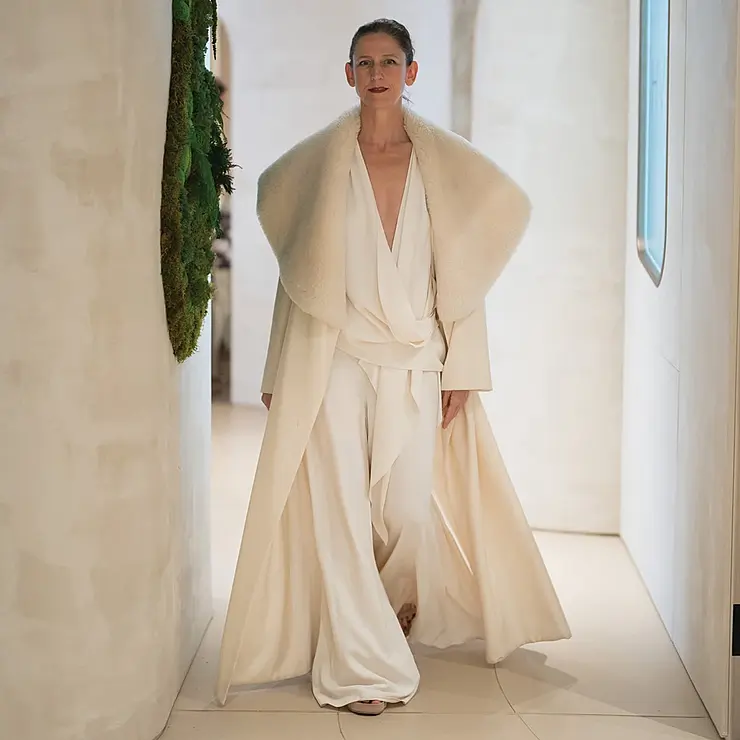
Her collections are notable for their sculptural drape and cut, their fluidity and femininity. Many pieces are retained season after season like her Gaia blouse, a luxurious interpretation of the classic T-shirt refreshed into a sophisticated silhouette offering coverage and shape.
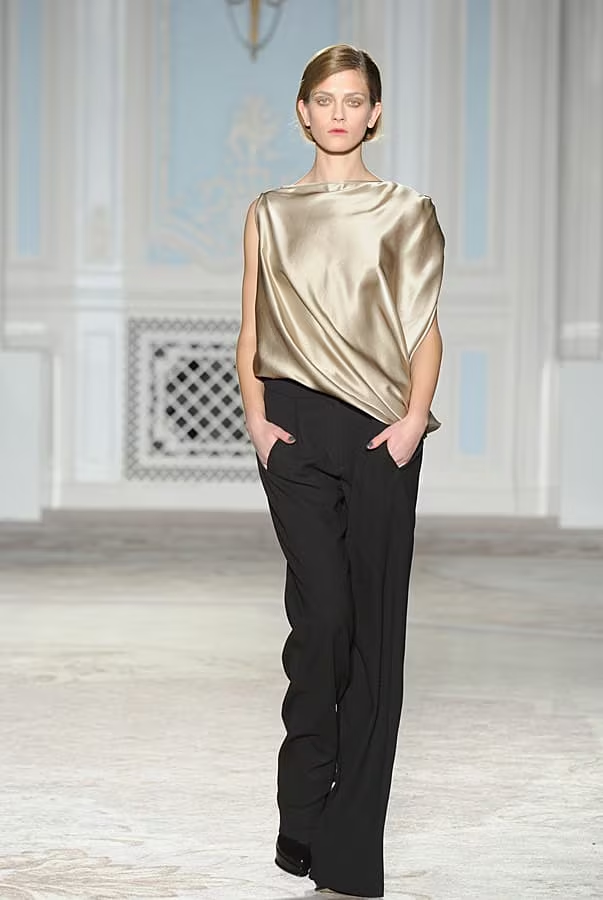
AW12, photographed by Elke Meitzel.
“I am always thinking about a woman’s life. Everyone wants to feel taller, slimmer and I hide deep pockets underneath the trouser pleats,” so a mobile phone, for instance, doesn’t affect the line. Such subtle, practical touches abound. She talks at length about how some designs can be transformative and one garment can be many things and immediately demonstrates exactly how. “I am wearing a jumpsuit with a high neck drape. I can release the neck and it becomes a V-shape, a very different thing,” she explains. “There might be two or three ways depending on how you want to wear it – for some because it just suits them that way and not another way. I am creating for a woman rather than a look. You create more love for a garment that way and so it is treasured more – it becomes an essential piece.”
The magic trousers, designed 20 years ago, retain a stellar role in the repertoire. So how do they work? “Since we always have aimed for a really good fit, in 2006, I took away the seams at the side and created sculptural seams up the back of the leg and around the hip. It lengthens and elongates the leg. If you have hips, the line makes the hips smaller; if you don’t have hips, the effect of the curved seam gives you a shape. I tried everything on myself and on lots of different body shapes and the trousers started selling out. My clients named them the magic trousers, not me,” she says with a grin.
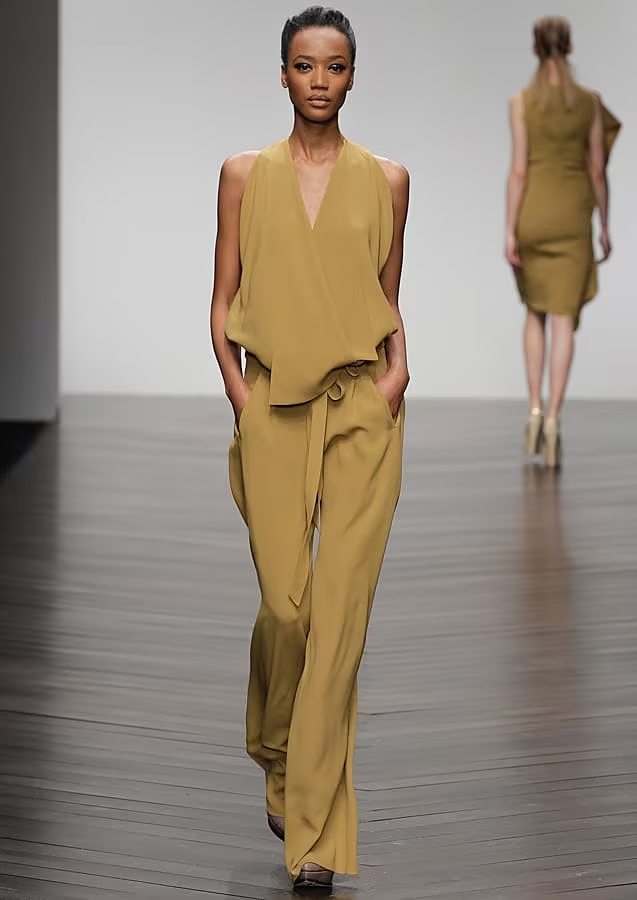
AW13, photographed by Christopher Dadey.
Born in London to a Polish father Joe, an accountant, and an Irish mother Margaret from Tuam, she has retained her links with Ireland and, until recently, had a house in Eyrecourt in Galway which was sold because “we weren’t using it enough and there are only a certain number of holidays in the fashion business.” What she loves about Ireland is the nature and sense of place. “We are surrounded by so much noise in the city and when you are in nature there is a certain peace deep in the core.” Married to investment banker Mike Simcock, the couple live in Marylebone, a 20-minute walk from her atelier in Jermyn Street and have a 16-year-old son Ansel, “an incredible singer and performer”, she says proudly.
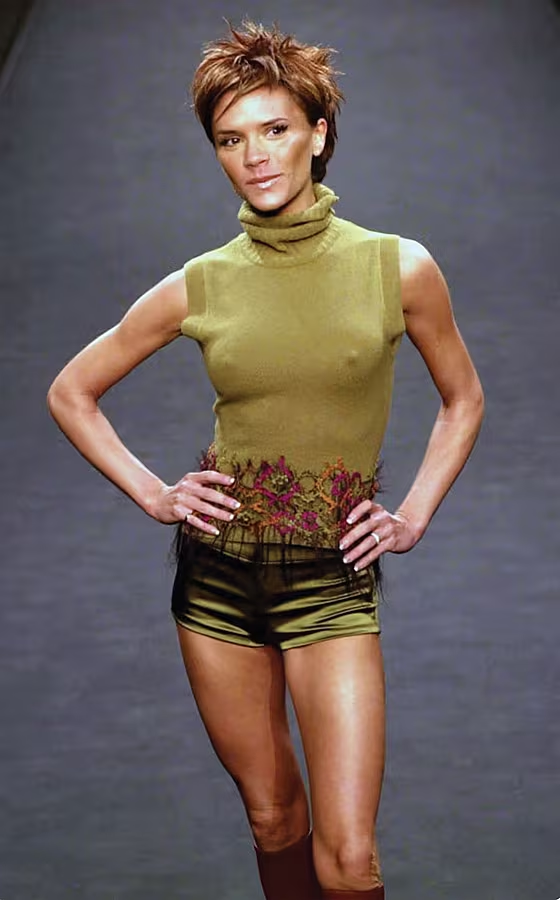
Victoria Beckham’s catwalk debut, February 2000.
Two events during a 30-year career generated huge publicity. One was using her friend Victoria Beckham as a model in her autumn winter 2000 catwalk show wearing green hot pants and a spiky haircut which created a sensation at the time.
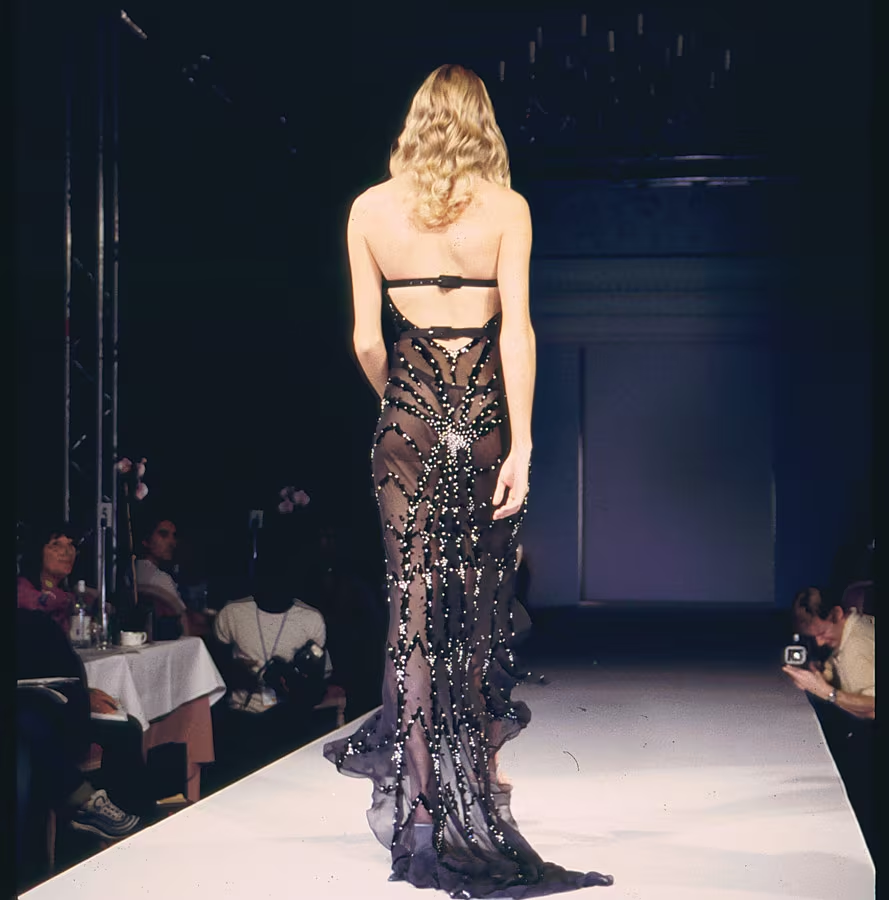
The “diamond dress” modelled by Jodie Kidd, September 2000.
The other, the same year, was a black ensemble modelled by Jodie Kidd scattered with 2,000 diamonds that became the most talked about garment in British fashion, attracting global press coverage. “The idea was a spider’s web with dewdrops, and I was using a lot of devoré velvet at the time with hand-drawn designs to create an illusion,” she recalls. What happened to it? “I still have it, but all the diamonds were removed, made onto individual chokers and sold for charity.
“I wanted to have something authentic, to focus on the core of what I do and make it sustainable at all levels.”
She no longer shows at London Fashion Week preferring instead to draw from her archive with styles that carry over from season to season. “We only make what we need to make now so I can focus on the design of future icons, so the collections are smaller. A catwalk is like a trade show and you must wait six months if you see something you like, and that can kill desire. Now with social media, images are everywhere instantly, so that has changed things. We can control the imagery now. I wanted to have something authentic, to focus on the core of what I do and make it sustainable at all levels. We have a long partnership with Havana in Ireland and it’s not just a seasonal buy. We always keep a stock of magic trousers in our Jermyn Street boutique in sizes from 6-20.” (It is worth noting that the magic trousers come with a magic price of more than €1,000.)
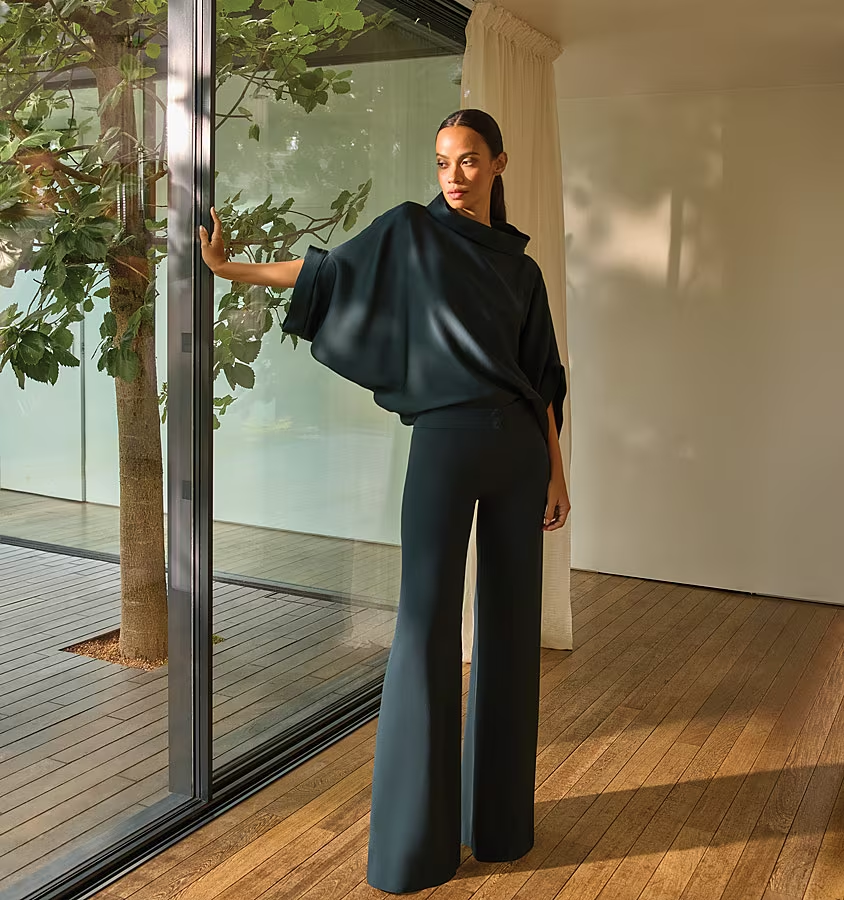
The Karikomi blouse and Magic Trousers, AW26 Transcend collection. Photographed by Claire Harrison.
Currently “toying” with the idea of menswear, she says that some years ago when her husband had difficulty finding trousers to fit, she made him a pair, slim cut “and every time he wore them, people would stop him and ask where he got them”. She is also making trousers for her son “and the great thing is that they can be casual or smart”.
In the meantime, she continues to keep her focus squarely on making beautiful, classic clothes for women designed for comfort and longevity in luxurious fabrics, each piece named after a goddess and as she says, “part of our armour”. According to Nikki Creedon of Havana, “they will always be versatile, flattering and never over embellished. Timeless”.
Need to know: Maria Grachvogel is taking part in a Design Talk at Design Week Dublin, in partnership with Range Rover. The World of Maria Grachvogel will take place at 5.30pm on September 16 at The Malt House, Grand Canal Quay, Dublin 4. For more details and to book tickets, see designweekdublin.com.