Artistic License: Oisín Byrne
By The Gloss
The London-based Irish artist, writer and filmmaker’s new series of screenprints continues his exploration of scale, colour, floral form, gesture and the passing of time …
From a young age, I felt the thrill of making things. I was always dressing up, drawing, inventing games or making with others; be it a painting, dance or a stage set. Making things turned on a tap of agency and possibility, where everything – colour, intimacy, the embedded quality of time – became more vivid. I loved the feeling of waking up with a mission.
I studied Fine Art Painting at NCAD and about ten years later, having had some time practicing as an artist, did my MA at Goldsmiths in London. From NCAD onwards, though, I had many day jobs – shop-boy, hospital trolley dollie, data entry clerk, teacher, creative consultant – it always fuelled my work in one way or another.
My work layers literature, overheard utterance, small intimacies, theoretical writing, material experimentation and a heavy dose of linguistic kink. I enjoy the dynamism of brushing extant theoretical thought up against anecdotal, personal or primary source material.
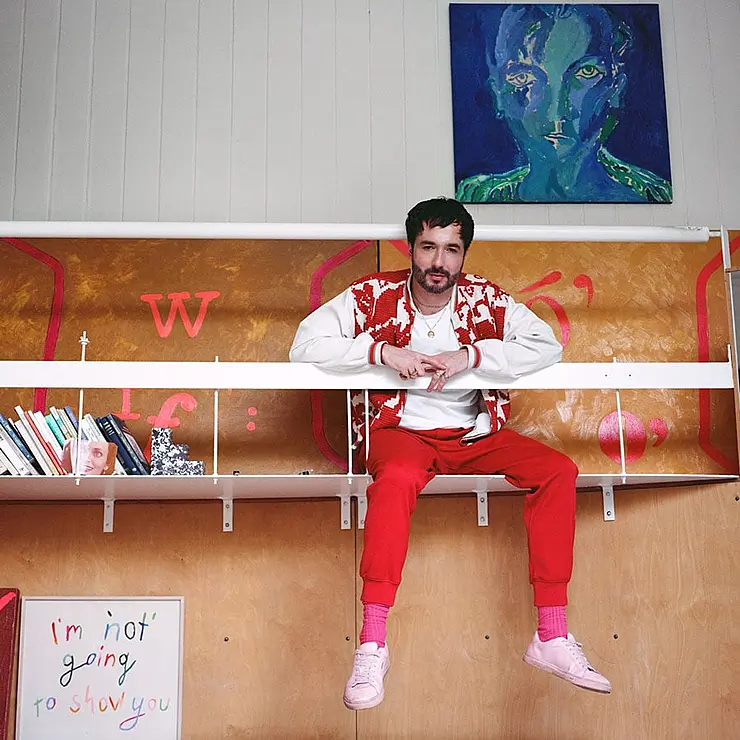
I work from my studio in London, in a building called The Thin House, which at its thinnest is only 6ft wide. From the exterior, it looks like a prop frontage on a film set. It’s got a giant window looking out over Thurloe Square, the V&A peeking out from behind the trees. I adore my studio.
I work primarily from life, whether flowers or people or scenes. It’s the same in filmmaking or even in songwriting; I like to catch the scent of a moment. I read, research and pace prior to beginning, but when I actually start making I like the materials and body to lead. At that point, there are all the things you ‘know’ and then there’s an encounter with the unexpected.
Working with others – whether editing a friend’s text, helping out on set, or talking about the intricacies and pragmatics of someone else’s process – I find very fulfilling.
In my own work, I enjoy moving around media depending on the shape of the idea I want to explore. I think it’s good to leave a field of work fallow for a period. Sometimes, months might pass without a painting, but I’m writing, singing or even just reading for weeks.
The ideas for my work are much more likely to arrive when I take a wrong turn or pick up a book from a completely different field. Sometimes, it’s some duff sentence you read on a poster, a trashy TV show, or a rainy forest walk that unlocks or loosens the valves of more focused thinking.
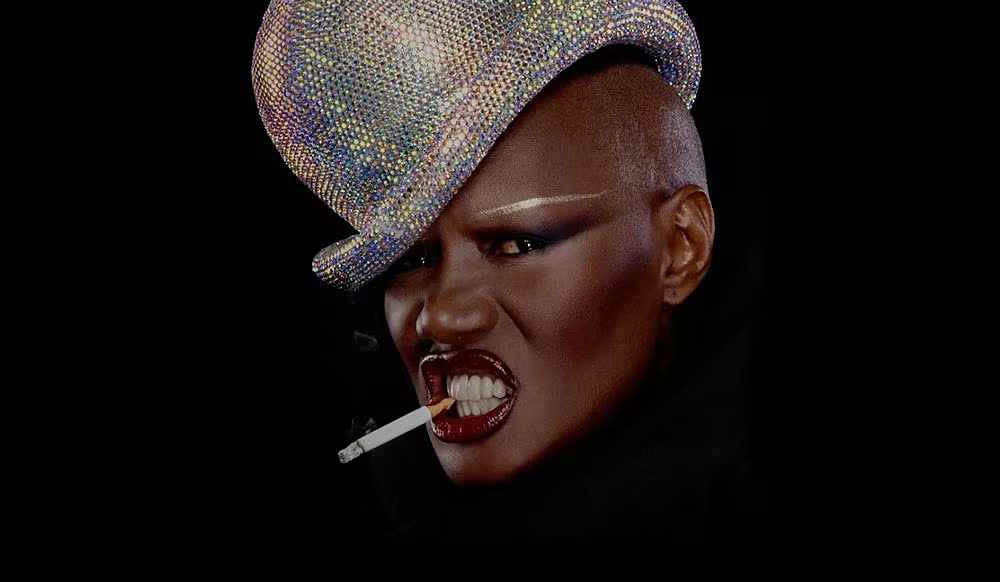
Working on Grace Jones: Bloodlight and Bami was formative. I was working on my own feature film at the time and Sophie showed me some of her observational footage of Grace, her ‘rushes’ if you will.
I love true observational documentary – the Maysles brothers, Wiseman, etc. – where the subject unfolds and reveals itself in embedded time. And Sophie’s footage transfixed me: Grace, ever shifting in character between the intimate and performative.
Sophie asked me if I would come back weekly throughout the long edit and then for the concert staging with Grace at the Olympia. Naturally, I said yes. Sophie edits her own films, a commitment I hugely admire. She taught me so much about editing. Especially in observational documentary, but also in other types of film-making. There’s such a degree of the ‘writing’ that can take place in the subtleties of the edit.
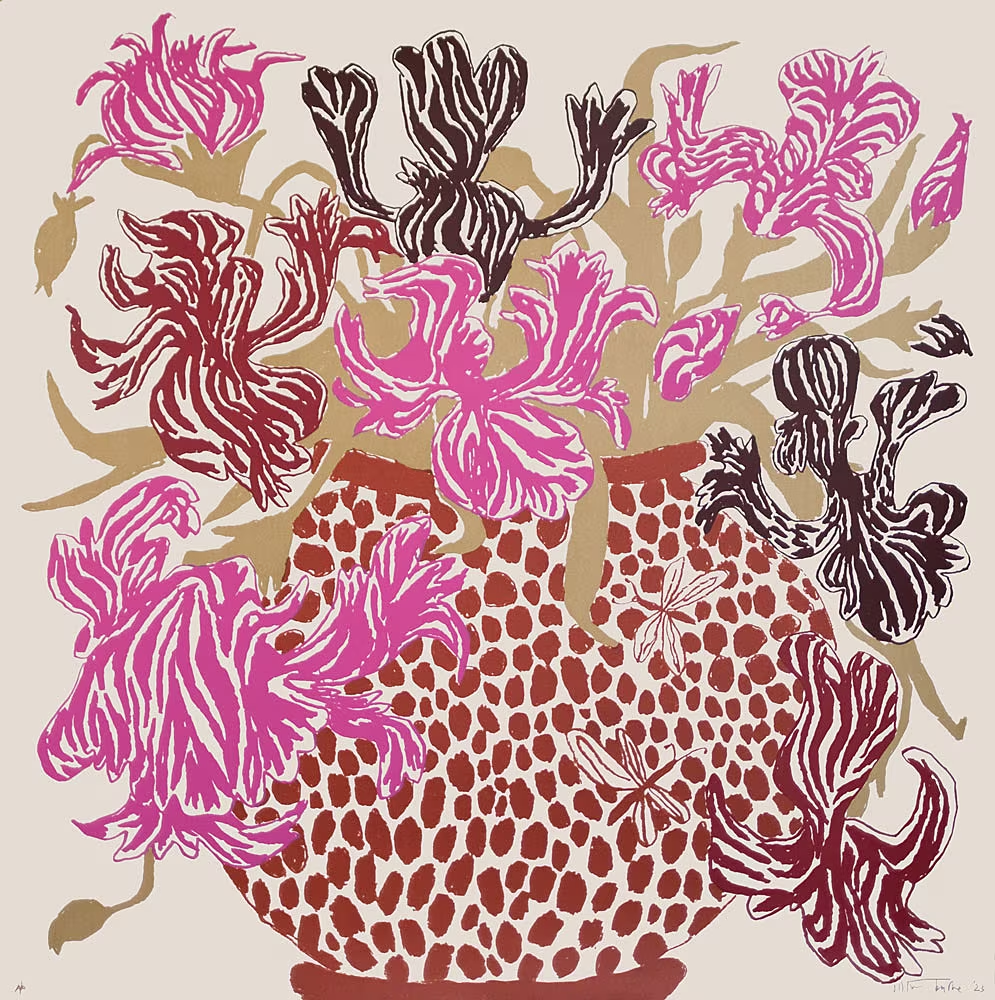
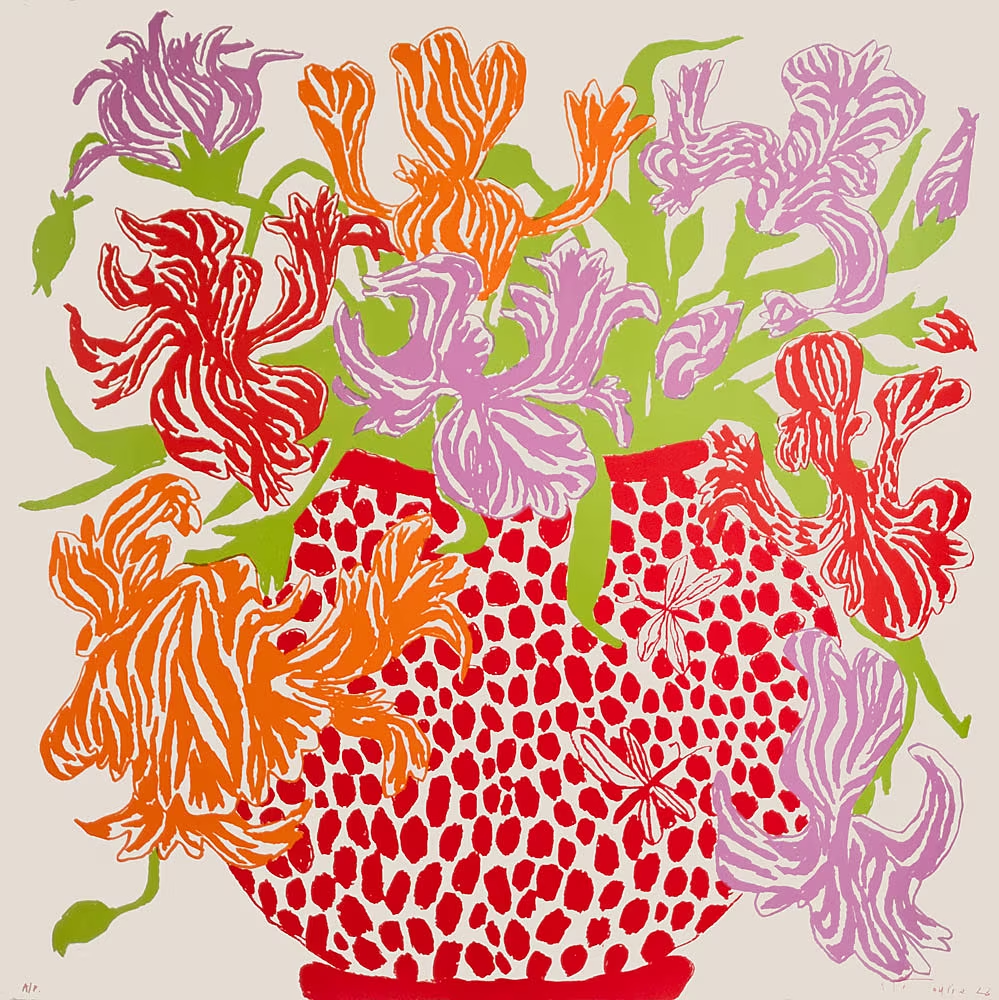
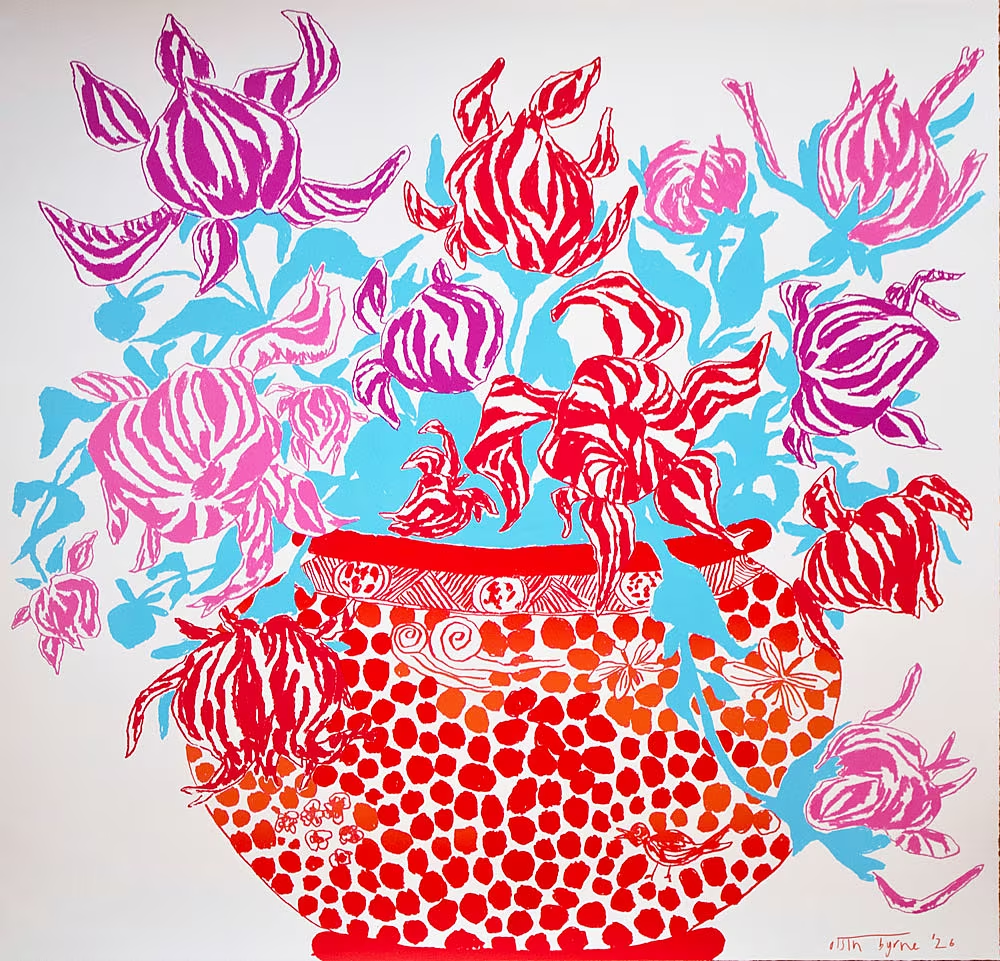
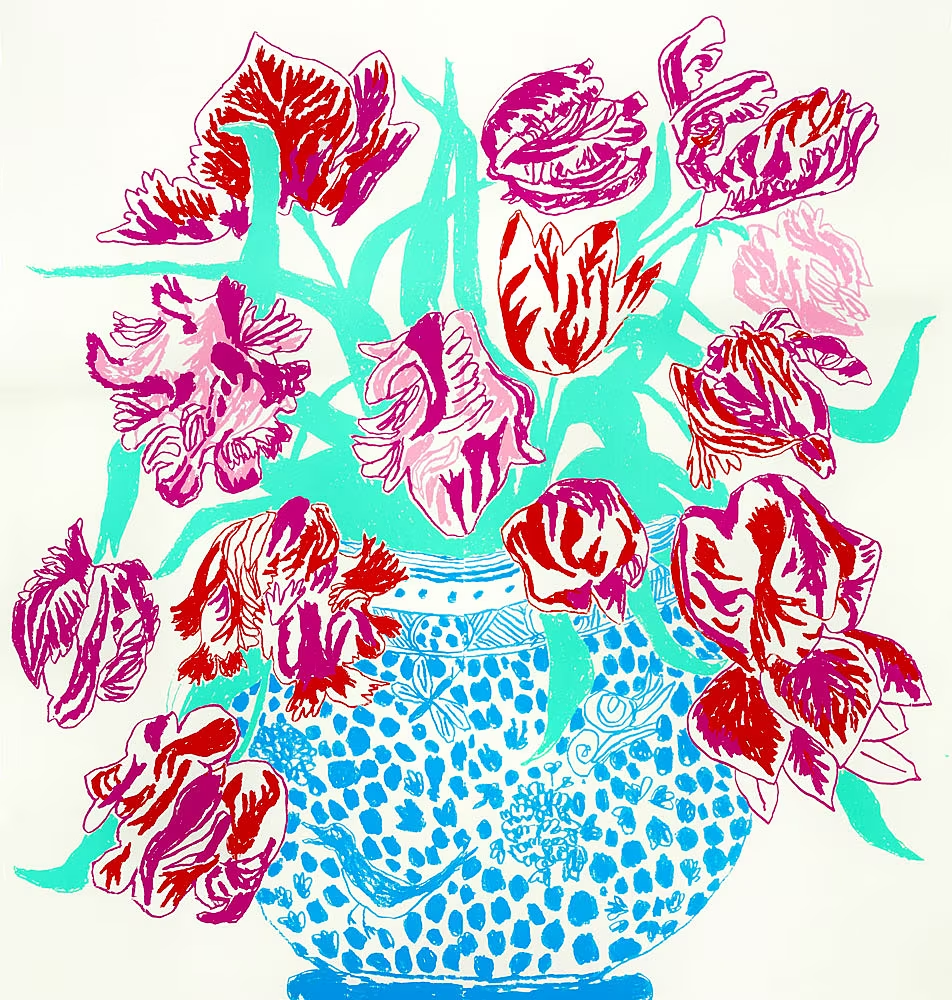
The Cut Flowers series began during lockdown. I was making a film called BOUNCER and in the afternoon, after a long morning editing, I’d go downstairs at the studio and draw these flowers: dahlias, tulips and irises, grown by Jasper [Conran, Oisín’s partner]. I had no intention of showing these works as they were truly made just for myself as they moved and changed over many days. But then, over all those months, they had incidentally amassed around me and were like a film in themselves.
The works in the show are a full set of the eight screenprints I’ve begun to make of these blooms. After many exhibitions in London and elsewhere, we’ve brought them to Ireland at last.
For me, the most important thing as an artist is to find a circle of friends whose work and thinking you admire, and whose input you can engage.
All my friends have their work churning away in the background. I don’t ask too much or pry, but I cherish when the moment is ripe and I end up ‘backstage’ at the studio, the rehearsal room or in the buzz of someone else’s nascent thinking.
Need to know: Cut Flowers by Oisín Byrne is running at SO Fine Art Editions, Powerscourt Townhouse, Dublin 2, until June 26. All unsold works will be available online. @byrneoisin
SEE MORE: Botanical Artist Isik Güner