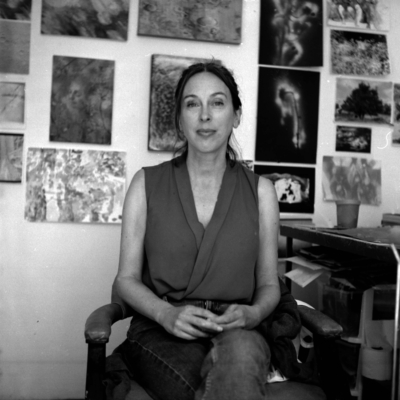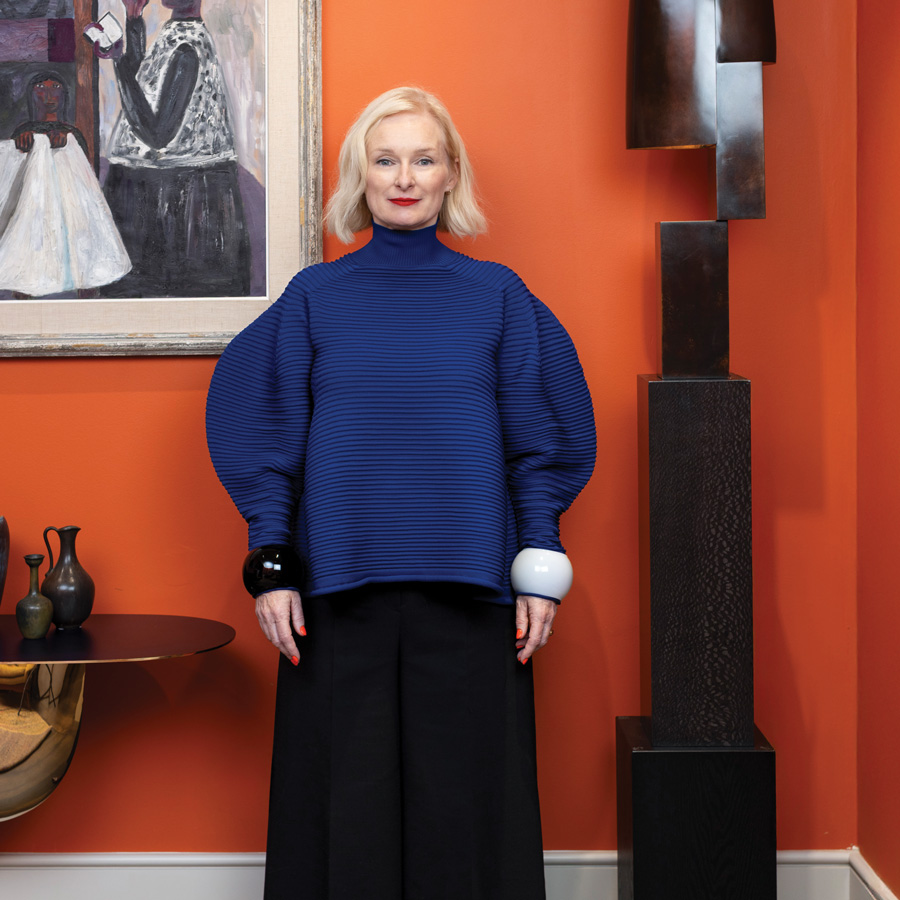


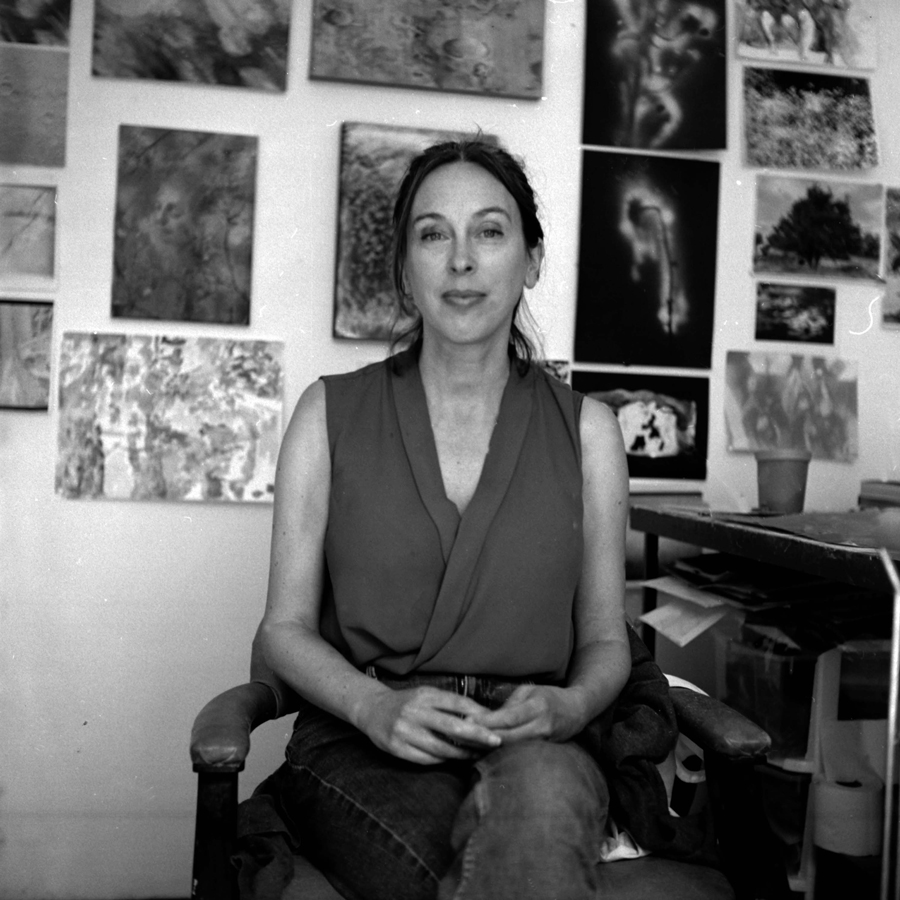
Abandoned spaces, especially theatres, inspired Beatrice O’Connell’s latest work …
What sparked your initial interest in art and how has this evolved? My mum was an artist and she dragged me around galleries when I was a child. She always had a painting on the go. She painted still lifes, heavily influenced by Matisse and Cézanne. Her work had strong compositions, and she was deeply interested in Chinese and Japanese painting; this compositional sensibility made its way into her own work. Mum encouraged me to keep a notebook, so from a young age I was constantly drawing. I find that I can think more clearly when I work through ideas in a notebook alongside my paintings.
I initially wanted to become an actress and enjoyed the process of improvisation. There’s something magical about losing yourself in another world and becoming someone else entirely. At school, I was told that I was a dreamer and was often reprimanded for staring out the window. Although I didn’t pursue acting, the improvisational approach stayed with me and became central to my artistic practice. I now approach painting as an open, exploratory process, allowing ideas to unfold intuitively rather than working toward a fixed outcome. As a shy and sensitive person, I think the artistic process suits me better as a visual artist because I value and protect my time alone.
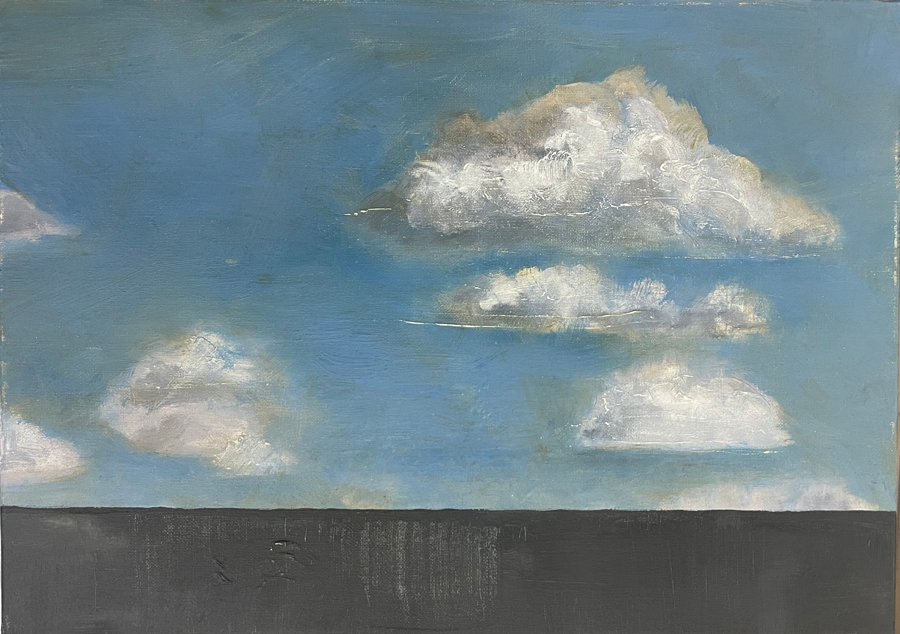
How and where do you work? I like to have several paintings on the go at the same time, but I also make video and installation work which often involves a more collaborative way of working. For example, Rayleen Clancy and I made an eco-feminist film together yet the process was very intuitive, despite living at opposite ends of the country.
I work from La Catedral Studios in the Liberties in Dublin, just around the corner from NCAD. I previously worked part-time in NIVAL, the National Irish Visual Arts Library, which was incredibly valuable. The material there is fascinating, and my interests lie in ecology and artists who engage with the environment in some way. All of this research feeds directly into my practice.
The studio itself is very vibrant. We are a diverse group, ranging in age from 22 to 82, with practitioners spanning textiles, painting and photography. We always have great discussions over lunch.
The shared studio environment is an important support for my practice, the ongoing exchange of ideas and perspectives, across disciplines and generations, is invaluable. We regularly share information about exhibitions, open calls and events, which helps keep my work connected to a wider artistic and cultural context.

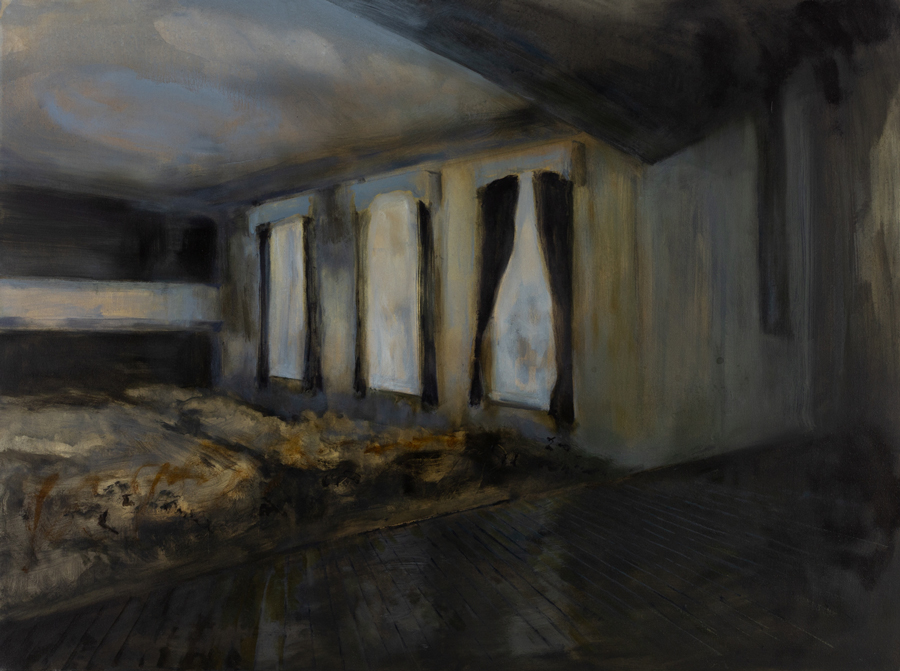
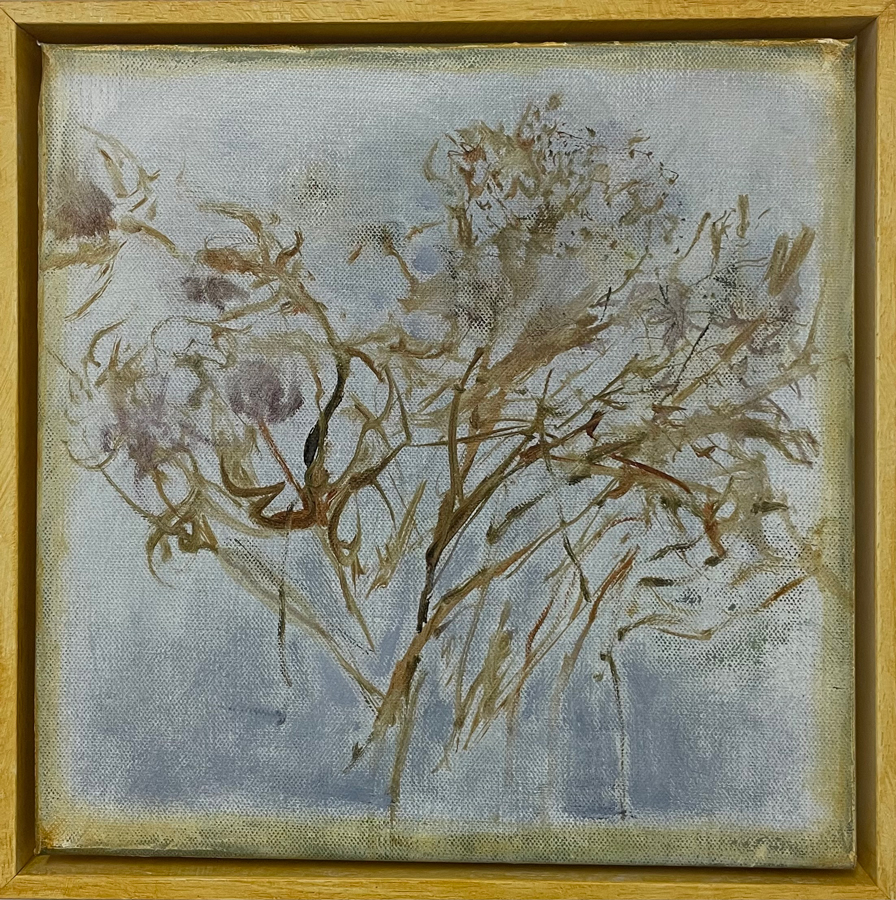
How did your interest in abandoned spaces inspire your latest exhibition? “Daphne’s Theatre” draws on Samuel Beckett’s existentialism, imagining abandoned theatres and damaged spaces, where meaning and human control have faded. The title also references the myth of Daphne who transforms into a tree to escape pursuit, echoing the exhibition’s focus on nature’s persistence and resilience. Across the works, vegetation overtakes human structures, reflecting endurance, transformation and the quiet persistence of life even amid collapse.
This body of work was initially sparked by a visit to Endgame by Samuel Beckett at the Gate Theatre in Dublin. The set was stark and desolate as if it was coated in concrete dust after an apocalyptic event. In my previous exhibition, one painting entitled Moon Food explored a similar atmosphere, so Daphne’s Theatre grew out of a desire to expand on that idea.
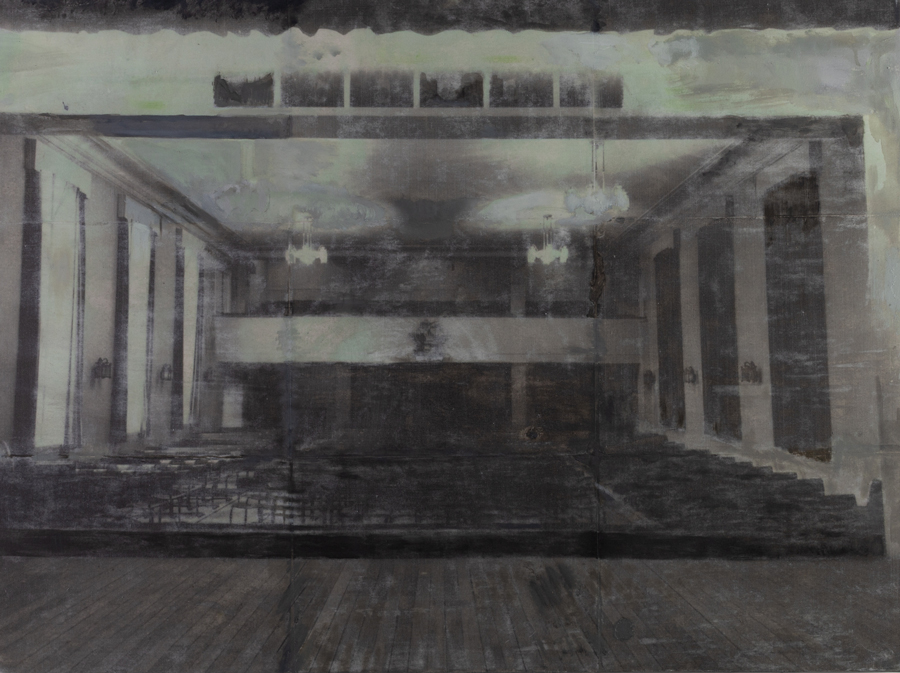
I began to think about the theatre as a metaphor – “all the world’s a stage” – alongside the persistence of nature. The works imagine abandoned spaces where the audience has left, no longer paying attention to the main event: the climate crisis. In this imagined drama, weeds become the protagonists, drawing attention to the fact that we are not separate from nature, but part of it.
I made a research visit to an abandoned theatre and many of the paintings stem directly from this experience. Titles such as Ghost Theatre and Awaiting Audience refer to spaces where the audience has been replaced, reinforcing this narrative. Alongside this, the work reflects my despair at the loss of so many key artistic spaces in the city such as The Complex, which are increasingly replaced by generic, soulless hotels and office blocks.
Our cities need housing and creative spaces to remain alive rather than being sold to the highest bidder.
What do you enjoy most about what you do? The variety, no day is ever the same. I love the process of making work, especially the intuitive, improvisatory way ideas can evolve as I paint or experiment. I also really value the exchange of ideas with others and the creative energy in the studio; it’s inspiring to be surrounded by people working in different ways. I don’t really know any other way of being, art making is how I process my experience of the world.
Need to know: “Daphne’s Theatre” can be viewed in Taylor Galleries from January 29 to February 21. @beatriceocartist