Pioneering Photojournalist Eve Arnold’s Grandson On Marilyn Monroe
By The Gloss
The lasting appeal of Marilyn Monroe on what would have been her 100th birthday …
Marilyn Monroe would have been 100 years old this week and to mark the occasion, a landmark exhibition entitled ‘Marilyn Monroe: A Portrait’ is opening at the National Portrait Gallery in London.
Pioneering American photojournalist Eve Arnold (1912-2012) captured some of the most memorable images of Monroe, many of which feature in the exhibition, as well as many other iconic figures, from Malcolm X to Jacqueline Kennedy Onassis. She was the first woman photographer to join the prestigious Magnum Photography agency, from the 1950s. Limited-edition prints are available online, as are beautifully printed poster versions of her striking images, including several of Monroe: the photographer was adamant that her work should be accessible to all. Eve Arnold’s grandson Michael Arnold runs her Estate, and we spoke to him exclusively about his grandmother’s photographs and her unique perspective on Marilyn Monroe.
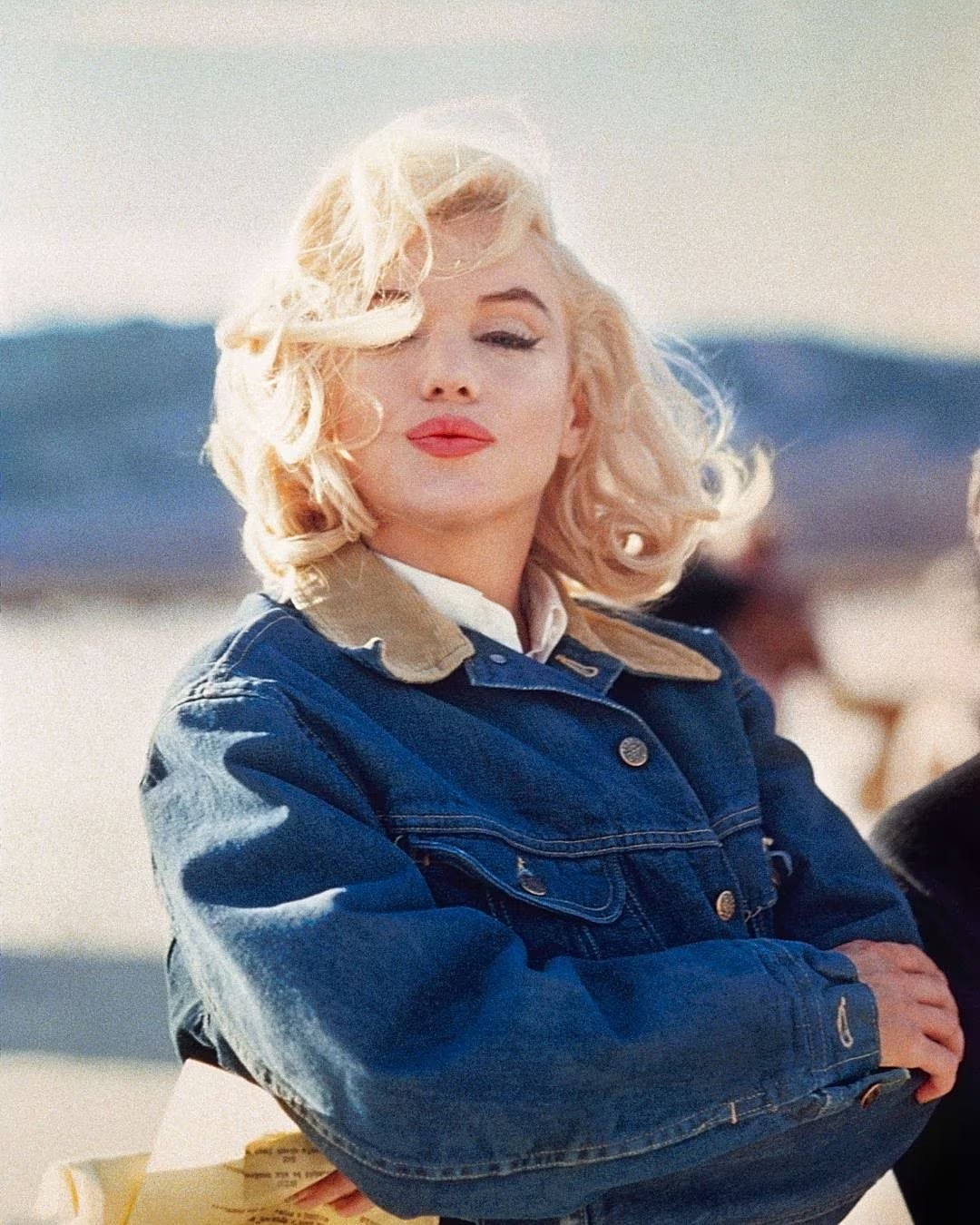
Marilyn in the Nevada desert during “The Misfits” filming in 1960 © Eve Arnold.
Why do you think Marilyn Monroe has such a lasting appeal and intrigue, as captured so beautifully and intimately by Eve Arnold?
“I think Marilyn’s lasting appeal comes partly from the fact that she was never one thing. She was glamorous, funny, vulnerable, intelligent, wounded, ambitious and extraordinarily disciplined. She created one of the most recognisable personas of the twentieth century, but behind that persona was a woman of great complexity.
What continues to fascinate people is the tension between Marilyn Monroe the icon and Norma Jeane, the person who created her. She understood the power of image-making and she knew how to generate a sensation, but she was also searching for seriousness, love, stability and artistic respect.
Eve understood that contradiction. Her photographs do not try to solve the mystery of Marilyn because Eve knew that nobody ever fully saw the ‘real’ Marilyn. She always kept something back. But Eve’s images come closer than most because they were made from a place of trust. They show the glamour, of course, but they also show the intelligence, loneliness, effort and vulnerability behind it. I think that is why Eve’s photographs still feel so alive. They do not freeze Marilyn as a fantasy. They allow us to feel the human being inside the myth.”
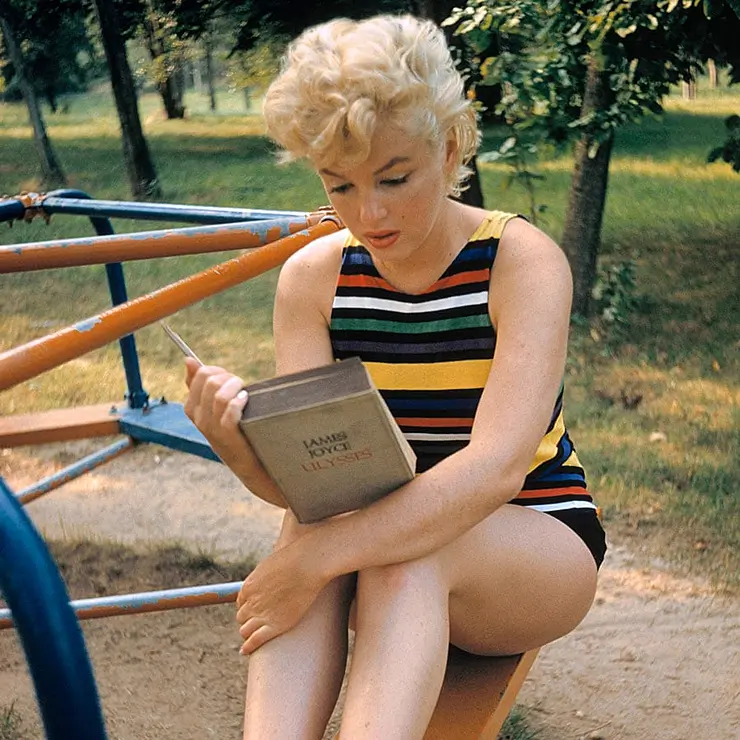
What do you think Eve Arnold captured of Monroe that perhaps other photographers didn’t? I love the focus on her reading, especially the photograph of Marilyn reading Ulysses. Perhaps only a woman could have captured that side of her?
“Eve’s photograph of Marilyn reading Ulysses is fascinating because it quietly contradicts so many of the lazy assumptions that have been made about her. Marilyn was so often reduced to the ‘dumb blonde’ stereotype, when in reality she was curious, intelligent, ambitious and serious about self-improvement.
Eve told the story that Marilyn had the book with her in the car and had been reading it between moments. Marilyn admitted that she found it hard-going in places, but said she loved reading it aloud to herself. That detail feels very revealing. She was not carrying Ulysses as a prop. She was engaging with it in her own way, through sound, rhythm and performance, which makes complete sense for an actress.
The photograph came about very naturally. Marilyn was reading while Eve was getting her cameras ready, and Eve recognised the quiet significance of the moment. She did not present Marilyn reading James Joyce as a joke or a publicity stunt. She photographed it simply as part of Marilyn’s world.
“ could be glamorous, funny, vulnerable, highly self-aware and intellectually curious all at once.”
I do think Eve’s position as a woman mattered. She was not photographing Marilyn with a sense of conquest or voyeurism. Her gaze is observant and compassionate. She is interested in Marilyn’s mind as much as her beauty. That is what makes the photograph so powerful: it gives Marilyn back her intelligence.
At the same time, Eve was always careful not to turn Marilyn into a simplified symbol in the other direction. The point is not simply, ‘Look, Marilyn was reading Joyce’. The point is that Marilyn was complex. She could be glamorous, funny, vulnerable, highly self-aware and intellectually curious all at once.
Eve understood that Marilyn Monroe was a creation, but she also understood the intelligence it took for Norma Jeane to create her. That photograph of Marilyn reading Ulysses captures exactly that: the woman behind the myth, thinking, searching and refusing to be as simple as the world wanted her to be.”
For you, what does the National Portrait Gallery exhibition add to the vast Monroe canon?
“What is exciting about the exhibition is that it has the potential to move the conversation beyond the familiar mythology. Marilyn has been looked at endlessly, but not always carefully. Too often she has been treated as an image rather than as a person with agency, intelligence and ambition.
Eve’s photographs help reframe that story. They show Marilyn not simply as the creation of Hollywood, but as someone who actively shaped her own image. Marilyn knew what she was doing. She understood performance, publicity, beauty, timing and desire. She also understood the limitations of the role the world wanted her to play.
The exhibition adds something important because it can bring together the icon and the human being. It can show the brilliance of Marilyn’s self-creation, but also the cost of it. That is where Eve’s photographs are so valuable: they hold both truths at once.
For me, the most interesting Monroe projects are the ones that resist cliché. Marilyn does not need to be flattened into tragedy, glamour or victimhood. She was far more interesting than that. Eve’s work allows us to see her as complex, funny, fragile, determined and deeply intelligent. That is the Marilyn who still feels modern.
Of the recent books launched, is there one that stands out for you as especially worth the read?
“I would naturally point people to Marilyn Monroe by Eve Arnold, published by ACC Art Books, because it brings together one of the most intimate and important photographic relationships in Marilyn’s life. It is not just a book of beautiful images. It gives a fuller sense of Marilyn as Eve saw her: glamorous, yes, but also serious, vulnerable, intelligent and in control of her own image.
I would also highly recommend Lynn Cullen’s forthcoming novel When We Were Brilliant . Lynn has done an extraordinary amount of research into both Eve and Marilyn, and what I admire is that she captures the emotional truth of their worlds. She understands Eve’s seriousness as a photographer, her place among her Magnum colleagues and the political and cultural atmosphere of 1950s America. She also writes about Marilyn with real nuance and respect.
The two books speak to each other beautifully. Eve’s photographs give us the visual truth of Marilyn in those moments, while Lynn’s novel opens up the emotional and historical context around them. Together, they help restore complexity to both women.”
Need to know: Marilyn Monroe: A Portrait is at the National Portrait Gallery London from June 4 to September 6.
Read more in THE GLOSS June issue on June 4.
SEE MORE: Fashion Exhibitions Worldwide Worth A Trip – Plus Where To Stay