Artistic License: Anne Ryan
The Irish artist is often inspired by saunters around London …
When I was about seven years old, there was a priest in Limerick, Fr Angus Buckley, who was a noted painter. He would have all the kids from our area help in his studio. My sister and I loved it, so we assisted with his watercolours and plans for commissions. He introduced us to a wonderful world of painting.
Later, there was an exhibition by Australian painter Sidney Nolan in the Belltable that completely changed the way I thought about art, so his work took me into a whole other world.
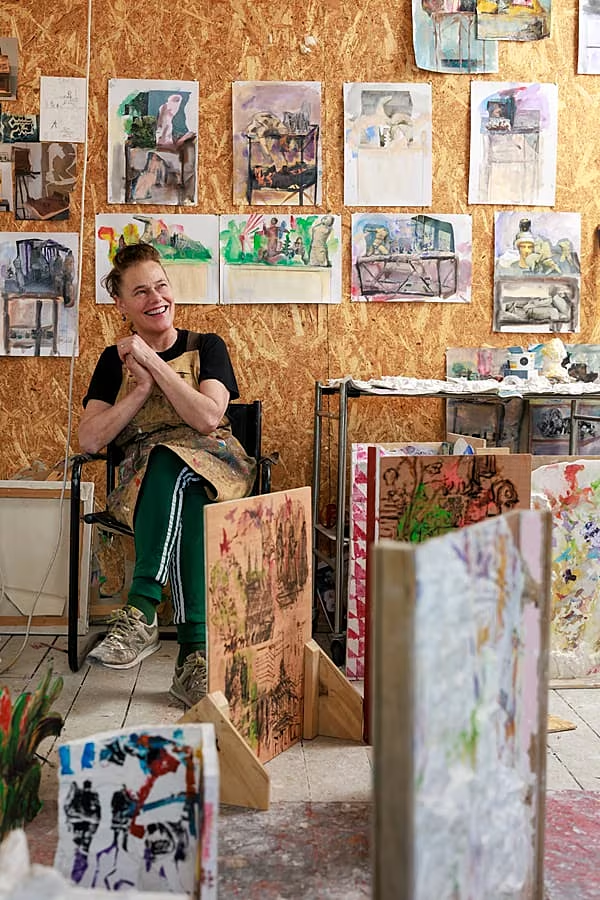
I studied at Limerick School of Art & Design and my first year in Fine Art had a huge impact on my life – making in 2D and 3D, immersed in the work with a great group of friends. After LSAD, I moved to Birmingham in the UK to complate an MA in Fine Art.
About ten years ago, I moved from making paintings to free-standing 3D cut-outs. These have evolved into more sculptural works made from wood, metal, plaster and ceramic. I even did some bronze casting recently. I don’t like the idea of limitation in my practice, I like it to be open-ended with an “anything is possible” mindset.
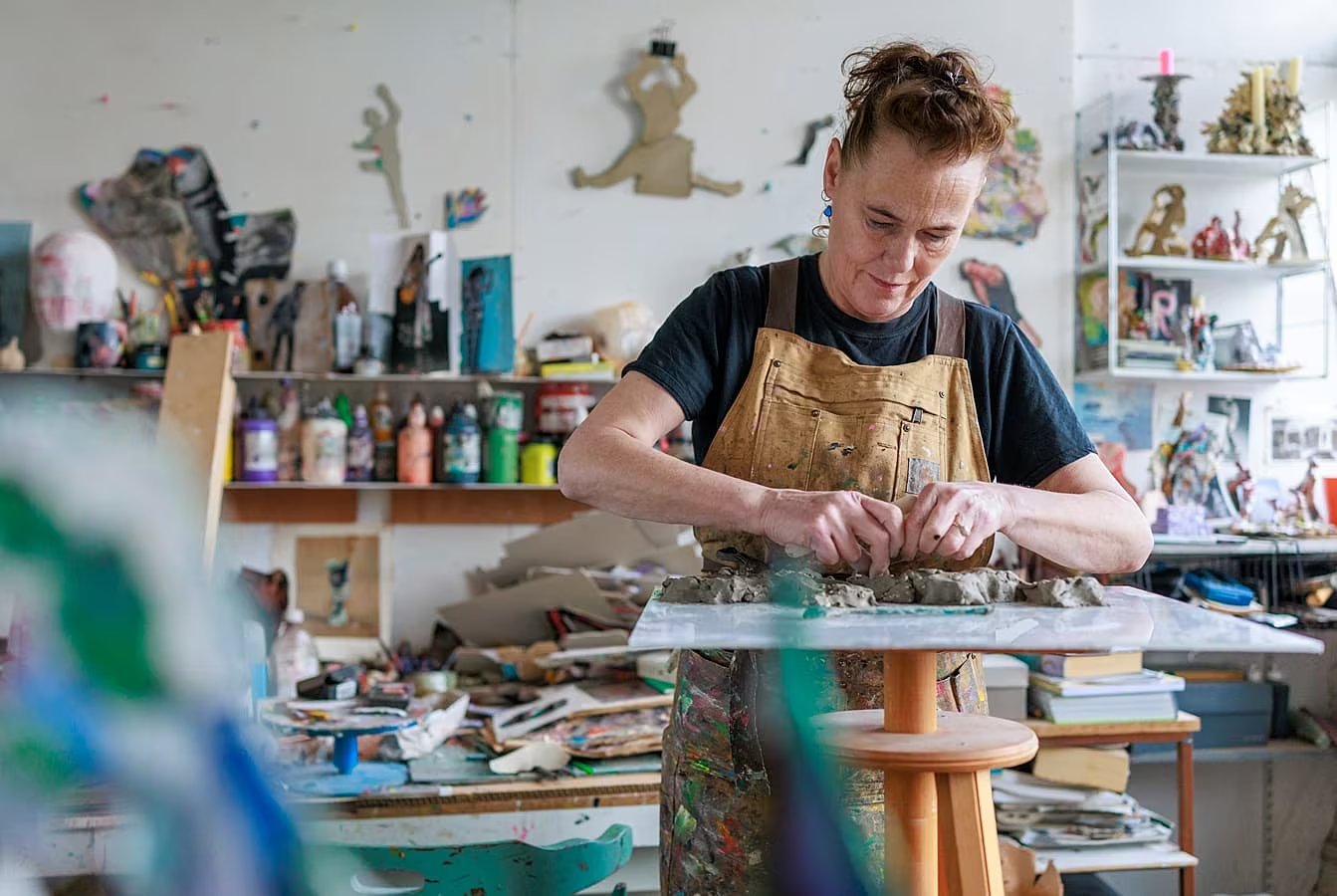
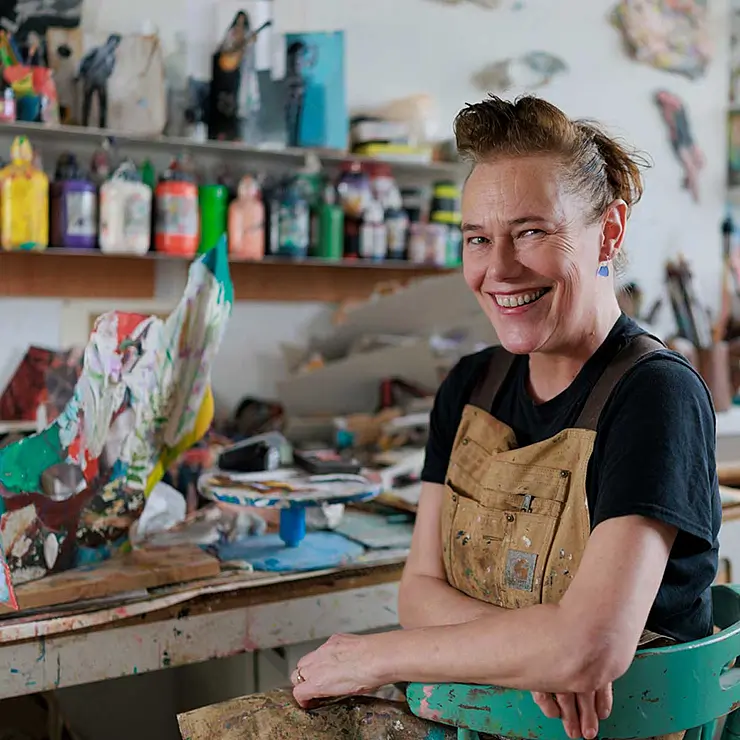
My studio is in Kingsgate Workshops in North London, just down the road from Irish landmark Kilburn High Road. It’s a busy, ever-changing area, which I like.
I make continuously. When I have a commitment like an exhibition, I have to get to a point where I get lost in the work. I push things too far and make a mess, break things even. Then I can go back and see what’s working, try and look at it fresh as if it’s not mine, and work on the things that stand out and ask to be worked on.
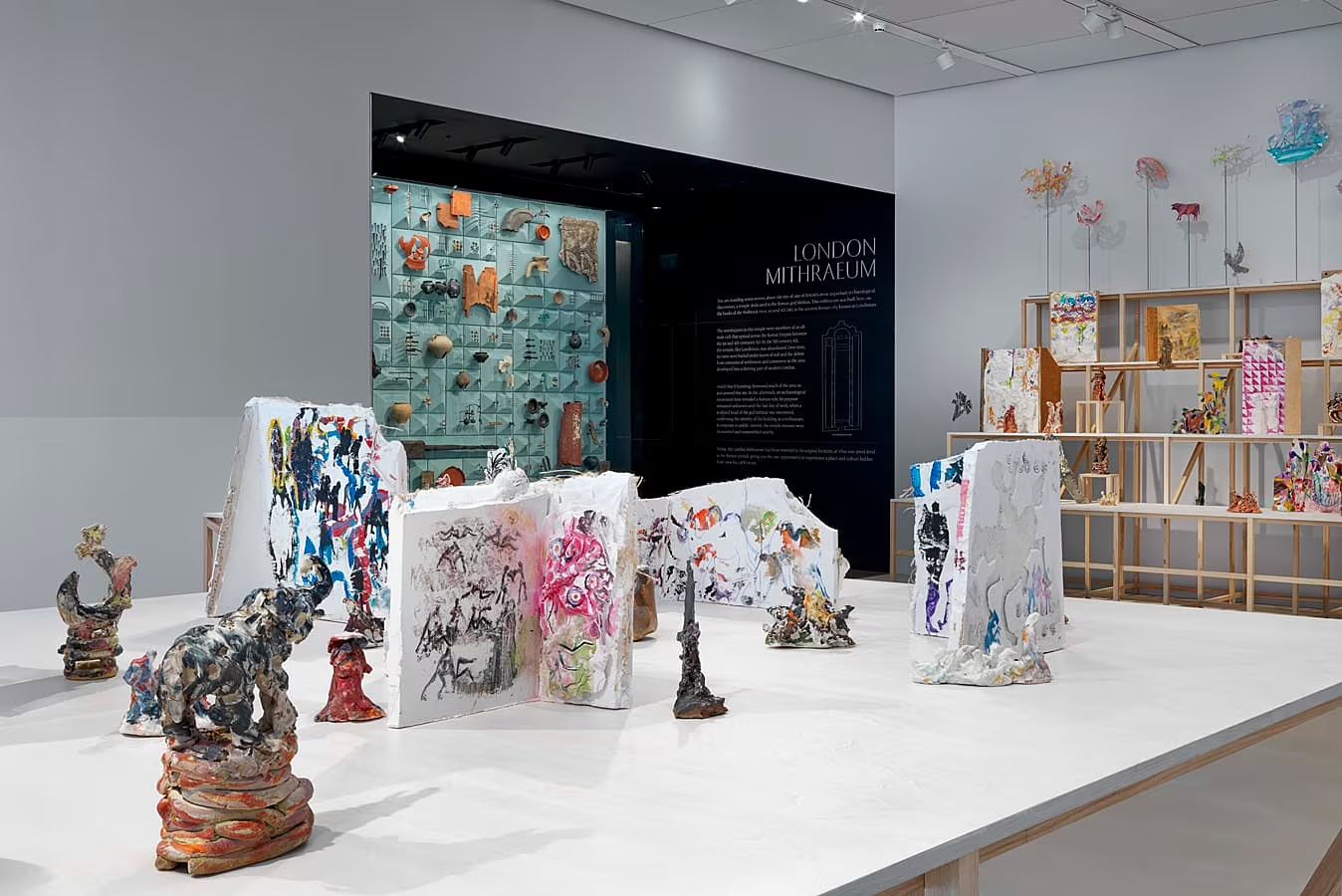
My new exhibition is called Folkmoot, an Old English word meaning a ‘gathering of people’. The exhibition unfolds as an immersive landscape of sculpture, painting, friezes and islands. I collaborated with Irish artist Kathy Prendergast, who lives near me in London. We put together a set of five walks that explore the area around the gallery, looking for odd things that people might not normally notice like weathervanes and reliefs on the sides of buildings. There was no point in including well-known places like St Paul’s, so we went into some less famous places like St Margaret Pattens on Eastcheap, also by Sir Christopher Wren, which was the church of the shoemakers’ guild and contains all sorts of footwear-related curiosities.
My walking is often based around the idea of a dérive – an aimless, unplanned saunter. Just set out and see what happens, slow down to let things and people soak in. One of my favourite walks is from home to the studio. It starts in Bloomsbury, continues to Camden across Primrose Hill and on up to Kilburn.
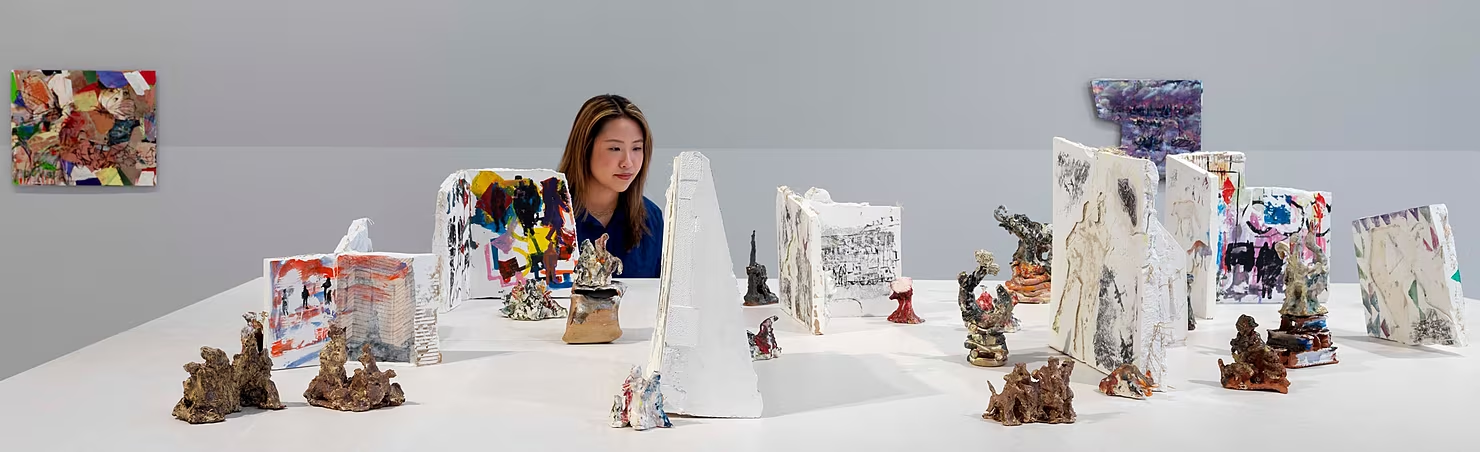
All of the artists who exhibit at Bloomberg Space are invited because their work connects in some way to the site, which has a Roman temple under it and a large wall of artefacts. My work relates as I’ve explored the area and gone back in time through London history. I’m interested in the proximity of other lives lived in different times. I have a lot of archaeologist and classicist friends from my time in the British School at Rome, where I learned a great deal. As you walk through London, history is all around you in street names, cornerstones and details of old buildings.
What I love most about what I do is putting on music and getting lost in the work. It’s always surprising and joyful. I want people to see the generosity in the work and hopefully change how they see things in the world.
Need to know: Folkmoot is at London Mithraeum Bloomerg Space until January 9.
SEE MORE: Artistic License: Anna McKeever