


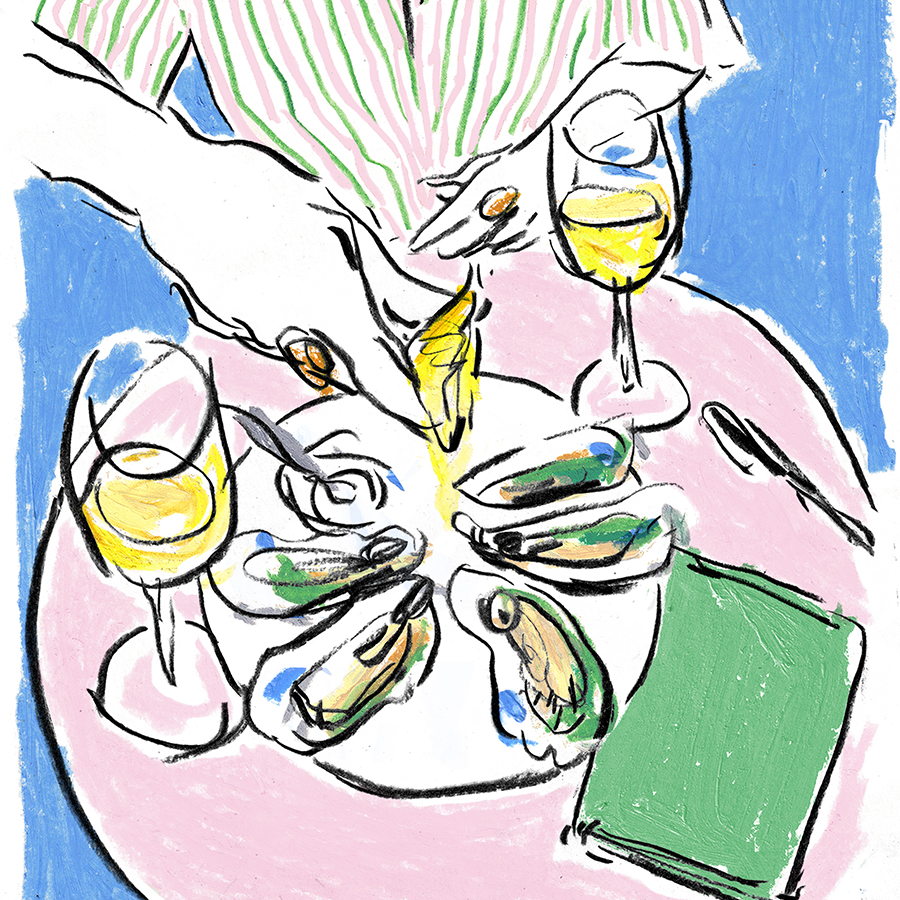
We reflect on the notable meals of some of the most famous characters in literature. Tempted to try?
Thomas Pynchon’s Banana Breakfast
Work: Gravity’s Rainbow
See: several pages early in the book, plus further allusions
Location served: Chelsea, London, during the Blitz
Description: Capt. Geoffrey ‘Pirate’ Prentice, a US Army captain stationed in London during the Second World War, makes a banana-themed breakfast for his messmates.
Quote: ‘… banana omelets, banana sandwiches, banana casseroles, mashed bananas molded in the shape of a British lion rampant, blended with eggs into batter for French toast, squeezed out a pastry nozzle across the quivering creamy reaches of a banana blancmange to spell out the words C’est magnifique, mais ce n’est past la guerre [. . .] tall cruets of pale banana syrup to pour oozing over banana waffles, a giant glazed crock where diced bananas have been fermenting since the summer with wild honey and muscat raisins, up out of which, this winter morning, one now dips foam mugs full of banana mead . . . banana croissants and banana kreplach, and banana oatmeal and banana jam and banana bread, and bananas flamed in ancient brandy Pirate brought back last year from a cellar in the Pyrenees also containing a clandestine radio transmitter …’
Critical significance: the banana, the penis and the rocket are symbolic of each other in Gravity’s Rainbow, representing perhaps the powerful but absurd urge to make war.
Verdict: the soldiers ‘dream drooling’ of Pirate’s breakfasts.
Herman Melville’s Clam Chowder
Work: Moby-Dick
See: entirety of the chapter ‘Chowder’
Location served: The Try Pots Inn, Nantucket
Description: Ishmael and his friend Queequeg discover ‘chowder for breakfast, and chowder for dinner, and chowder for supper’ at the Try Pots Inn.
Quote: ‘It was made of small juicy clams, scarcely bigger than hazel nuts, mixed with pounded ship biscuit, and salted pork cut up into little flakes, the whole enriched with butter, and plentifully seasoned with pepper and salt.’
Critical significance: Moby-Dick is considered to have homoerotic themes, and scholars have suggested that Ishmael and Queequeg were gay lovers. Their enjoyment of the bountiful chowder may represent the warmth and happiness of their relationship.
Verdict: ‘Surpassingly excellent.’
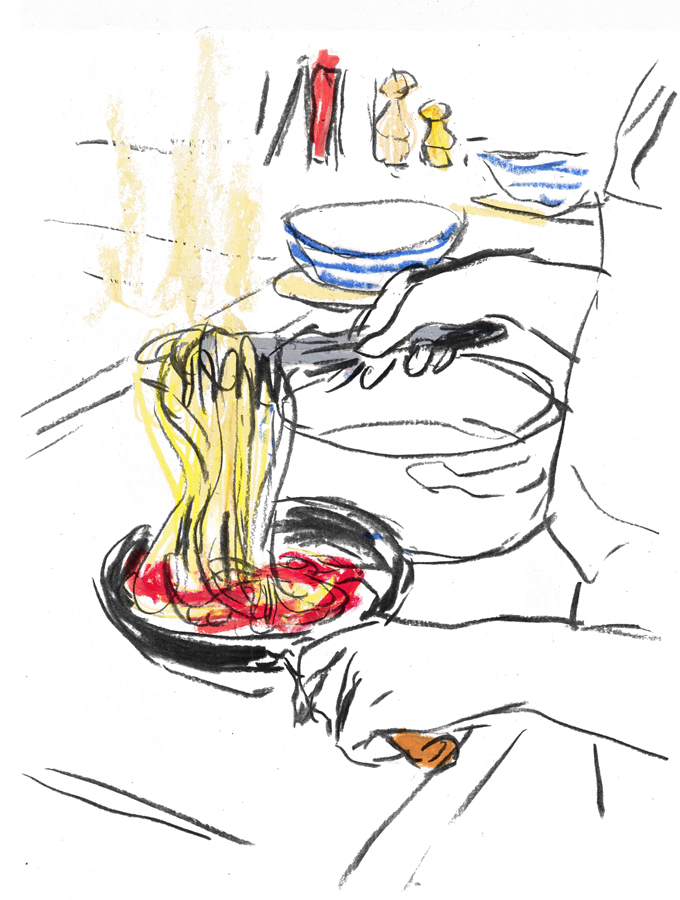
Haruki Murakami’s Spaghetti
Work: The Year of Spaghetti, published in The New Yorker, 2005
See: about two pages; entirety of the story
Location served: a lonely man’s apartment, possibly in Japan
Description: It’s the year 1971 and a man makes a lot of spaghetti.
Quote: ‘Fine particles of garlic, onion, and olive oil swirled in the air, forming a harmonious cloud that penetrated every corner of my tiny apartment, permeating the floor and the ceiling and the walls, my clothes, my books, my records, my tennis racquet, my bundles of old letters. It was a fragrance one might have smelled on ancient Roman aqueducts.’
Critical significance: Murakami is known for declining Japanese cultural markers in his fiction, shown here by the protagonist’s fondness for spaghetti.
Verdict: ‘Born in heat, the strands of spaghetti washed down the river of 1971 and vanished.’
Giuseppi Tomasi di Lampedusa’s Timpano
Work: The Leopard
See: a couple pages in the chapter ‘Donnafugata’
Location served: Donnafugata, Sicily
Description: a timpano (or timballo) is a classic Italian showstopper dish of pasta baked in a large Dutch oven (timbale, in French), which has been lined with sheet pasta. Inverted and plated it resembles a drum. The aristocratic family portrayed in The Leopard serves it at a dinner.
Quote: ‘The burnished gold of the crusts, the fragrance of sugar and cinnamon they exuded, were but preludes to the delights released from the interior when the knife broke the crust; first came a mist laden with aromas, then chicken livers, hard-boiled eggs, sliced ham, chicken, and truffles in masses of piping-hot, glistening macaroni, to which the meat juice gave an exquisite hue of suède.’
Critical significance: this lavish but traditional dish represents the hidebound decadence of the aristocracy.
Verdict: the demi-glace is too rich, but most of the diners find the timpano delicious.
Virginia Woolf’s Boeuf En Daube
Work: To the Lighthouse
See: Chapters XVI and XVII
Location served: a beach house in the Isle of Skye, Inner Hebrides
Description: Mrs. Ramsay, a mother of eight mostly adult children, is hosting a summer gathering in the Hebrides, and serves boeuf en daube one evening for dinner, worrying that all the diners should be on time for the meal.
Quote: ‘an exquisite scent of olives and oil and juice rose from the great brown dish’
Critical significance: in this semi-autobiographical work, Woolf was exploring the conflicting female roles of artist vs home-maker. The boeuf en daube is the kind of domestic triumph that Woolf’s daughter-character eschews in favour of making art.
Verdict: ‘It partook … of eternity … Of such moments, [Mrs. Ramsay] thought, the thing is made that endures.’
Margaret Mitchell’s Barbecue
Work: Gone With the Wind
See: the beginning of Chapter IV
Location served: Twelve Oaks Plantation, Georgia
Description: heroine Scarlett O’Hara, dressed in a low-cut ‘afternoon dress’ of green flowered muslin and showing ‘two inches of green Morocco slippers’, sits surrounded by beaux at the annual Twelve Oaks barbecue, not eating her plate of food because it would be improper for a young woman to show appetite, and longing for the only man who isn’t paying her any attention: Ashley Wilkes.
Quote: ‘The barbecue pits, which had been slowly burning since last night, would now be long troughs of rose-red embers, with the meats turning on the spits above them and the juices trickling down and hissing into the coals.’
Critical significance: critique of Gone With the Wind has long centred on Mitchell’s stereotyped and racist portrayals of enslaved people and the barbecue scene is no exception. By positioning the barbecue, a traditional Black American practice, hidden far from the house, Mitchell displays the noxious attitudes towards race that were typical of her place and time.
Verdict: Scarlett doesn’t take a bite.
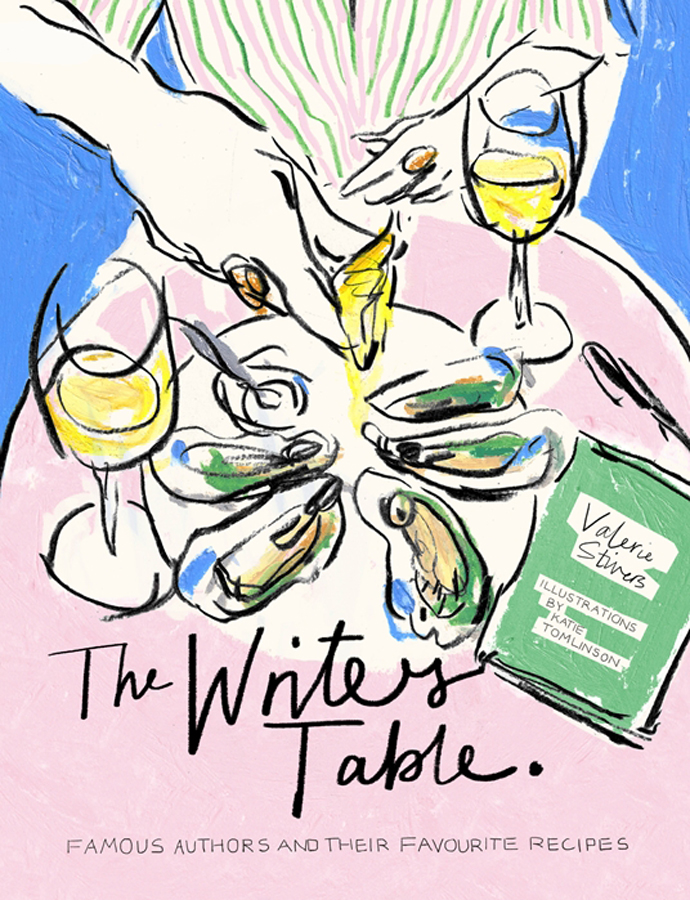
Extract from; The Writer’s Table by Valerie Stivers, Illustrations by Katie Tomlinson, Frances Lincoln.