


Dominique Barbéris lives in Paris and is the author of nine critically acclaimed novels. She teaches at the Sorbonne, specialising in stylistics and writing workshops …
For me, the most perfect travels are those you make across both space and time. You don’t need planes and anyway, none of them could reach such countries. I am aware that the 19th century was not an easy time to live in, but I find it one of the best to visit in my imagination. So to begin with one of my favorite travel destinations, I must mention Thornfield. I love to go there. Of course, Thornfield only exists in Jane Eyre, and the place may not seem very exotic to English readers, but it is to me. I am French and I dream of that kind of England: gloomy big houses and castles, mist, croaking crows, mysterious lanes. There is no other place I should be so eager to visit, and I fancy myself walking along the dark paths at night (and hearing a rider on a horse approaching from behind, like the devil), or perhaps resting in the orchard on a bench underneath an oak, or climbing the stairs to the attic, opening a door, and behind, in the corridor, there is Rochester. Did I mention that I was in love with him from the age of twelve? No castle I visited all across Europe could compete with the large room with tapestries and a fireplace where “the master” is seated, with his dog Pilot lying at his feet. (Did I say he looks exactly like Orson Welles in the film?).
Every time I visit Thornfield, it is pouring with rain outside, and dark, and Rochester asks me: “Do you find me handsome?” (or something of that kind; I am quoting from memory). Of course, I would like to answer passionately: “Yes”, but it’s Jane he is asking, and her answer is “No”, so instead I must imagine what would have happened should the answer have been different, and build my own romance with him.
I happened to go to Denmark recently and visited Karen Blixen’s house, near Copenhagen. After that visit, I decided to read her book for the first time. Of course, I had seen long ago the film Out of Africa starring Robert Redford and Meryl Streep and I remembered the marvellous highland landscape featured in the film. It is exactly as Blixen writes in her memoir: ochre colours, pale sky and strangely shaped trees.

While visiting Kenya with her, you are no longer a tourist; you see Africa from the inside. She lived there in the early 20th century and, as a baroness and European, had servants. Yet when her coffee crops failed, she went bankrupt and had to give up her farm. But she had a true relationship with the country. She loved the people deeply and tried to understand them, and she portrays them with tenderness and humour: Kikuyus, for example, or the young Somali girls with whom she discusses marriage and who she teaches knitting. The whole country – animals, landscape and people – is rich with beauty and poetry, and you will never forget the Ngong hills as she describes them, nor the darkness and mystery of the forests full of monkeys and silence.
Let me end with Marguerite Duras and her way of describing late French Indochina (which included Vietnam). Born in 1914 in Gia Dinh, near Saigon, she lived for some time in the Mekong Delta. Despite being still young when she left Saigon, the Mekong Delta is the location of some of her most remarkable novels, such as Un barrage contre le Pacifique (The Sea Wall, 1950) and L’amant (The Lover, 1984). You have no choice with Duras: you either hate her or worship her. I took the second option. Duras wrote “My life does not exist” and she imagined different stories about her own life in Indochina based on various scripts. In the novel The Sea Wall, a rich and ugly Chinese man falls in love with Suzanne and tries to buy her from her poor family, offering them a diamond. In The Lover, Duras tells the story of her own encounter with a young Chinese man in Sadec, on the Mekong river. The two become lovers but have to part when she leaves for France, and the young man becomes a symbol of the lost country.
I have read that one can now visit the house of the lover in Sadec. But I feel no need to go there. Indochina, as told by Duras, only exists in Duras’ novels; it is made of the stuff of her own dreams, imbued with the music of words – Sadec, Vin’h Long, Ram – with rice fields invaded by the sea, with boats crossing the Mekong, and lovers in old fashioned cars; it tells of heat, poverty and glamour.
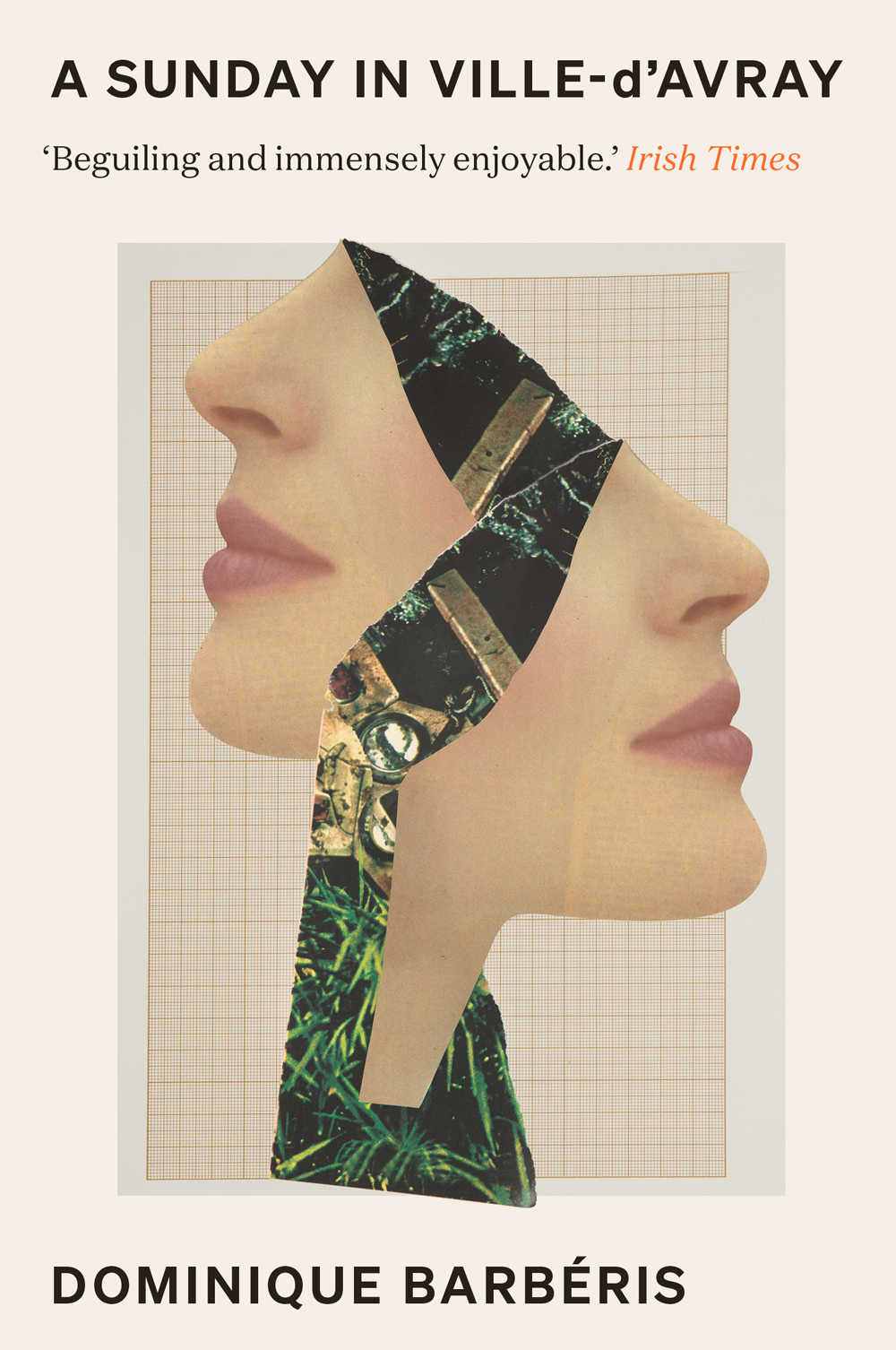
A Sunday in Ville-d’Avray by Dominique Barbéris, translated by John Cullen is published on August 5 in Paperback Original by Daunt Books, €9.99. Longlisted for the Prix Goncourt and shortlisted for the Prix Femina, A Sunday in Ville-d’Avray is an atmospheric novel documenting the relationship between two sisters – Jane and Claire Marie who lives in Ville-d’Avray, one of the suburbs of Paris. Fans of Anita Brookner will enjoy this enigmatic, slightly sinister novel.






LOVETHEGLOSS.IE?
Sign up to our MAILING LIST now for a roundup of the latest fashion, beauty, interiors and entertaining news from THE GLOSS MAGAZINE’s daily dispatches.