Everything You Need To Know About The Blockbuster Summer Exhibition On Frida Kahlo
A new exhibition at London’s Tate Modern shows Frida Kahlo’s impact on art history …
Feminist, folk hero, disabled artist, fashion icon: how do you perceive Mexican artist Frida Kahlo (1907-1954)? Through the lens of the artists she impacted and her own work, Frida: The Making of an Icon at Tate Modern, will trace Kahlo’s rise from a relatively unknown painter to a cultural phenomenon. It presents her work beside that of contemporary artists who have been influenced by her aesthetic, identity and biography.
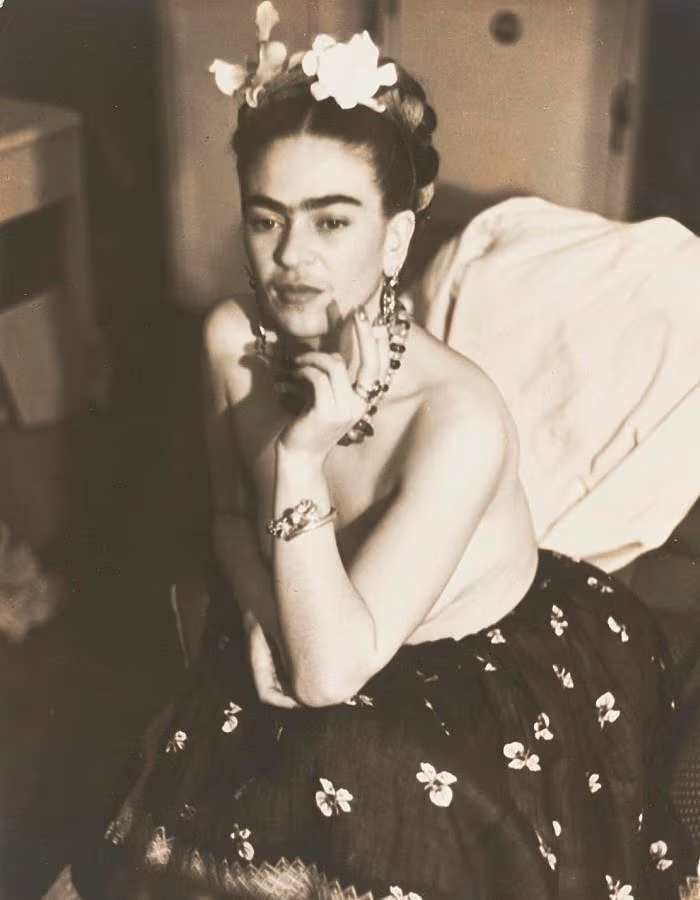
Julien Levy, Frida Kahlo 1938. © Courtesy of Philadelphia Museum of Art.
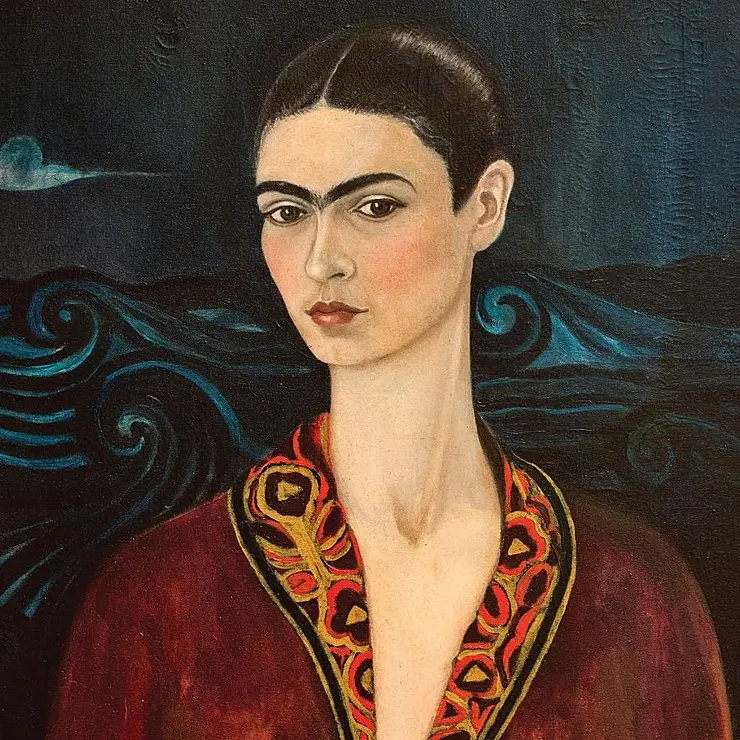
The exhibition is split into seven thematic sections, opening with an exploration of how Kahlo constructed and projected her many “selves” – from the personal to the political, and the physical to the spiritual. Highlights include Kahlo’s most iconic self-portraits, including Self-Portrait (With Velvet Dress) 1926 and Self-Portrait with Loose Hair 1938, through which she embraced her Mexican heritage, queer self-image, feminist ideals and experience as a disabled woman.
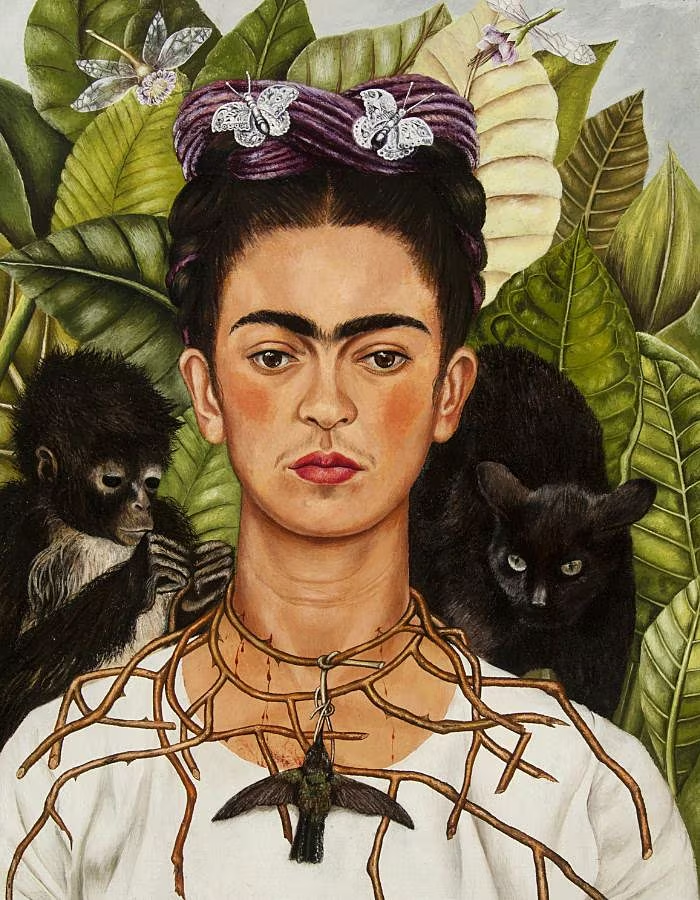
Frida Kahlo, Untitled 1940. Nickolas Muray Collection of Mexican Art.
Kahlos paintings are presented alongside works by other artists of the Mexican Renaissance, such as Diego Rivera’s Portrait of Frida Kahlo c.1935 and María Izquierdo’s Dream and Premonition 194. Alongside the paintings, photographs and archival materials will be displayed, including Kahlo’s tehuana dresses that she wore as a political statement.
The show also focuses on the surrealist connections between Kahlo and her contemporaries. While Kahlo famously rejected the label, its founder André Breton declared her “a self-made Surrealist”. Following her first solo show at Julien Levy Gallery in New York in 1938, Breton invited Kahlo to exhibit in Paris, where the French national collection acquired her self-portrait, The Frame 1938. This artwork is on show, as are others that reveal a fascination with surrealist motifs, including masks and skeletons, and a fixation on death and dreaming.
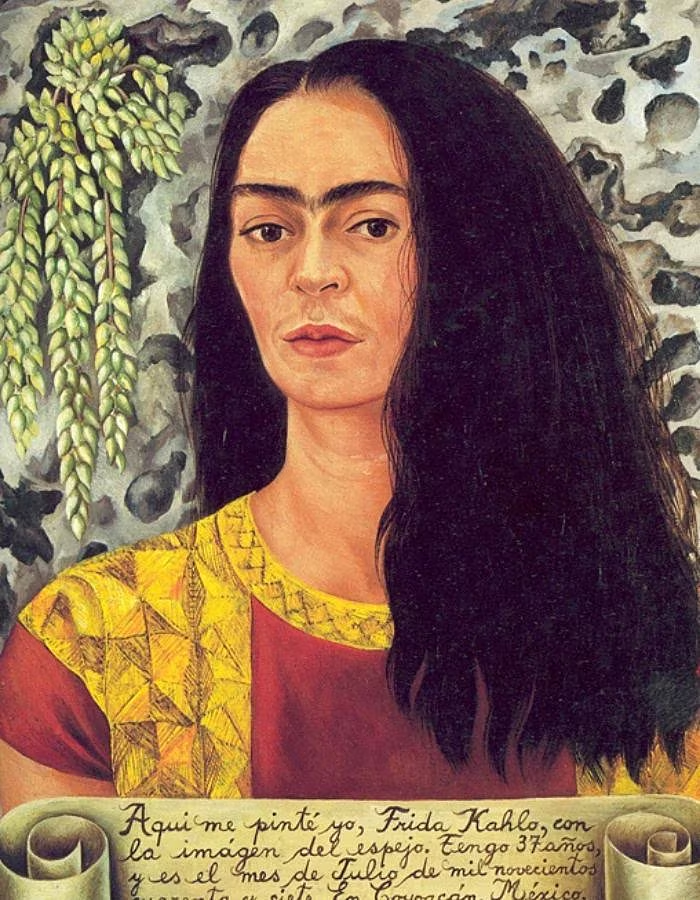
Frida Kahlo, Self-Portrait with Loose Hair 1946. Private collection.
Although Frida Kahlo’s name first appeared in US artistic circles in the early 1930s, her work and image only gained widespread popularity much later. During the late 1960s, the US Chicana/o movement embraced Kahlo as a symbol of cultural pride and political resistance, celebrating her resilience and creativity. Kahlo’s works, such as My Dress Hangs There 1933-8, captures her ambivalence toward the US, which resonated with Mexican migrants and Chicana/o communities, making her a lasting source of inspiration.
The rise of feminism in Mexico and the US, during the 1970s and 1980s, also sparked renewed interest in Kahlo’s self-representation. Her self-portraits in masculine attire, as well as her scenes of childbirth and female sexuality, challenged cultural norms.
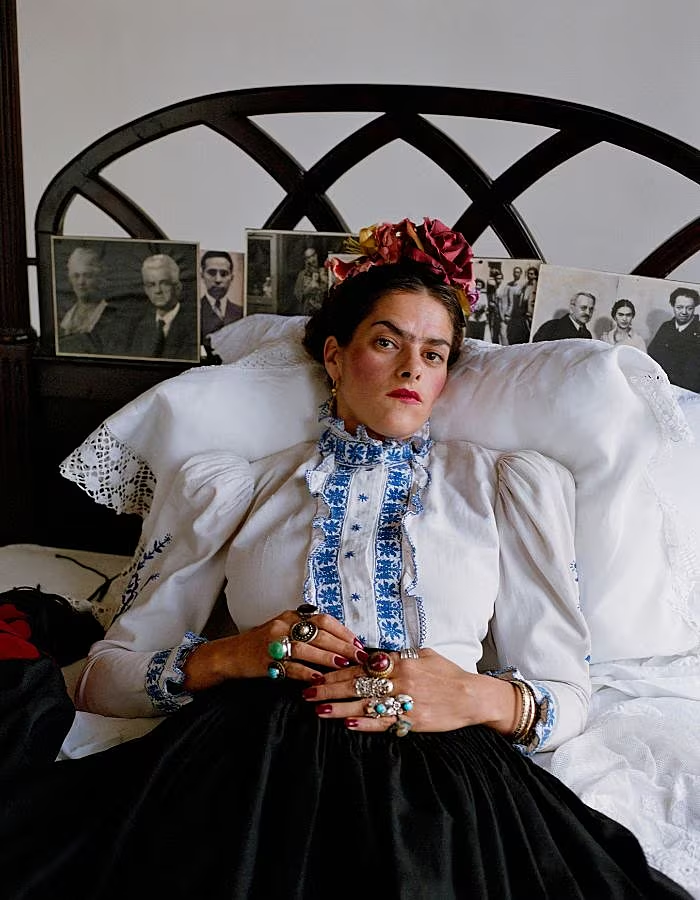
Being Frida, London 2000. © Mary McCartney. Courtesy of the artist.
The exhibition celebrates Kahlo’s lasting impact on women artists. Kahlo’s work is paired with artists such as Kiki Smith, Judy Chicagom Ana Mendieta, Yasumasa Morimura, Martine Gutierrez and Berenice Olmedo, creating visual dialogues that address issues of race, gender, sexuality and disability. One of the most poignant is Mary McCartney’s photograph of artist Tracey Emin, Being Frida, from London in 2000. Emin has frequently noted the parallels between their artistic philosophies and unapologetic approach to emotional pain.
The finale to the exhibition is the “Fridamania” room that looks at the rise of her commercial legacy; housing more than 200 objects from T-shirts to tequila bottles, Christmas tree decorations, Barbies and perfume. Also included is the 1983 publication of Hayden Herrera’s biography of Kahlo, now translated into over 25 languages, which further solidified Kahlo’s iconic status. It’s a must read for anyone interested in her legacy or to peruse before a visit to this multi-layered exhibition.
Need to know: Frida Kahlo: The Making of an Icon is at the Tate Modern London until January 3, 2027. @tate
SEE MORE: Artistic License: Kim Gaffney