

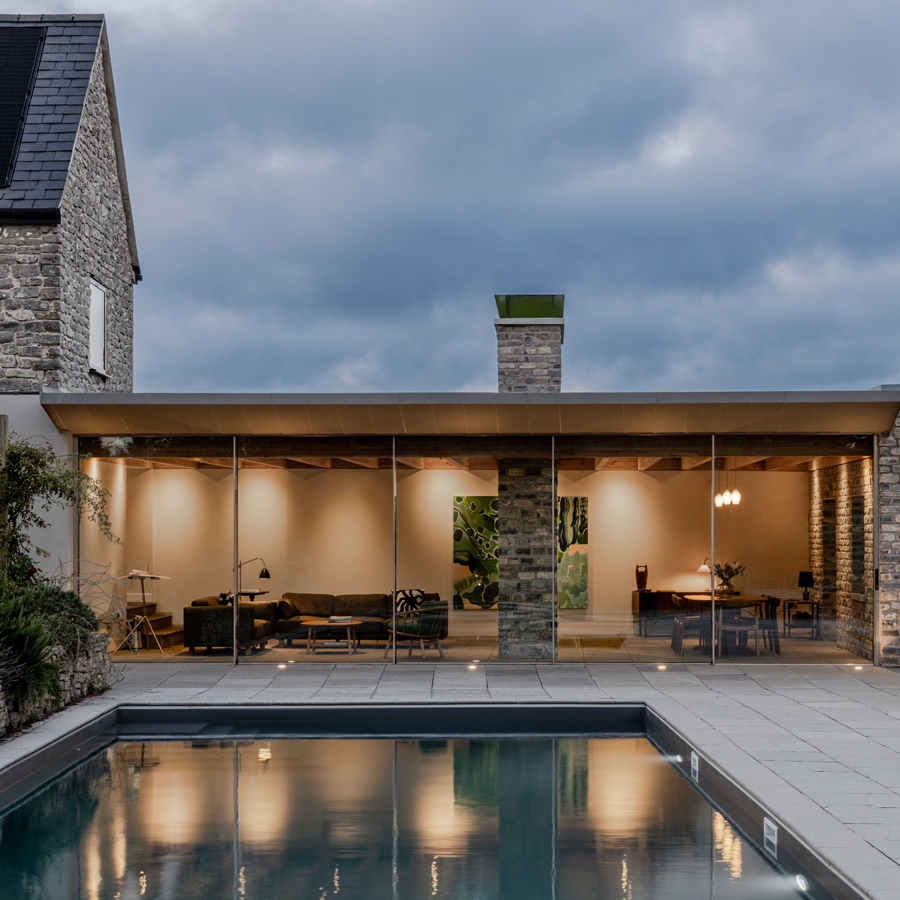
Forgeworks Architects transformed this farmhouse and barn into a functional family home, seamlessly and sustainably …
In the rolling Mendip hills of Somerset, not far from Bruton and Castle Cary, is a sophisticated example of how a 19th-century farmhouse and its adjoining barn has been renovated and combined for a young family. The project was implemented by Forgeworks Architects who fulfilled their clients’ desire for a unified family home that respected the existing vernacular while resolving practical issues of flow, warmth and liveability.
When the owners first approached Forgeworks, they weren’t looking for grand statements or architectural acrobatics. What they needed was more intangible: a sense of cohesion. Their home consisted of a historic farmhouse and a poorly converted barn, separated by a drive and lacking any meaningful connection. The barn was underused, plagued by damp and impossible to regulate thermally. The farmhouse retained its charm, but was beginning to feel isolated from family life.
Forgeworks’ solution was to introduce a new yet modest “link” building. This proved to be transformative – and created a formal living and dining space – now the heart of the home.
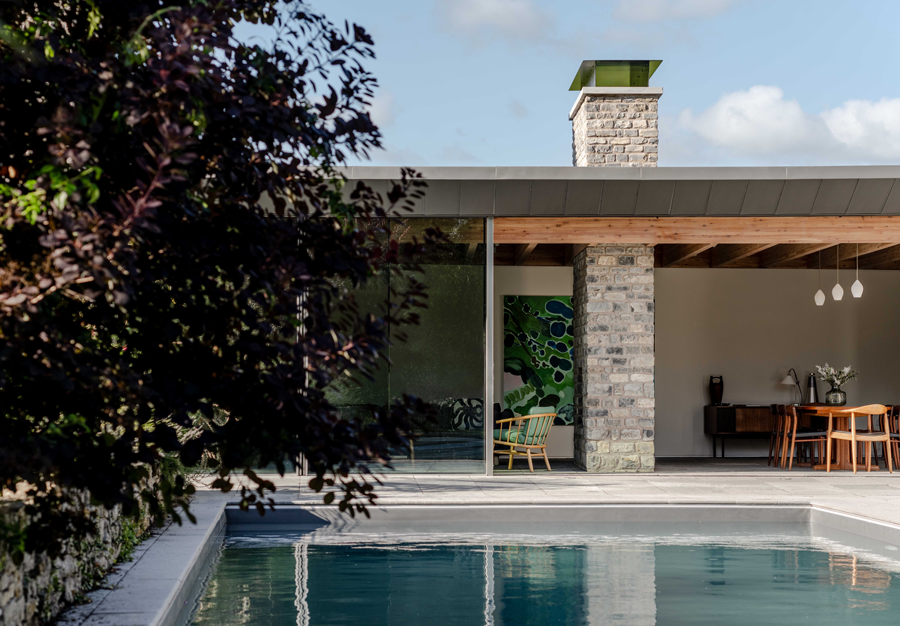
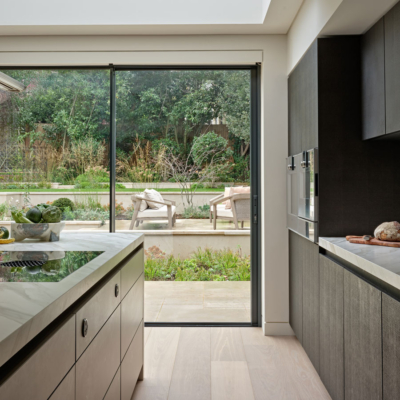
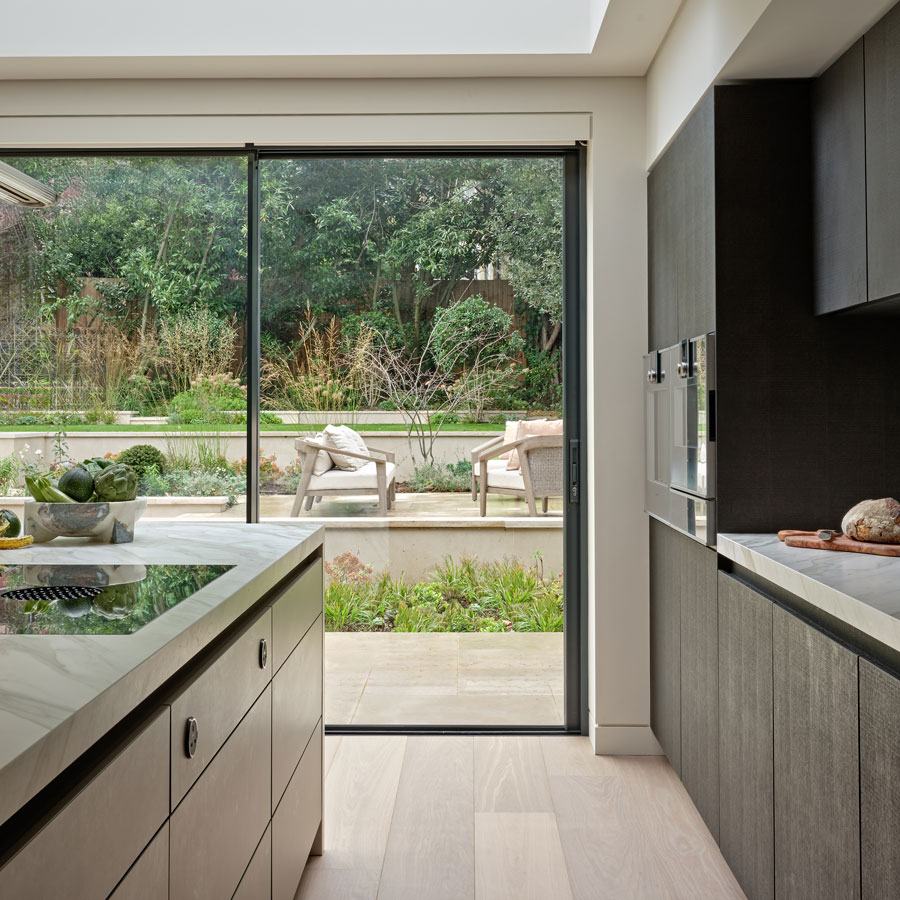
As for the design, it’s quiet and precise, emphasising texture, proportion and natural light over architectural bravado. Clad in locally quarried blue lias stone and topped with a gently pitched roof, the link building is a study in restraint. Five glazed panels run its full width, sliding open to connect both the farmhouse and barn to a south-facing terrace and swimming pool.
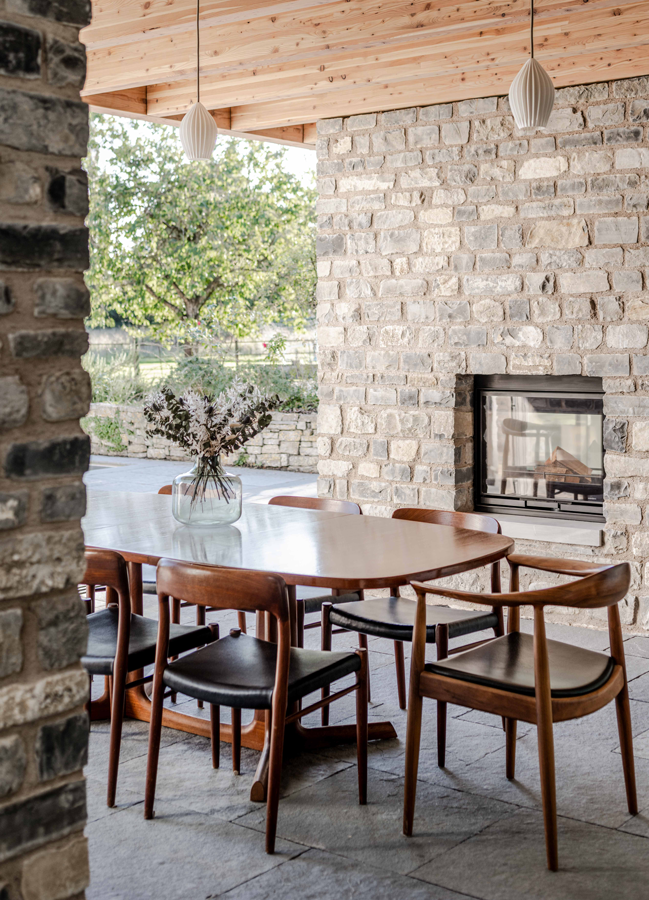
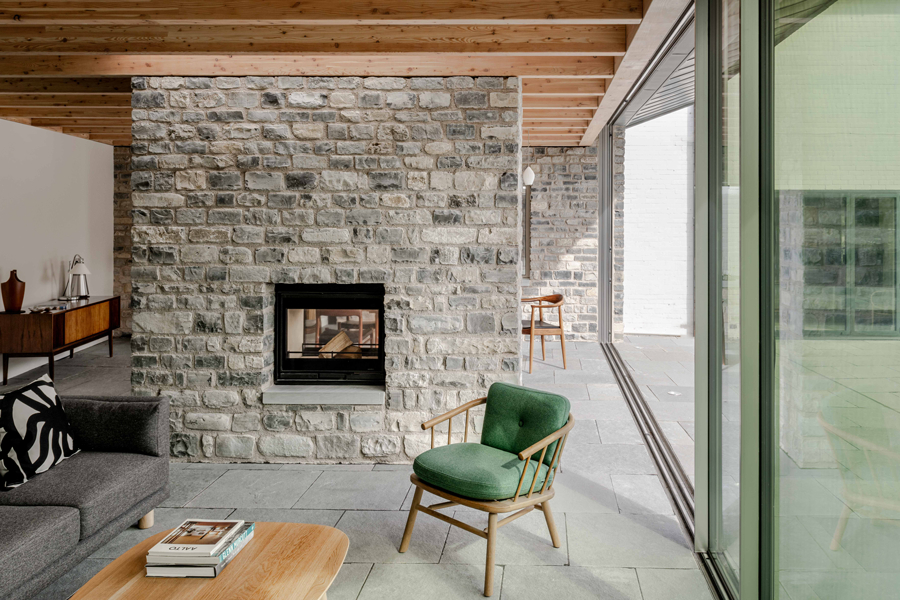
The sense of openness is immediate thanks in part to a freestanding chimney that bisects the room and houses a dual-aspect log burner. The spruce-lined ceiling is laid out in harmony with the glazing joints and chimney placement. Where glass meets stone, the joinery is subtle and deliberate.
“The clients had a strong appreciation for American mid-century architecture, stonework, articulated rooflines and open hearths,” explains Chris Hawkins of Forgeworks. “Those themes helped shape the new structure, rooted in craft.”
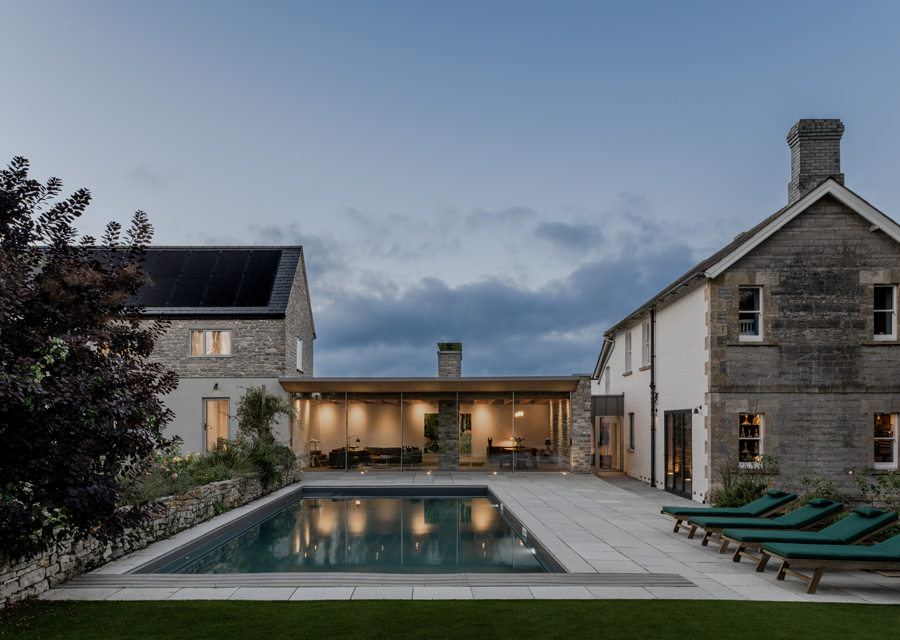
He describes the house as “engineered but calm” which could describe Forgeworks’ design philosophy: to let materials and light do the talking, rather than resorting to stylistic gimmickry. Sustainability without shouting about it.
The barn was gutted and retrofitted to meet modern standards of thermal efficiency, and now houses bedrooms, bathrooms, a study and a generous playroom, and a garage for the owner’s collection of vintage cars. Solar panels and battery storage systems now powers the entire property. Inside the link building, the stone and limestone flooring helps regulate temperature throughout the year, while concealed blinds provide shading in summer.
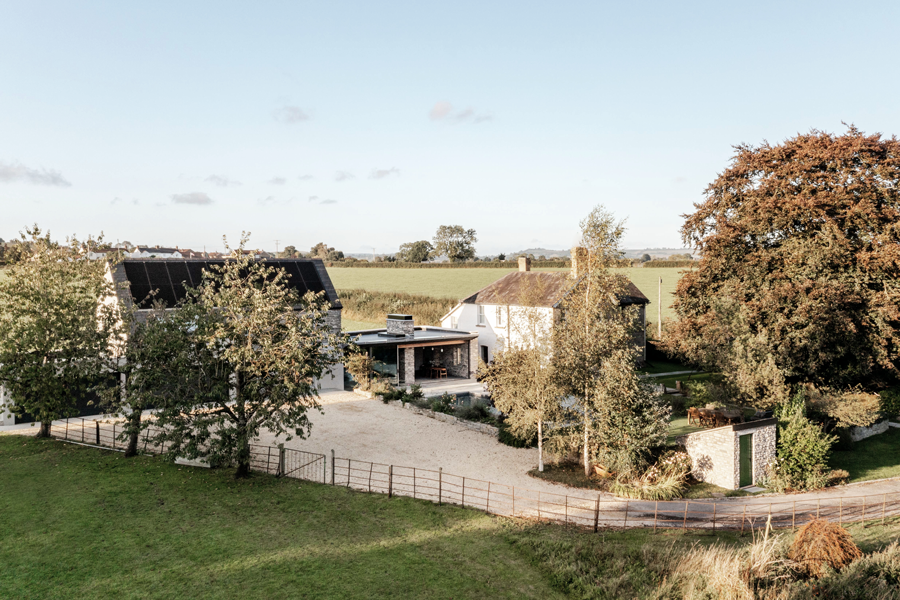
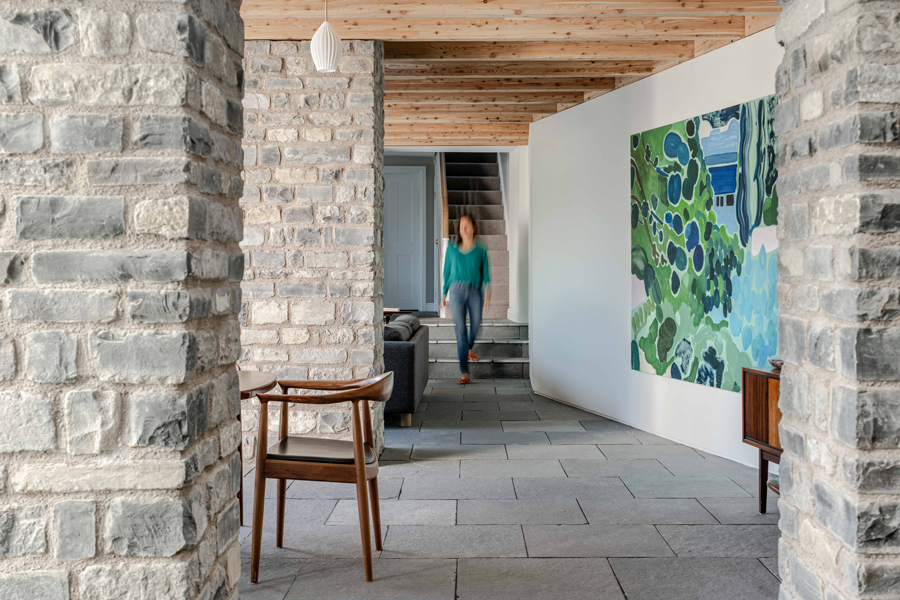
Spatially, a new 25-metre-long axis now connects the entire home, running in a straight visual line from the farmhouse kitchen through the dining space to the barn’s far wall. Combined with the full building footprint, the house now stretches over 50 metres in total. Where once there was disconnection and damp, there is now a continuous flow of space, light and air.
A window placed between the new and old buildings is a reminder of the past, framed through the present. “We believe that architecture is at its most powerful when it responds to the place and the people it’s made for,” explains Hawkins. “It should help life happen more easily. And in a way that’s beautiful, but also natural. Lived-in.”
Top tips exclusively for THE GLOSS on renovating and linking two buildings, from Chris Hawkins, Forgework Architects:
1. Don’t think of long corridors The size of a linking structure can vary from a few meters to 15m like this project, which we called the House of Blue Lias. When you elongate a home, try to avoid long corridors. Think of a series of inter-connected spaces that draw your eye as you pass through. Views, lighting and interior styling all come together to bring a great experience, not just thin dull passageways.
2. Use alignment to bring clarity When buildings evolve over time, the layout often feels muddled. A strong internal axis, clear views between rooms, and thoughtful positioning of doors and windows can help everything fall into place. That spatial legibility is something you feel every day.
3. Find the timeless balance in materials Rather than try to contrast the old buildings, we used local blue lias stone again in the new link. It wasn’t about matching, but about continuing a material language that already made sense on the site. That decision grounded the whole design, and allowed us to insert more subservient modern materials like glulam and stainless steel.
4. Think about performance as much as appearance In rural homes, period houses and barns are often beautiful but cold, dark and damp. Enhance the character where possible to make considered wider specification and fabric choices to ensure the overall end product has longevity. Homes needs to comfortable!
5. Keeping things minimal helps celebrate the existing as well Often applying a lighter design approach and using more glass in linking structures enables the architecture to have more harmony. Avoid heavy or contrasting materials that are at odds with the overall feel. We opted to use minimal framed glazing on a sliding assembly to maximise access and a refined elegance.