This Efficient Home Is The Epitome Of Sustainability
By The Gloss
See inside this compact, smart and sustainable house extension designed by Robert Bourke Architects …
“Designing homes that utilise all of the existing space available is actually one of the most sustainable approaches to renovation,” say Robert Bourke Architects, who say their clients are increasingly focused on climate change.
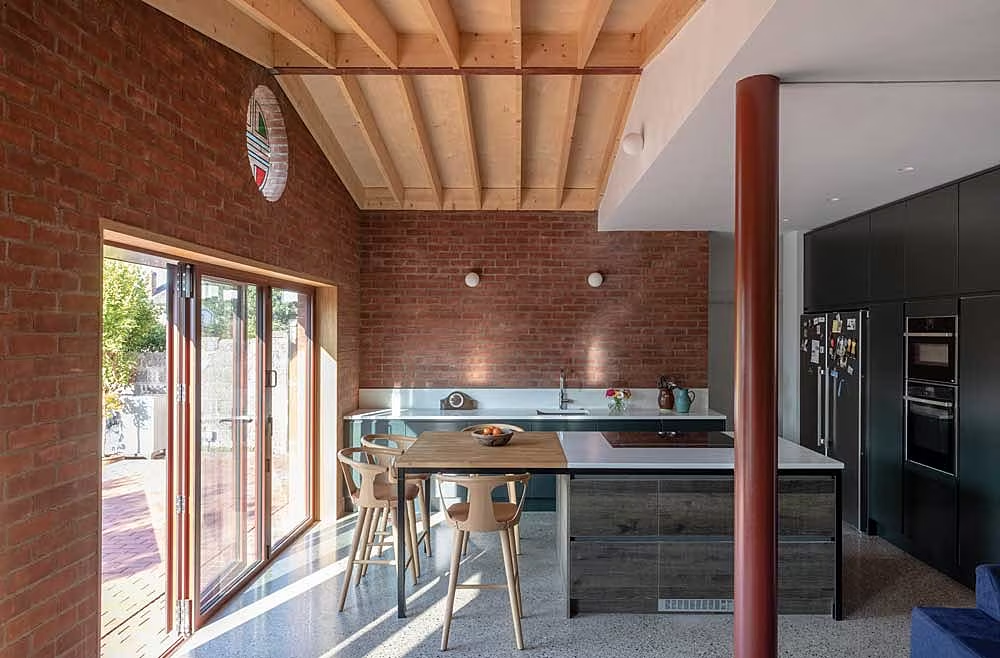
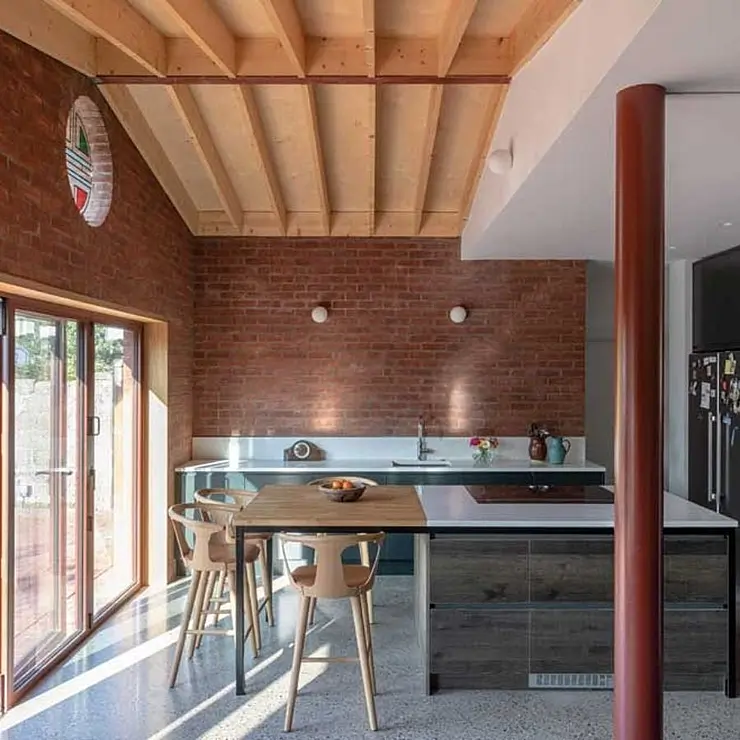
In the case of this 1930s semi-detatched home for a father and his two growing sons, the new extension was carefully crafted to support and enhance the existing house and how the family use the space. The reconfigured ground floor now has a much better flow; accommodating a new kitchen, dining and informal living space, as well as a utility room.
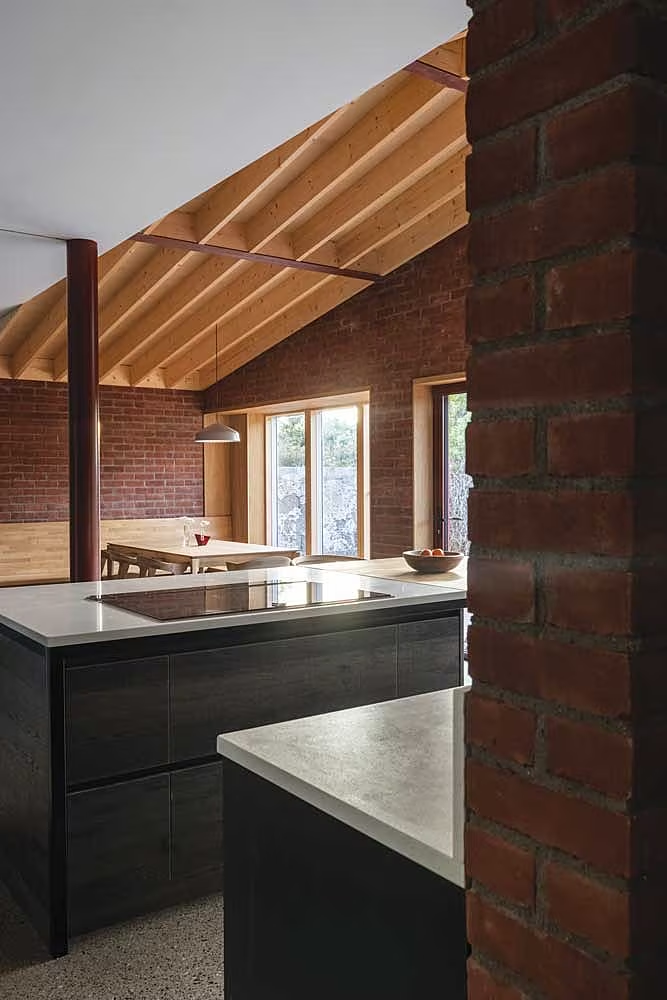
To find space for a new bedroom and all-important home office, a slender two-storey volume was added to the side. A high-level of energy efficiency was a priority for the owner. The architects achieved a A3 BER rating by upgrading the thermal performance of the floors, walls and roof of the original house, building the extension to new build standards and installing a heat pump. Equally critical was the choice of materials in the form of embodied carbon. Brick was used here both inside and outside for its longevity. Its high thermal mass capabilities absorb heat during the day and slowly release it at night. The roof structure is made from Irish spruce that contains stored carbon.
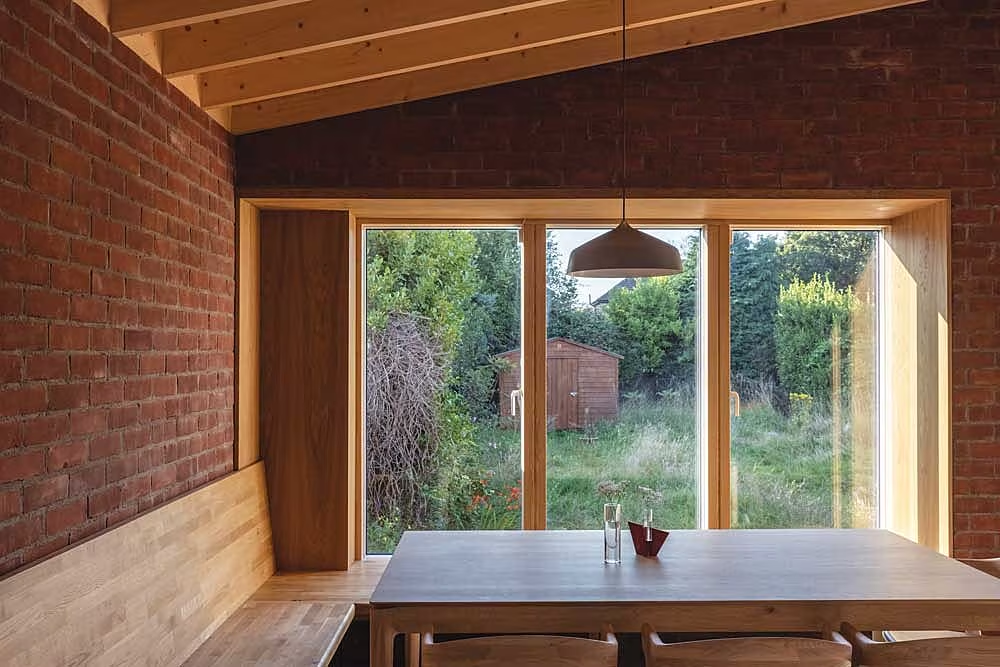
Renovating an older house is a balancing act between retaining character and achieving more energy efficiently. The new addition takes the form of a single-storey, gable-fronted extension with a pitched zinc roof. High-performing triple-glazed windows are part of the overall energy strategy for this home.
SEE MORE: Interior Designer Zoe Willis’ Townhouse In South London