

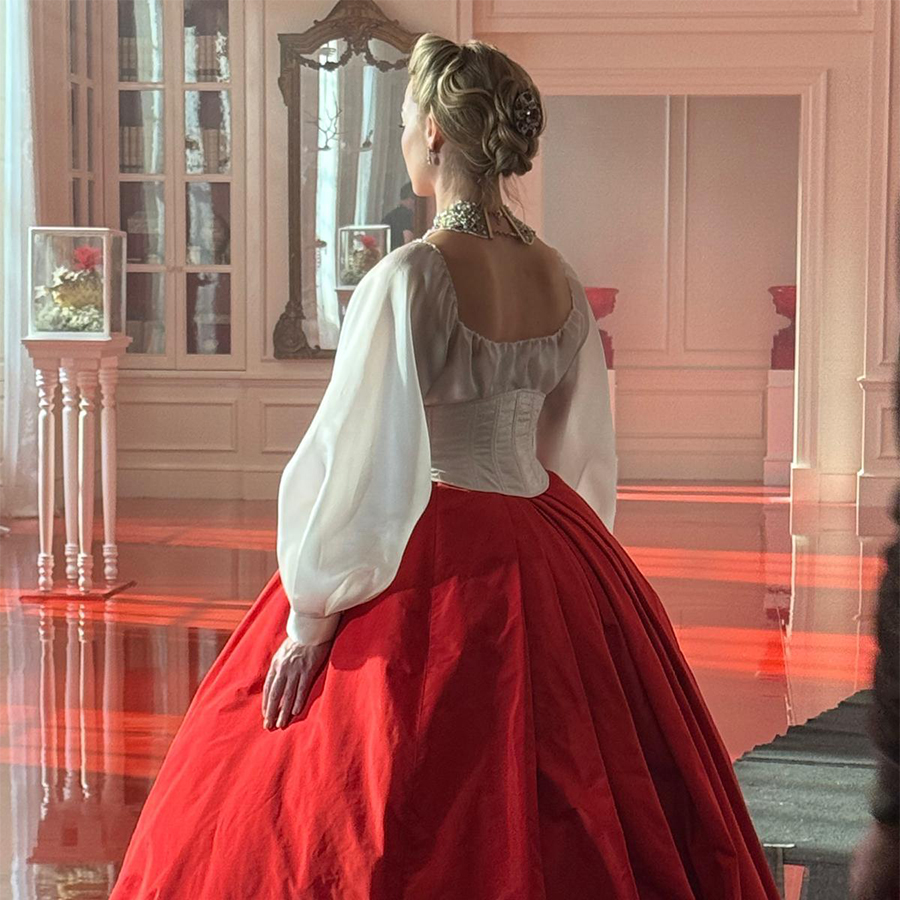
Hair and make up artist Siân Miller discusses the looks on Emerald Fennell’s “Wuthering Heights” …
We talk to Siân Miller, the hugely experienced hair and make-up designer for Emerald Fennell’s “Wuthering Heights”, and find out what it’s like to work on a “fever dream” movie like this – and one of the blush shades used to create Margot Robbie and Jacob Elordi’s glow …
On working with Emerald Fennell …
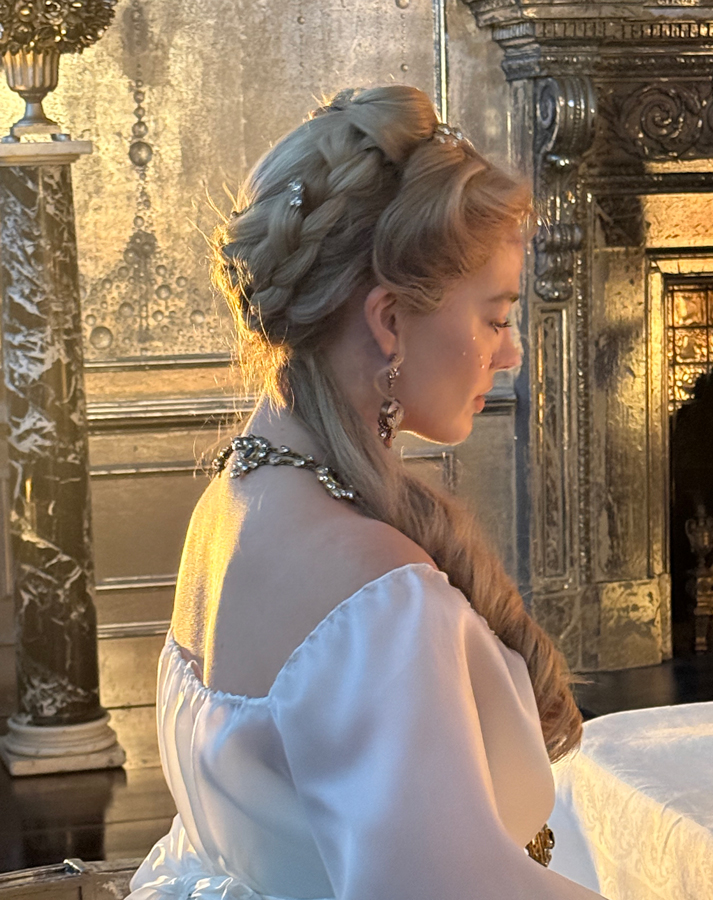
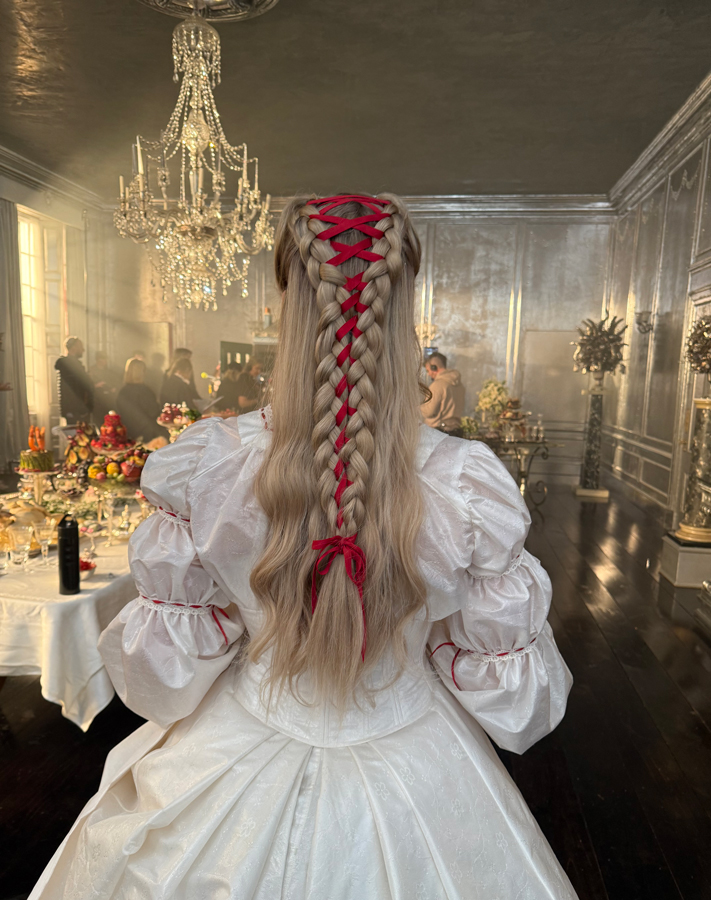
“My starting point was Emerald and the script, of course. The moment she approached me about doing “Wuthering Heights”, I said yes please and thank you! Emerald’s scripts are always full of a lot of detail, and this one in particular oozes with detail, especially about hair. And then with Emerald’s script comes an amazing Emerald Fennell moodboard, which just contains a plethora of images, you know, from brutalist architecture, fashion, photography, film, the countryside, food, nature, fine art, sculpture … I mean, it’s got everything in it. And all that was incredibly evocative of the world that I was finding my way into. From there on, I had an early meeting with Emerald, Jacqueline Durran the costume designer and Suzie Davies the production designer, because they’re all on board a lot sooner than I am. So I was able to go into the studio, meet them and see where they were at. It’s all about trying to find the key to the door into Emerald’s mind, and to find this ’zone’.
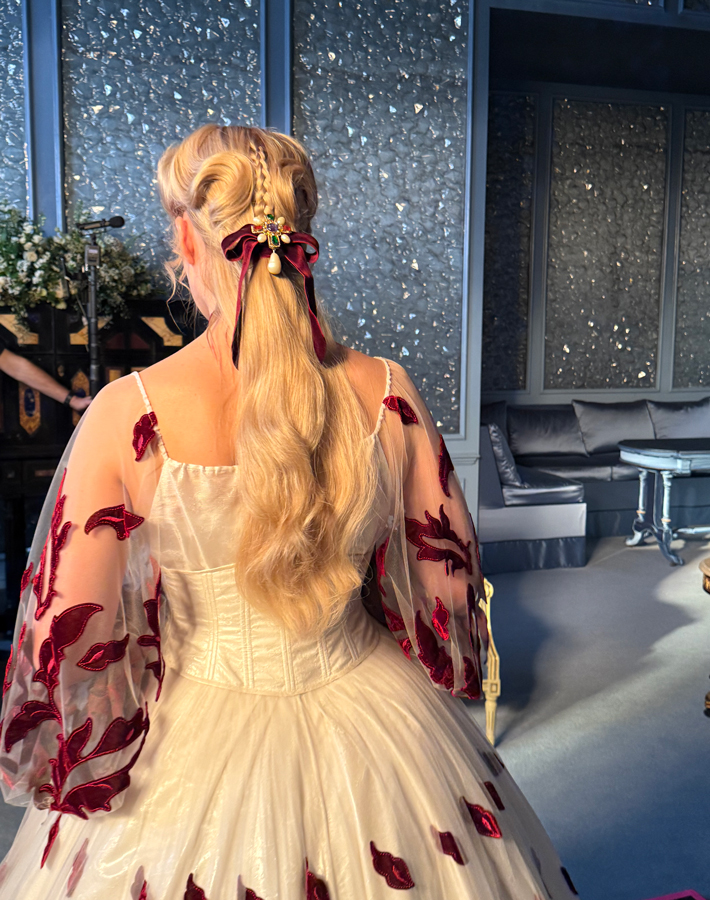
So that was the start of it. I’d learned this shorthand to a degree when I did Saltburn with Emerald. It is a different world, and this was a new approach. And then I amassed a ton of images as well, which I kept on a secure Pinterest moodboard. It was just a case of trying to find my feet in this world, and I worked very closely with Jacqueline Durran, particularly for the Cathy looks, because of the story arc, the way she had broken it down really into three acts. I very much took her lead with that, what Emerald and she had discussed prior to my being onboard. And we worked together to try and make everything that I did harmonious with what she had set out to do. Which I think works really well – it was a really true collaboration.
When you’re a hair and make-up designer on Emerald Fennell’s films, you never feel that that what you’re doing is standing alone. It very much feels like it’s fully integrated with all the creative heads of departments.

Everyone had said, imagine this as if it is through the imagination of a 14-year-old girl. Almost fairytale-like: it’s kind of a sort of mash-up of melodrama meets a pinch of some kind of historical reference, but not necessarily pinned to a date. It was really just being able to choose from this smorgasbord of resources that we have out here in the world, and to introduce elements that we liked, and to put them in our world. I don’t think I’ve ever worked on anything that offered quite so much freedom to introduce just whatever – it was all about what suited and what worked, rather than going to a defined period in time, there was certainly none of that. I mean, there were certain eras, like Old Hollywood, that we dipped into, but it was a real mishmash.
It is very rare to get the opportunity to do something like this. And I think when you work with Emerald Fennell, the opportunity is great to really give everything a sort of backstory, if you like, a reason and a connection with the environment. When you’re a hair and make-up designer on her films, you never feel that that what you’re doing is standing alone. It very much feels like it’s fully integrated with all the creative heads of departments, and everybody feeds off each other. Everybody’s very encouraging and I think that shows on screen.”
On working in film …
“Is this what I always wanted to do? Honestly, no, originally. I went to art school for three years and I ended up studying interior architecture and design in the mid 1980s. I’d done an art foundation course, and then did two years of a degree in interior architecture and design. And then my work was always quite sculptural, and I think the reason I didn’t continue with it is because the building regs were just not appealing to me, staircases and things like that … So as a frustrated art student in the ’80s, I didn’t know what to do. I’d always been fascinated with hair, and I’d always thought, I bet I could do that. Then it was a tearful conversation on the phone with my mum (who I’ve got to give a lot of credit to for this), who said, ‘You love film, you love fashion, fine arts, the cinema. What about being one of those make-up ladies?’ At the time, it was a kind of job that other people did.
And then, all credit to the BBC: they said you have to go to the London College of Fashion and study hair. I was so determined to do it. So then I went to Vidal Sassoon to train to be a hairdresser. That was really one of the most valuable parts of my training. Another three years later, after London College of Fashion, I went straight into British television. I was very lucky. I’ve now been doing this for the best part of 35 years, and it’s been great, fantastic. I can’t imagine doing anything else now. I feel like I’m only just getting going. I’ve done some amazing projects, it’s been a great industry to work in and I’ve really been lucky to really never stop working.
For the time, you know, my great late dad and my mum, still with us, were really, really into the arts. And I think it’s so important to encourage our children, and now especially. Both my children are hoping to go into the arts, but I do feel that there’s not quite enough support for that, because – what an industry to work in. I love it.”
Throughout the narrative, we’ve also used that blush to display those moments that are evocative of anxiety and arousal and distress and bitterness and all the emotions that they run throughout the film.
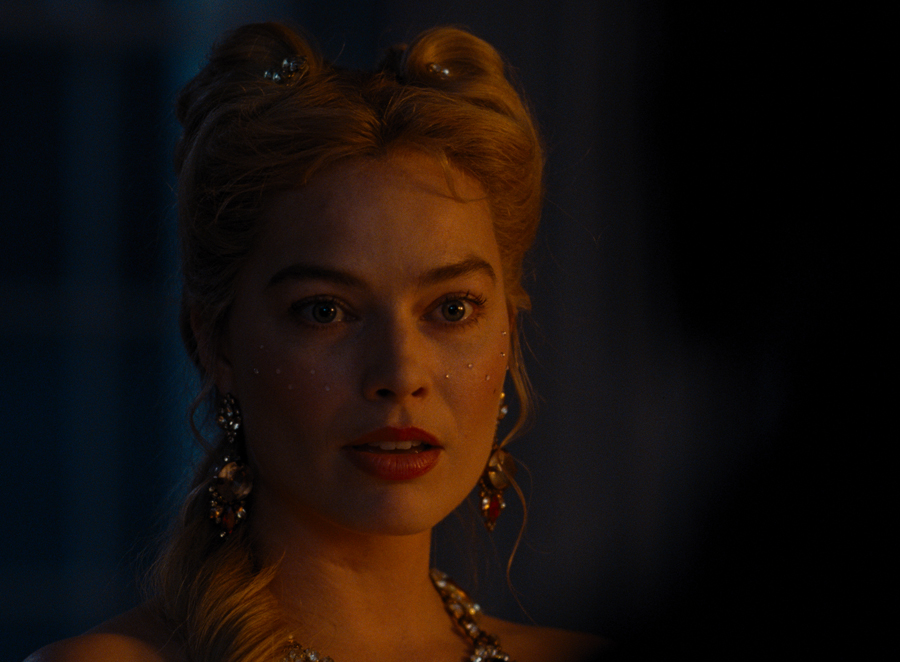
Photograph by Japan Buitendijk. Courtesy of Warner Bros.
On the beautiful blush …
“I have to give credit to Nana Fischer, who is Margot’s personal make-up artist – she obviously had all the tools in her kit that she relies upon for skincare etc. In terms of specific products, Chanel was definitely a big factor, with Margot, and across the board. I’m a big fan of their bases. I loved the No1 de Chanel Lip & Cheek Balm in Berry Boost. But, of course, it isn’t one size fits all, and to create, you dip into this and that, whether it’s what Nana did on Margot, or I did on Jacob …
The ethos behind the look for “Wuthering Heights” was that sort of flush, the kind of outdoors flush. That’s the weatherbeaten, slightly stylised, look but that kind of idea that, you know, the cheeks are alive. And then throughout the narrative, we’ve also used that blush to display those moments that are evocative of anxiety and arousal and distress and bitterness and all the emotions that they run throughout the film. And I certainly employed it a lot when I’m making up Jacob Elordi. It was something that I used, for example, when he’s at his most distressed, and he’s really florid.”
On that beard …
“We shot a lot of the film in story order, so far as we could. It’s not always possible, of course, to do that. A lot of directors and actors love it – it’s a great way to film, if you can afford to do it. I started off with Jacob’s own beard, which is fabulous. But, of course, there’s the point at which I had to shave it off and just leave him with the fabulous sideburns, knowing that we’d have to go back to the location on the Moors, and I’d have to replicate it. I bought an amazing make-up artist over from Italy, Roberto Pastori to do this because he is better than I am, and he’s ten times faster than me.
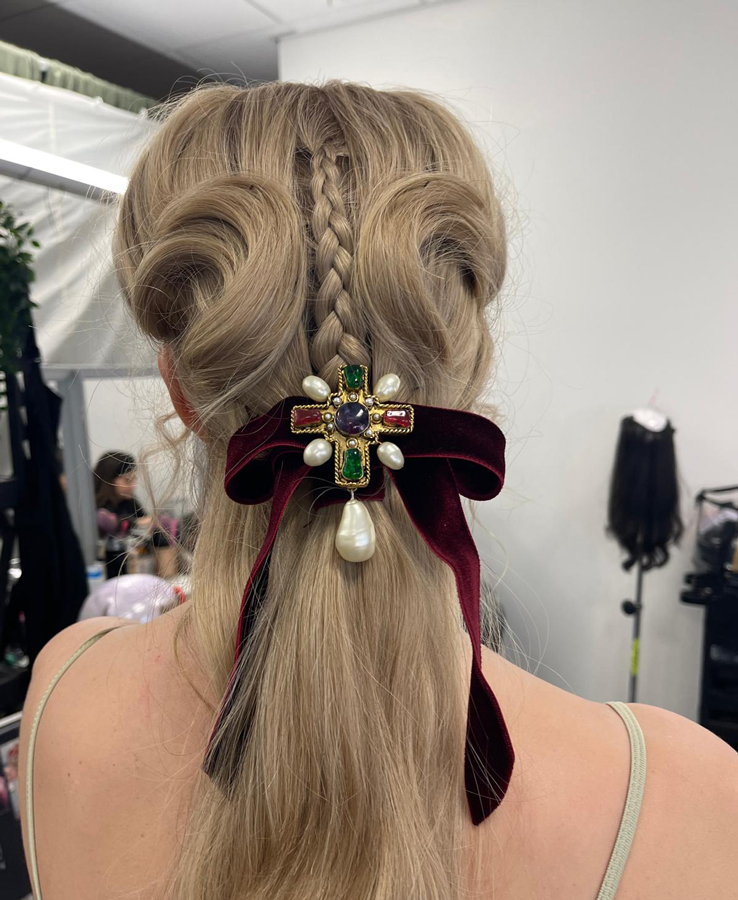
And of course, along with everything you do in hair and make-up design, you know, you have to be mindful of the clock. Because it’s not an infinite schedule – and filming days cost a lot of money. A big part of my job is not just to come up with the looks and manage my team, bringing all this to life, it’s also to make sure it’s happening on time. And within the filming day, we had lots of changes, with Margot’s hair for example. If you go into it blindly and spend hours, you’re holding up the unit. It’s about problem-solving: how can I deliver the most dramatic changes, the most wonderful looks, but within the time allowed? So you have to bring all this into the mix.”
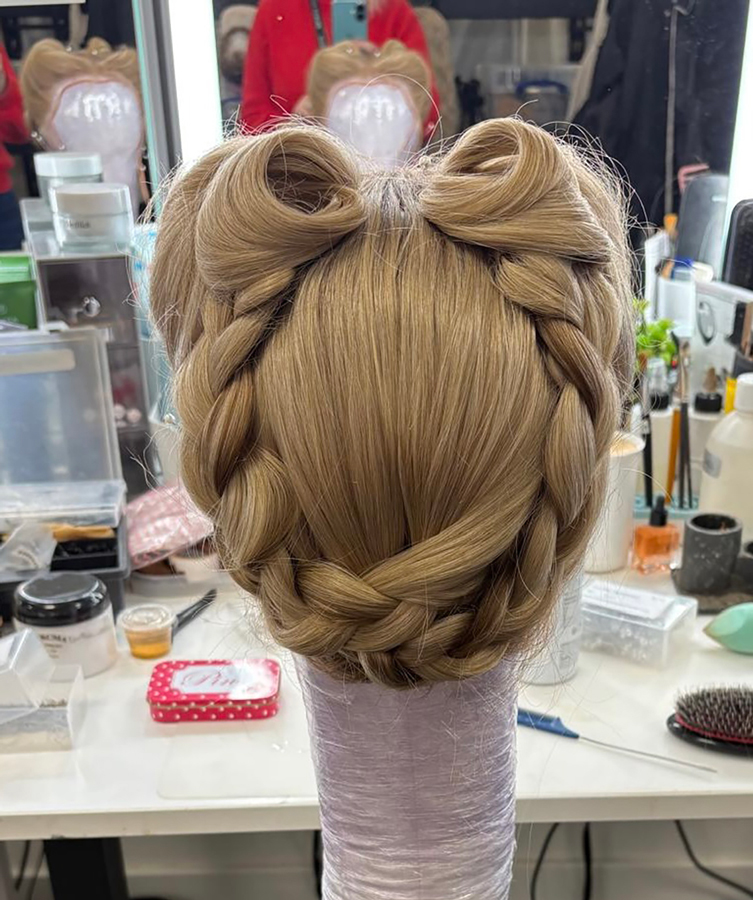
Key tools
“As well as hair tools, combs and pins, make-up artists love to decant. So even if they’re reduced to a minuscule, I’ll have a generic palette of colours that you’d take onto the Moors if you were painting watercolours. It’s the spectrum of colours that you can create pretty much anything with, the kind of make-up that’s very versatile – it could be a lipstick, it could be a bruise, it could be foundation. These colours can serve many purposes. And I think that’s what’s great about the old fashion training, and if you’ve got an art school background, as my team would have, you can rely upon those, your artistic skills and colour theory to turn these products into what you need.”
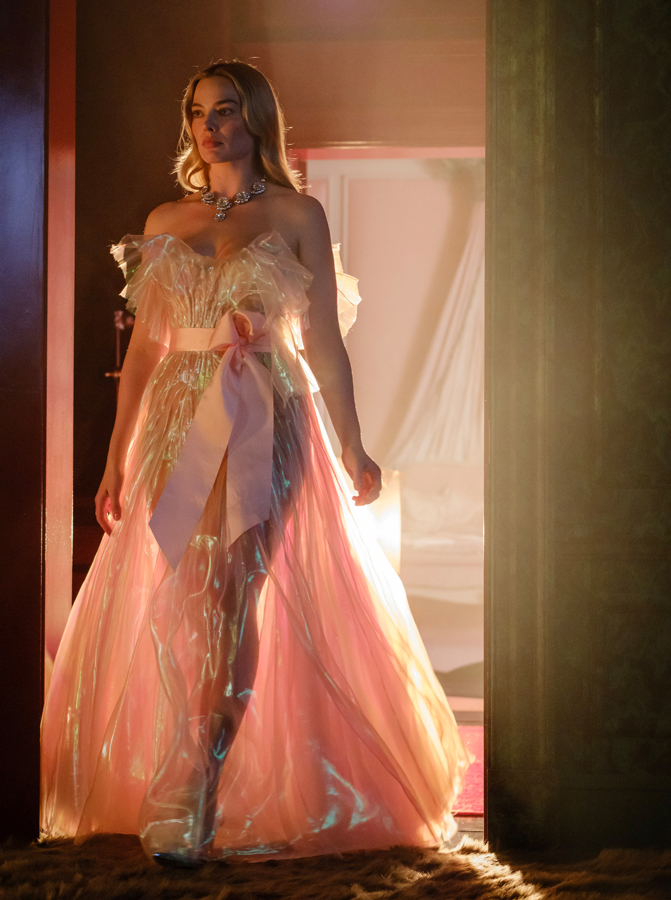
Photograph by Japan Buitendijk. Courtesy of Warner Bros.
The make-up looks in films that have inspired me …
“I love the old Douglas Sirk movies. I love films like Mildred Pierce, I love that era. I loved Baz Luhrmann’s Moulin Rouge, I loved the looks in that. Fabulous. I grew up on Old Hollywood, you know, Singing in the Rain, West Side Story – I remember watching that as a very young child. On the Town, An American in Paris. The old Gene Kelly films. And then, of course, the kind of neo-noir films like Taxi Driver, Casino … So many.” @siantmiller