

Before the National Gallery of Ireland’s landmark exhibition on Pablo Picasso opens, there’s time to book a weekend in some of the artist’s favourite haunts for some winter sun ...
“Picasso’s influence is immeasurable. By focusing on the places in which he chose to create, Picasso: From The Studio offers a unique opportunity to connect with his artistic journey in ways we have not seen before,” says Dr Caroline Campbell, Director of the National Gallery of Ireland. This hotly anticipated exhibition sheds new light on his most celebrated works which were profoundly shaped by his surroundings. Picasso saw travel not as an end in itself, but an enriching process to develop his art and perspective on the world. Following in his footsteps is a chance to visit some idyllic places.
Malaga: A trip to Malaga is where any itinerary should begin; Picasso was born there in 1881 and lived in the city until 1884. The city’s Picasso Museum is a gorgeous spot in the Old Town that captures the artist’s evolving style. Spread out over two floors, the museum also hosts regular exhibitions by contemporary artists inspired by Picasso. I recommend the current Genius Loci by Farah Atassi, on until December 14.
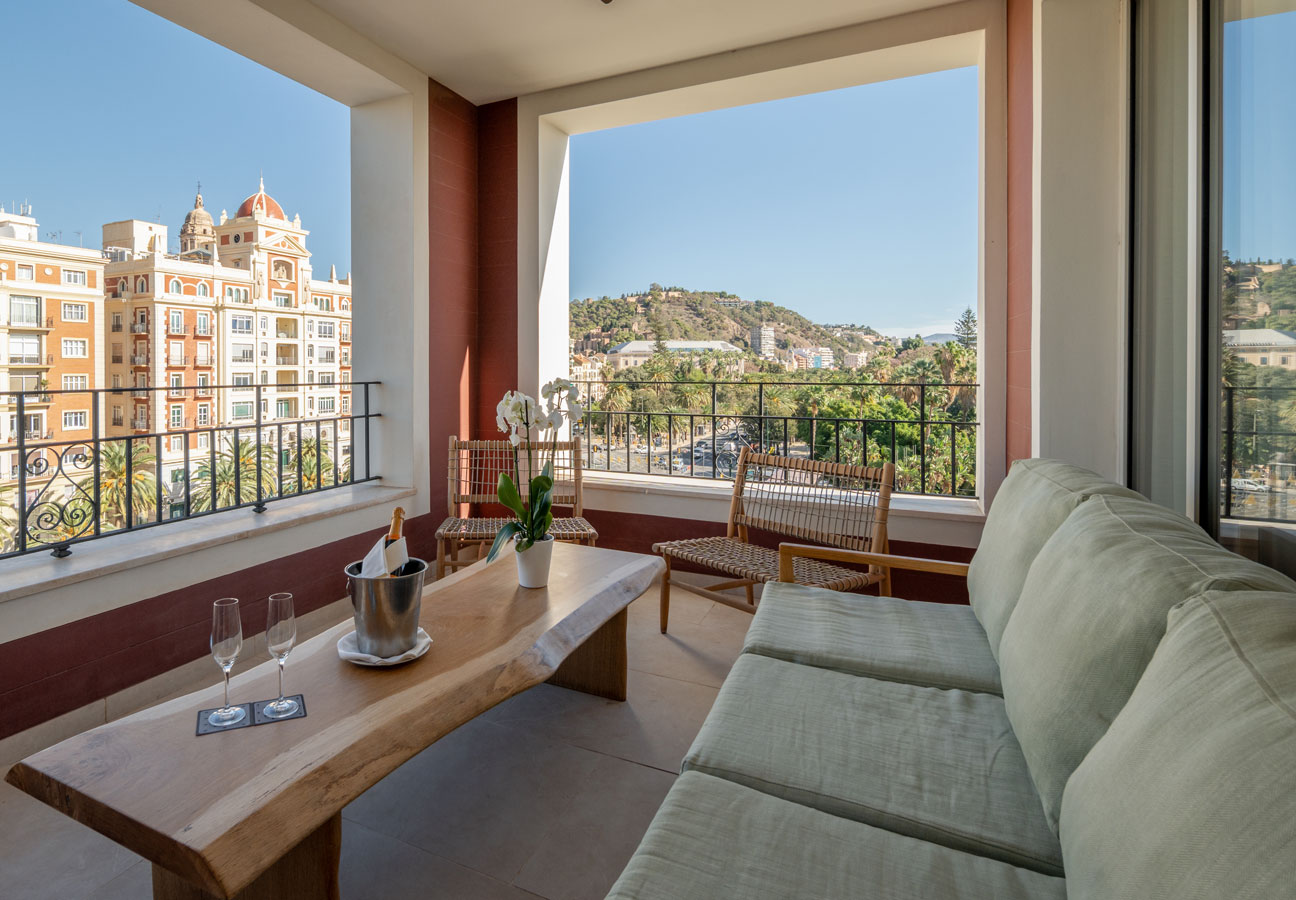
Stay: Only You Hotel, a sophisticated escape just steps from the famous Calle Larios shopping street and within easy walking distance of the port. Malaga Cathedral is a short stroll away, as are the Carmen Thyssen and Picasso Museums. For refuelling, try Central Market of Atarazanas, great for sampling local produce, or book Bodega El Pimpi and look out for its owner Antonio Banderas. I also recommend the Gourmet Terrace of El Corte Ingles where several top notch restaurants have a bird’s eye view of the city.
SEE MORE: An Insider’s Guide To Malaga

Barcelona: In 1895, Picasso and his family moved to Barcelona where he studied at the Barcelona School of Fine Arts. Working from the roof of the building in Passeig d’Isabel II where his family lived, Picasso completed his first painting in Barcelona – Rooftop of Les Cases d’En Xifre. Pablo’s father rented a rooftop attic studio for his son (still only 14!) where he painted many of his early works, the most famous of which is Science and Charity (1897), now on display at the Picasso Museum Barcelona.
Stay: You’ll find a Picasso Corner in The Serras boutique hotel with a selection of books about the artist, whose studio was on the rooftop of the building. Located in the Gothic Quarter, overlooking the Marina Port Vell, the hotel was designed by Eva Martinez in chocolatey tones. The rooftop restaurant is great for Catalan dishes, while breakfast is served in Agreste, which serves up Italian-Catalan food and a noteworthy tasting menu.
SEE MORE: Madrid City Guide
Paris: Arriving in Paris for the 1900 World Fair, Picasso settled in Montmartre where he began a lifelong connection to France. A must visit is the Musée Picasso (rue de Thorigny) where the collection includes more than 5,000 artworks, ceramics and personal papers donated by Picasso’s family. The museum has collaborated with the National Gallery of Ireland for the upcoming exhibition and has loaned many pieces including Bust of a Woman with a Blue Hat, 1944 and Woman Reading, 1935.
Stay: Môm’Art Hotel & Spa, a beautifully appointed artsy hotel near the Sacre Coeur Basilica and Moulin Rouge.
SEE MORE: An Insider’s Guide To Paris
Picasso decamped to Avignon at the outbreak of World War I, where he was inspired by the physical space of his studio to develop another way of seeing things. Inspired by everyday objects in his studio and nearby cafés, Picasso created flattened representations. This approach, termed synthetic cubism, is perfectly demonstrated by several key works from this period that feature in the exhibition. A Bottle and Newspaper (1913) incorporates old newspaper from Le Journal, Glass (1914) blends paint with sand, and Violin and Bottle on a Table (1915) combines wood, twine and nails to striking effect.
SEE MORE: What To See And Where To Stay In Avignon

Rome: In 1917, Picasso travelled to Rome to design the costumes and sets of poet Jean Cocteau’s Parade, the first Cubist ballet, performed by the illustrious Ballets Russes. During rehearsals, Picasso became infatuated with dancer Olga Khokhlova, whom he went on to marry. During his three-month stint in the Eternal City, Picasso was inspired by many sites such as Piazza di Spagna, Trinità dei Monti, Villa Medici, and Piazza Barberini which can be seen in his work from this period.
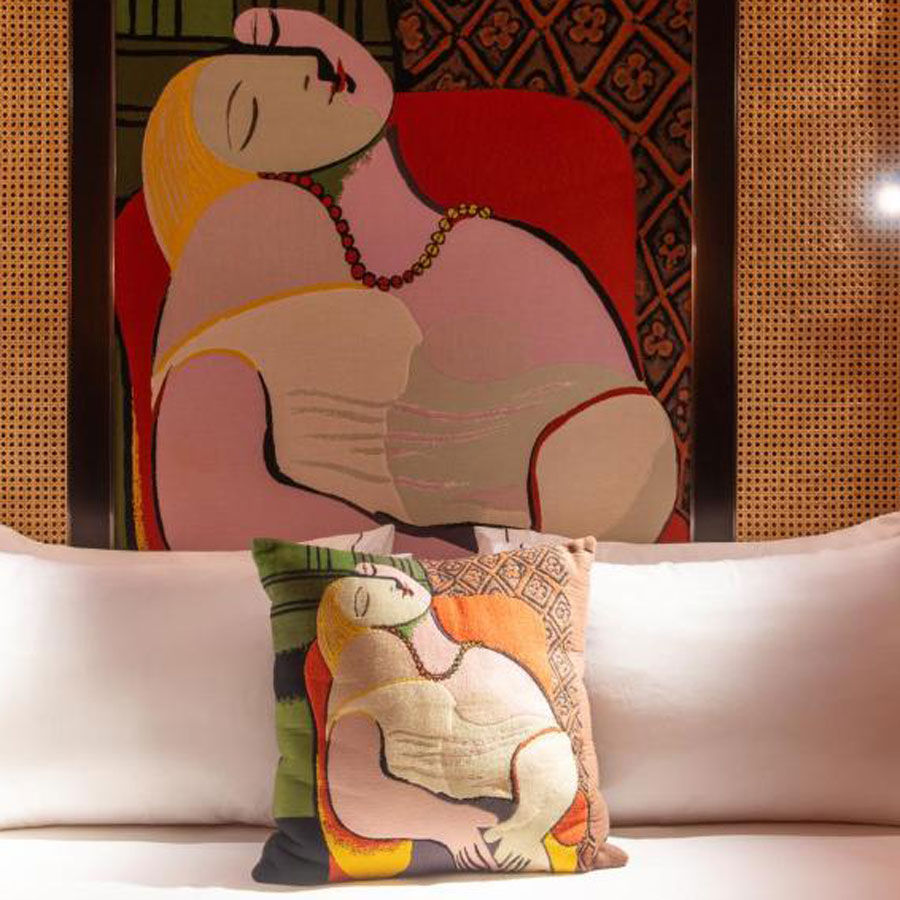
Stay: At Hotel de Russie where Picasso was a guest because of its proximity to his studio in Via Margutta. Cocteau was in an adjoining room and the pair were known to lean out of the windows to pick oranges from the garden. The hotel’s Picasso Suite, designed by Olga Polizzi, features prints and tapestry cushions decorated with renderings of popular works such as Portrait De Dora Maar.
SEE MORE: How To Spend 24 Hours In Rome
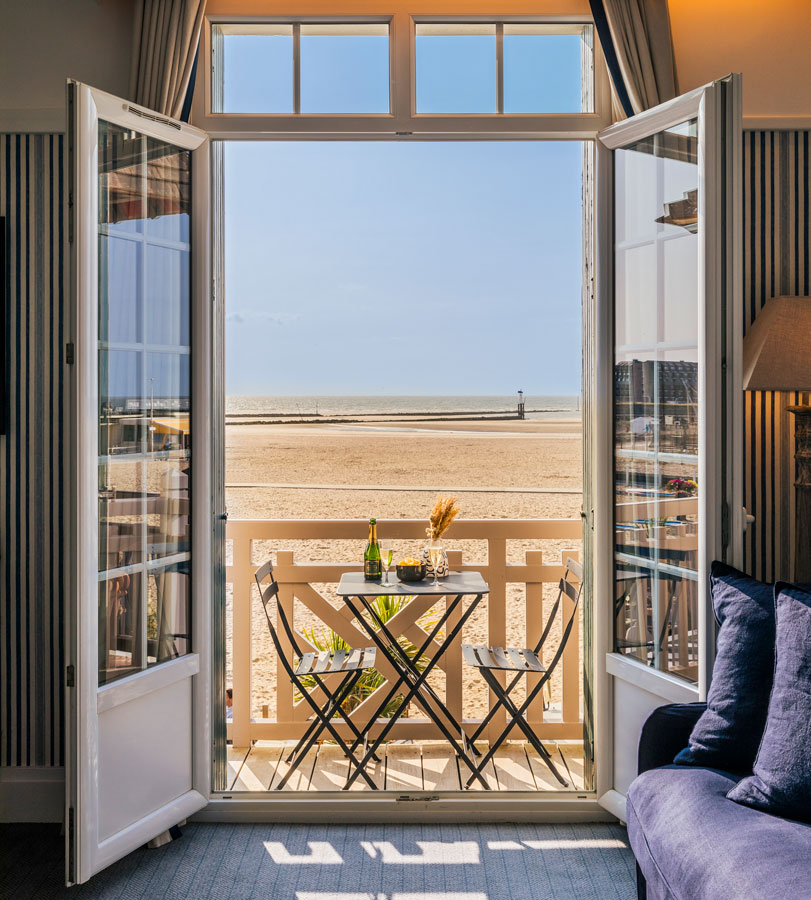
Normandy: Picasso’s studio was central to his personal life and no space exemplifies this more than the Château de Boisgeloup in Normandy, purchased in 1930. During his intense love affair with Marie-Thérèse Walter, Picasso created some of his most iconic works, inspired by her as his muse and model.
Stay: Trouvilles-sur-Mer, which has inspired artists such as Claude Monet and Gustave Courbet, and writers including Alexandre Dumas and Marguerite Duras. I enjoyed browsing the market lining the quays, sampling some of its classic restaurants such as Les Vapeurs and Chez Marinette. I also recommend Les Etiquettes wine bar and Turbulent for a Michelin-approved experience where rising culinary star Jarvis Scott is chef. Happily, the Neo-Norman-style Hotel Flaubert on the boardwalk is open year round, decorated with antiques that play on its literary affiliations to Flaubert who spent summers at the seaside town. The hotel also hosts the annual winner of the Prix Flaubert.
SEE MORE: How To Eat Your Way Around France
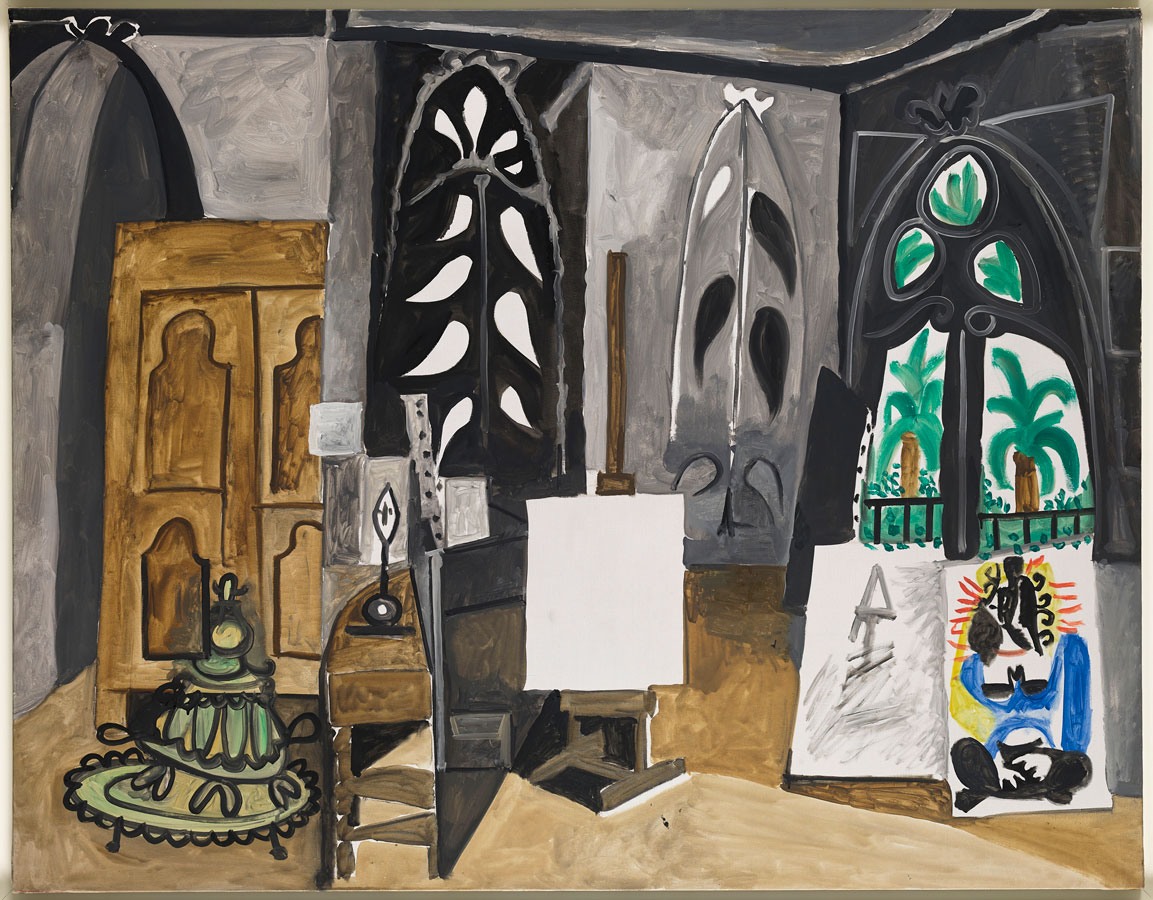
The Studio at La Californie, 1956, Pablo Picasso
Riviera: Picasso’s last residence and studio was in the town of Mougins near Cannes where he acquired the Notre Dame de Vie farmhouse and had his studio in Villa La Californie. There, he hung some of his favourite works and continued to work up until his death in relative solitude, marking a contrast to the vibrant social circles with which he surrounded himself for much of his earlier career.
Stay: The Maybourne Riviera, a strikingly modernist hotel high above the picturesque town of Roquebrune-Cap-Martin, which was inspired by the golden age of the French Riviera and Slim Aarons pictures of the Amalfi Coast. No doubt Picasso would have approved of the design – Bryan O’Sullivan created many of the stunning suites and restaurants – and the artistic influences in the décor. Dine at La Colombe d’Or that was a regular haunt for Picasso as well as other artists including Matisse, Braque, Leger and Calder. Many of their works are on display throughout the restaurant and hotel owned by the Roux family.
Need to know: “Picasso: From the Studio” is on from October 11 to February 22 2026 with admission from €5.