Ready To Roll: The Art of Decorating with Wallpaper
How interior experts are hanging wallpaper …
Walls are the biggest visual landscape in a room and therefore the quickest way to make a change. “While I always espouse the virtue of paint for a quick and affordable transformation, I love using wallpaper in my projects. To me wallpaper is fabric for the walls, it allows us to introduce texture, pattern and beautifully layered depth to a space,” says Dublin-based interior designer Helen Turkington. This sentiment is echoed by London-based Zoe Willis, “Wallpaper is never surface decoration. It is atmosphere. Used well, it anchors a room’s identity instantly, not as trend, but as intention.” No longer contained by skirting boards and cornicing, stopping wallpaper at a standard dado or picture rail height now feels passé.
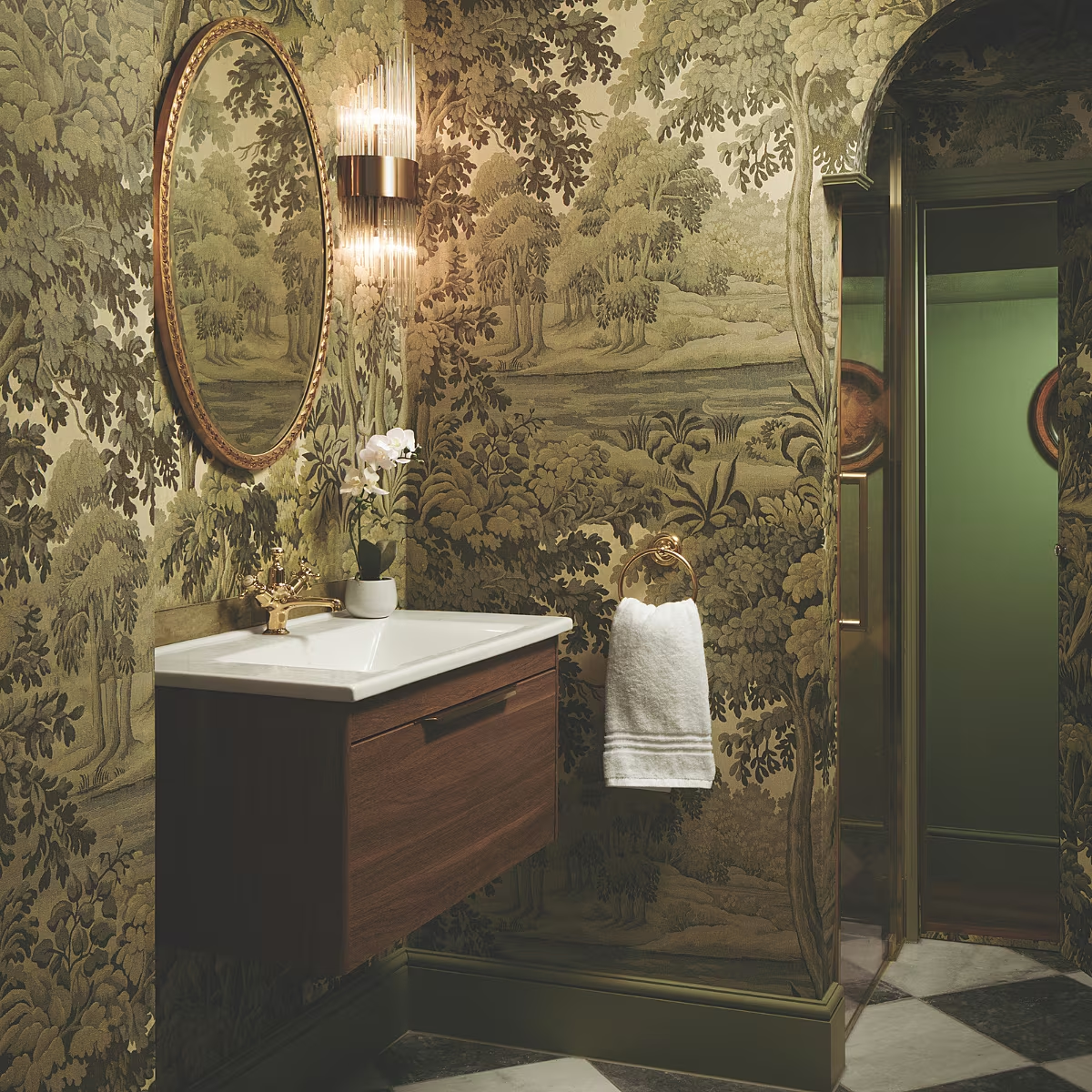
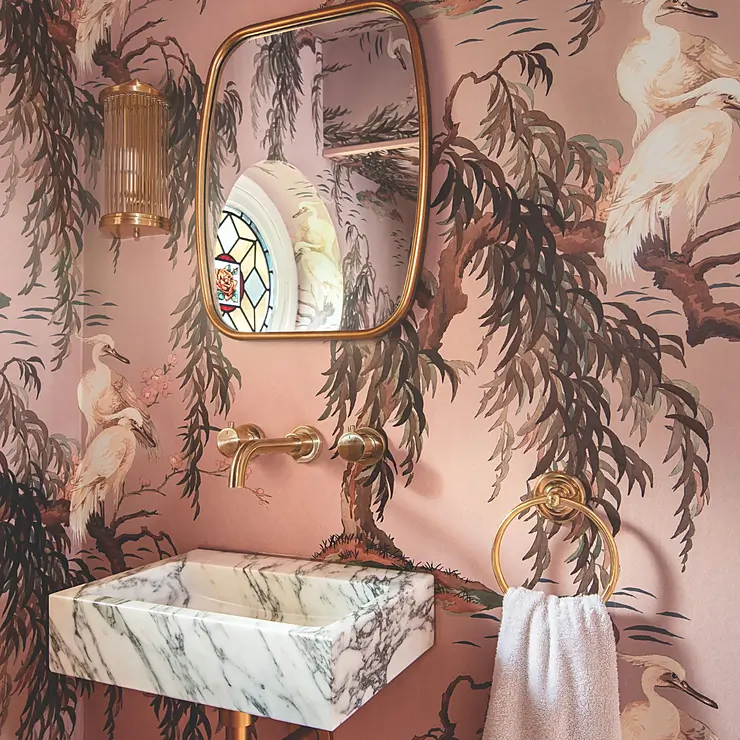
Instead, designers are wrapping paper all around the room and across the ceiling too, which gives an intimate feel that a single feature wall never quite achieves. “One of my favourite design techniques is wallpaper cocooning, the equivalent of colour drenching, where every surface, including the ceiling, is wrapped in wallpaper,” says Turkington. “This creates an incredibly cosy, immersive feel and works especially well in awkwardly shaped rooms, as it softens and blurs architectural lines rather than emphasising them.” Ruth Mothershead, creative director of Little Greene, suggests picking a highlight colour from within the wallpaper and to carry onto the woodwork or skirting rather than defaulting to white. “It removes the hard edges from a room and makes the whole space feel held together and considered, like a little sanctuary.” If you are feeling brave, bring the pattern in on the curtains too!
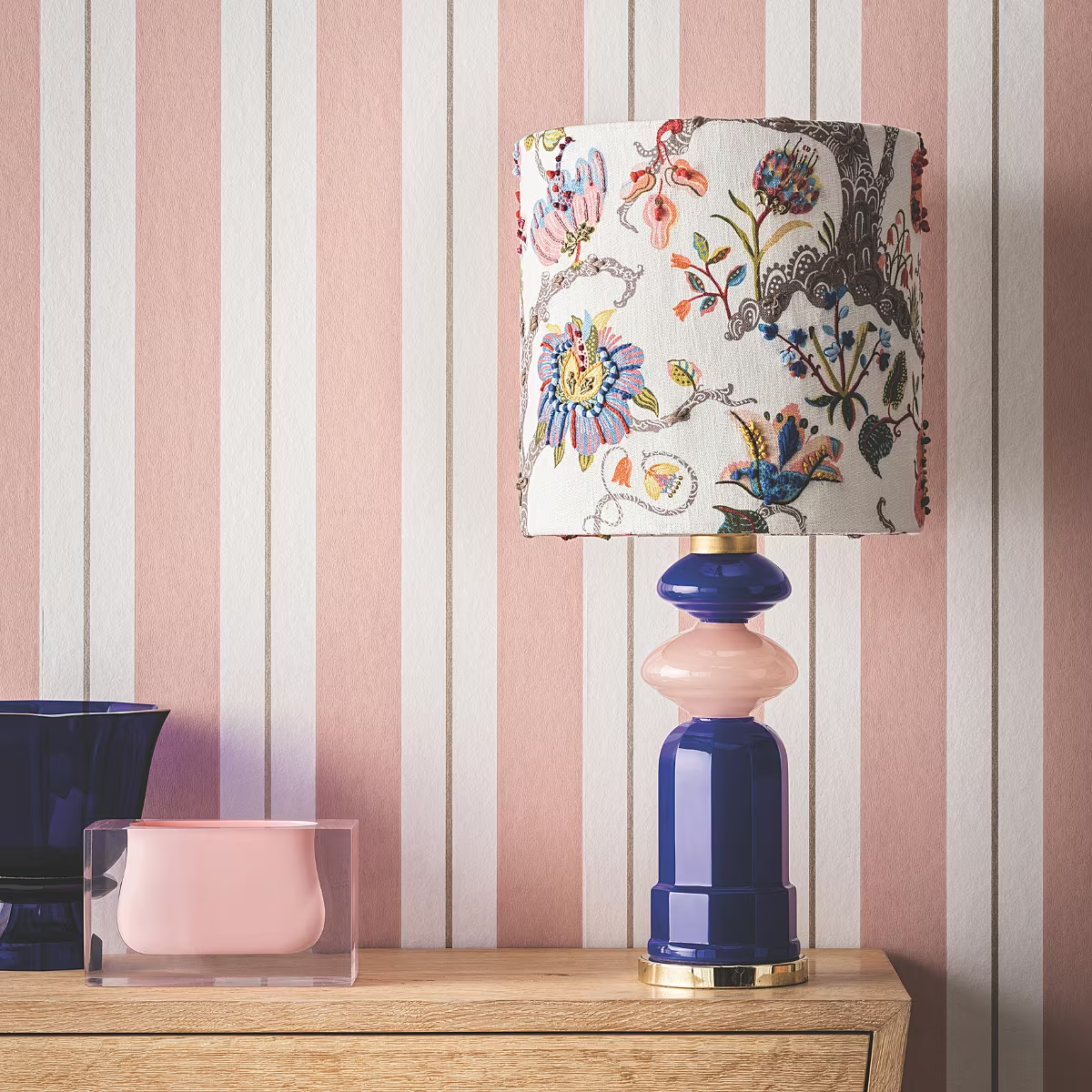
The strongest trend that I am noting at the moment is the return of classic striped wallpaper. There is a freshness to the new Osborne and Little AW26 collections introducing foliage with a stripe – Nina Campbell’s Anduze design with botanical sprigs resembles block printing,” says Dublin-based interior designer Collette Ward. She often uses a greater proportion of wallpaper in client projects, allowing paint and wallpaper to complement rather than compete with each other. She adds, “ there’s a versatility to stripes because they can feel crisp and classic, or, in the right colourway, surprisingly playful and modern. A clear wide stripe gives a wall a distinct rhythm, while a fine linear structure can appear almost like a plain wall from a distance.”
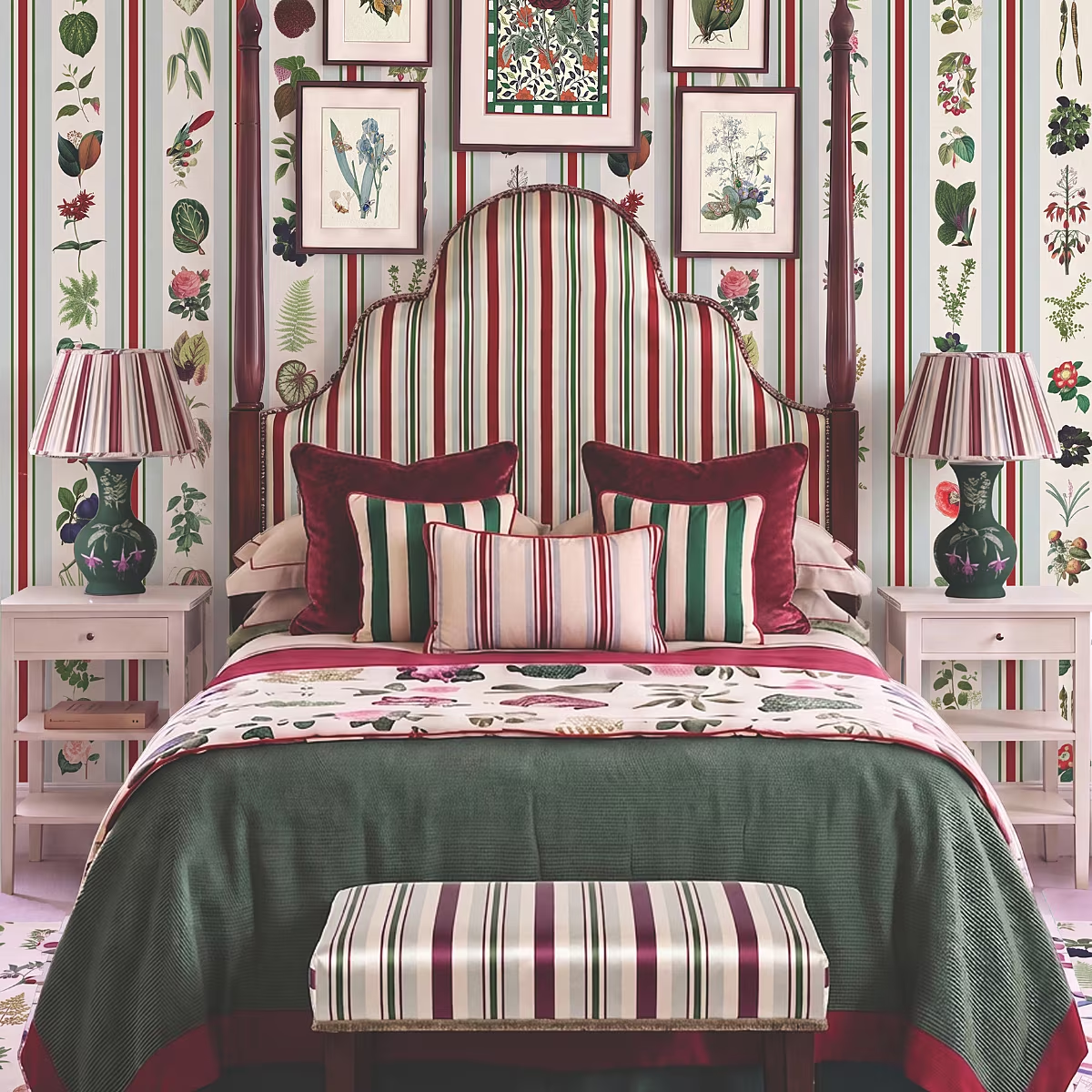
Northern Irish designer Carrie Neely, creative director of Myrtle & Mary, says the inspiration for her Garden Room wallpaper was a vintage design she came across where stripes and botanicals weren’t paired, but combined within the same pattern. She advocates confidence rather than restraint when incorporating pattern into a room. “Pick one pattern as your anchor – a bold botanical say, then let a stripe play a supporting role in cushions, a lampshade, or a chair back. Keep one colour thread running through both and let matte and gloss finishes do the separating. Commit fully: a half-hearted wallpaper reads as clutter, a confident one as design”.
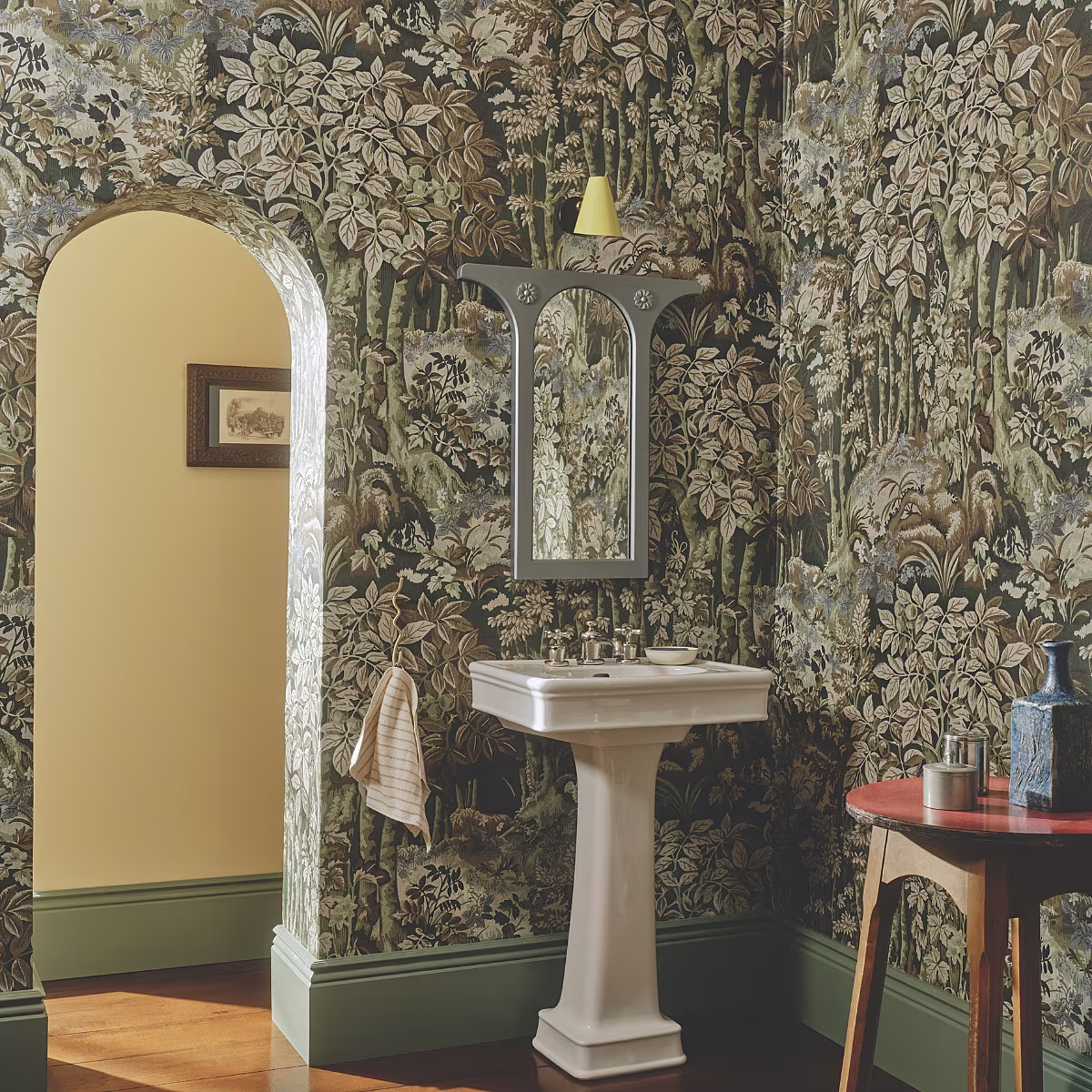
Bringing the outside in via nature-inspired wallpaper has never gone out of style. “You don’t need a grand, formal botanical to get this effect. Even a simple, small-scale motif like a daisy can bring the outdoors in, and these designs tend to sit just as happily in a period home as a contemporary one,” says Mothershead. Bolder bucolic designs are the focus of House of Hackney’s new AW26 interiors collection, Overstory, inspired by endangered temperate rainforests. It features 17 FSC certified wallpapers, layered with ancient trees, fungi, lichens, woodland creatures and hidden mycelial networks. More exotic still are the designs of Parisian Manuel Canovas who trained in art and archaeology and then built a textile and wallpaper house on the idea that big, generous motifs are simply more elegant.
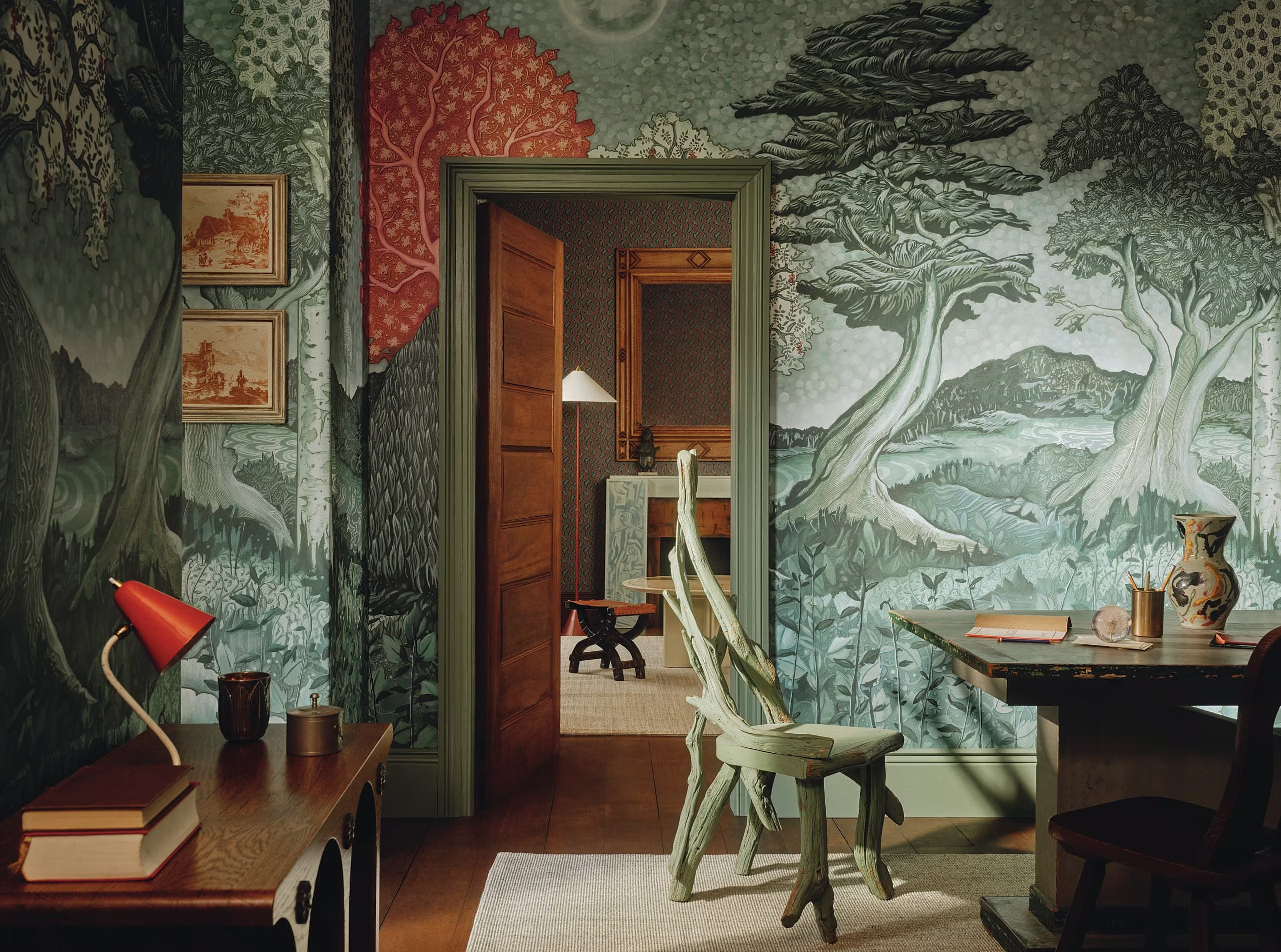
In the most refined spaces, trompe l’oeil scenic wallpapers will always be a part of the decorative repertoire, and it seems wraparound murals are currently trending. With space to breathe, a large-scale design becomes part of a room’s atmosphere adding depth and drama. Worth noting is the interesting Roots programme of talks at Mount Congreve, Co Waterford, during which Irish wallpaper maker, conservator and researcher David Skinner will explore the fascinating world of Chinese wallpaper and the rare example preserved at Mount Congreve. There’s also a growing appetite for tactile wall coverings from grasscloth and woven papers to silk, suede and fabric-covered walls.
Willis advises, “With textured papers and fabric wall coverings, preparation and installation are everything. Use an experienced specialist, particularly for ceilings, doors and detailed joinery. Always order a generous sample and view it throughout the day, as colours, textures and woven or metallic details can change dramatically with the light.”