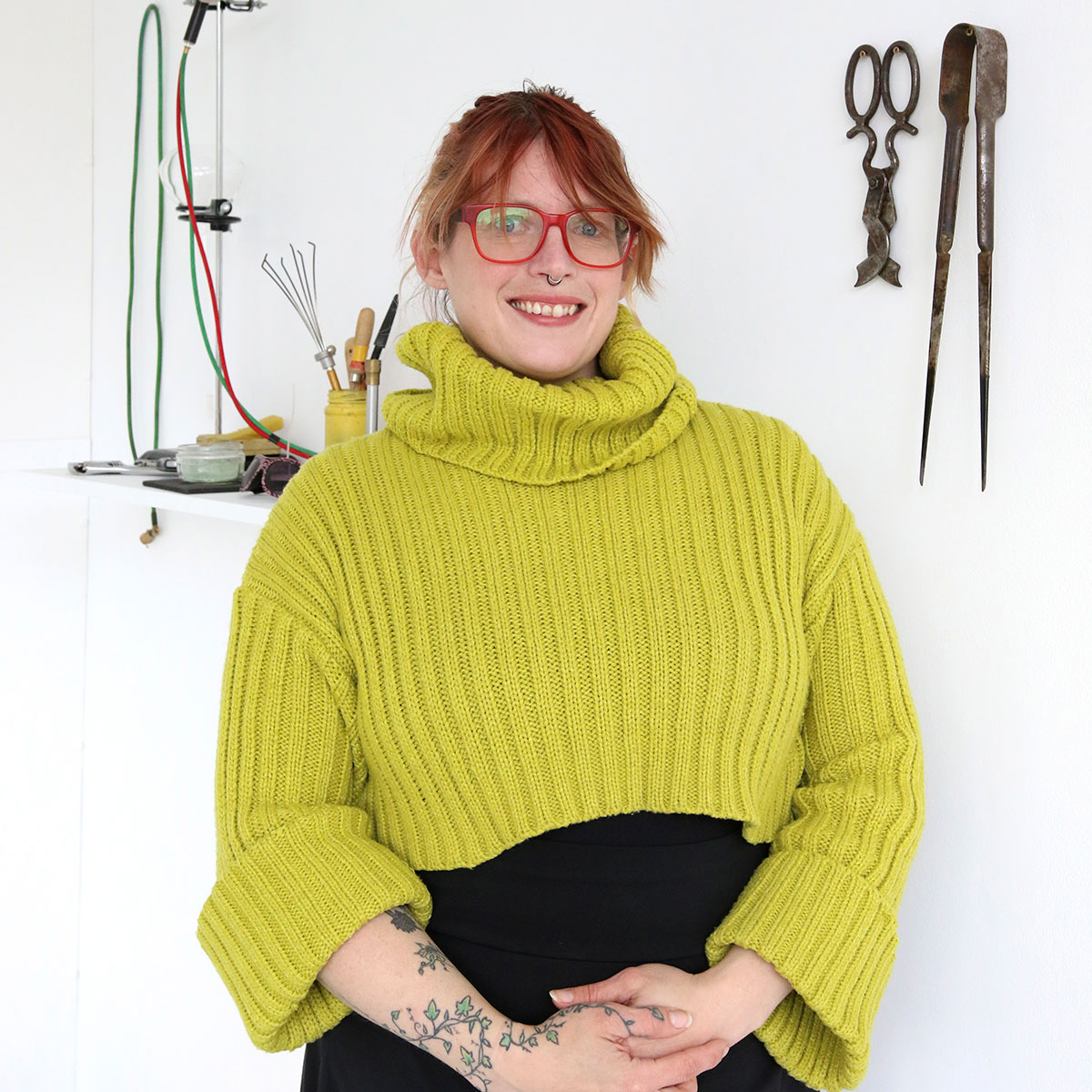

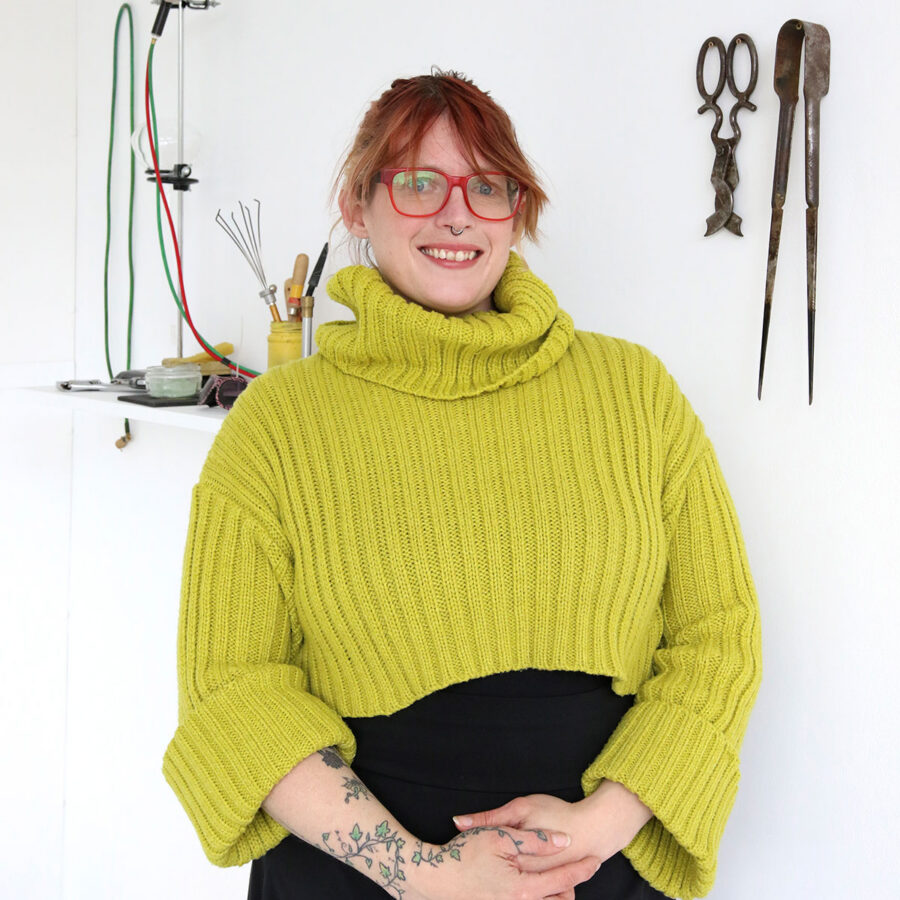
Working between Arizona and Sligo, artist, mentor and curator Lindsay LeBlanc shares her fascination with glass …
I was always making things, but I can probably trace some of my fascination with materials back to childhood. My Mum had these wonderful, slightly eccentric collections of milk glass, antique glass insulators and old bottles that we would find in the woods. I don’t think I consciously understood that as an influence at the time, but I was fascinated by their colour and weight, and the fact that they had survived and carried a history with them. I was also always drawn to theatre, sets and practical effects. I’ve dipped in and out of those worlds for as long as I can remember, and I’m probably known for having a bit of a flair for spectacle and the dramatic. I’m very inspired by practical applications of illusion and atmosphere, particularly when viewed through a critical lens of Gothic or horror traditions. That way of thinking tends to find its way into my work, even when the final piece looks quite different.
I was drawn naturally towards sculpture because I liked working physically and learning through materials. I wanted to understand how things were constructed, what they were made from and what happened when you pushed a material beyond what it was supposed to do. That eventually brought me to glass, although my practice has never been exclusively about glass. I work across sculpture, installation, moving image, research and site-responsive work, and those interests in material, atmosphere, ecology, history and spectacle tend to overlap. Usually, the idea comes first and I follow whatever material or process makes sense from there.
Adrienne Diamond & Fiona Byrne, Sacred Landscape
I studied sculpture and glass at Massachusetts College of Art and Design in Boston, then completed an MFA in art and ecology at Burren College of Art, Co Clare. MassArt was really foundational for me. We had brilliant mentors and teachers, but also access to state-of-the-art equipment. You learned your trade, but also how to troubleshoot, assist, teach and share knowledge. That gave me both a foundation and a bar. It showed me what can happen when artists are given access, trust and strong mentorship. That experience has stayed with me, especially since moving to Ireland. There are incredibly talented glass artists here, but very few publicly accessible facilities where people can use specialist equipment and develop their practice outside of a commercial or academic setting. Over the years, I’ve slowly collected equipment and tools of my own, and one of my long-term goals is to help create more opportunities for shared access, knowledge and mentorship within the Irish glass community. I know firsthand how formative that kind of environment can be.
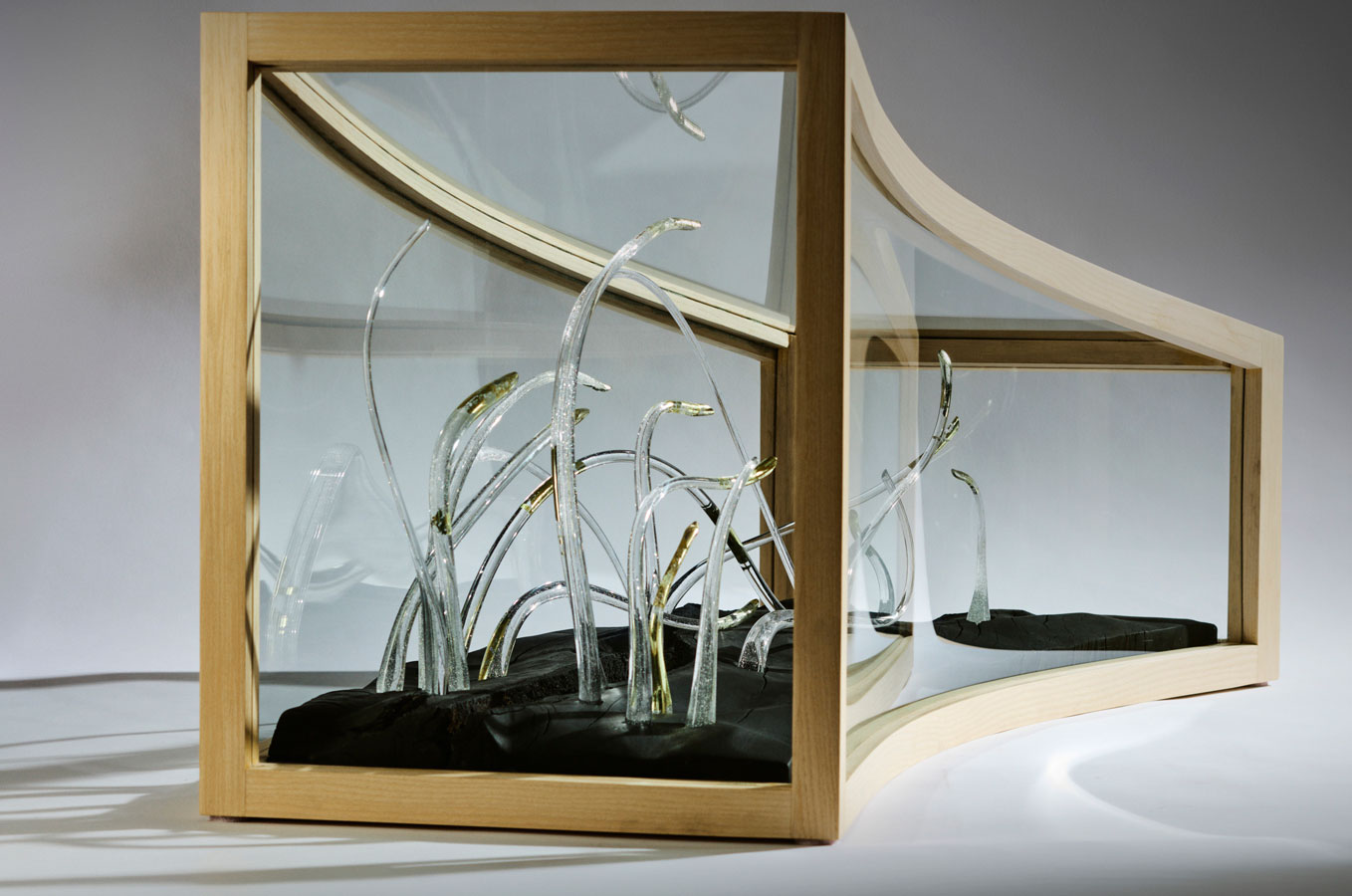
Mark Dockeray, Within
I encountered glass while studying sculpture and very quickly became hooked. Part of it was the material itself, but it was also the culture surrounding it. Glass is incredibly social and knowledge is passed from person to person. You watch someone work, assist them, learn a trick, share one of your own and gradually build this enormous vocabulary of techniques. The material itself is full of contradictions. It’s strong and fragile, ancient and technologically sophisticated, solid and seemingly liquid. When glass is hot, it’s constantly moving and responding to gravity, heat and breath, and then that movement becomes fixed. That quality has become increasingly important in my work. I think of glass almost as a narrator or an archive. It can hold a gesture, breath, pressure, mistake or a moment in time. Because my practice often deals with ecology, history and retelling, that ability to preserve evidence of transformation feels very connected to the subjects that I’m interested in. I also love watching somebody touch hot glass for the first time. That slightly mind-blown expression beginners get is one of my favourite things. It immediately reminds me why I became fascinated by it in the first place.
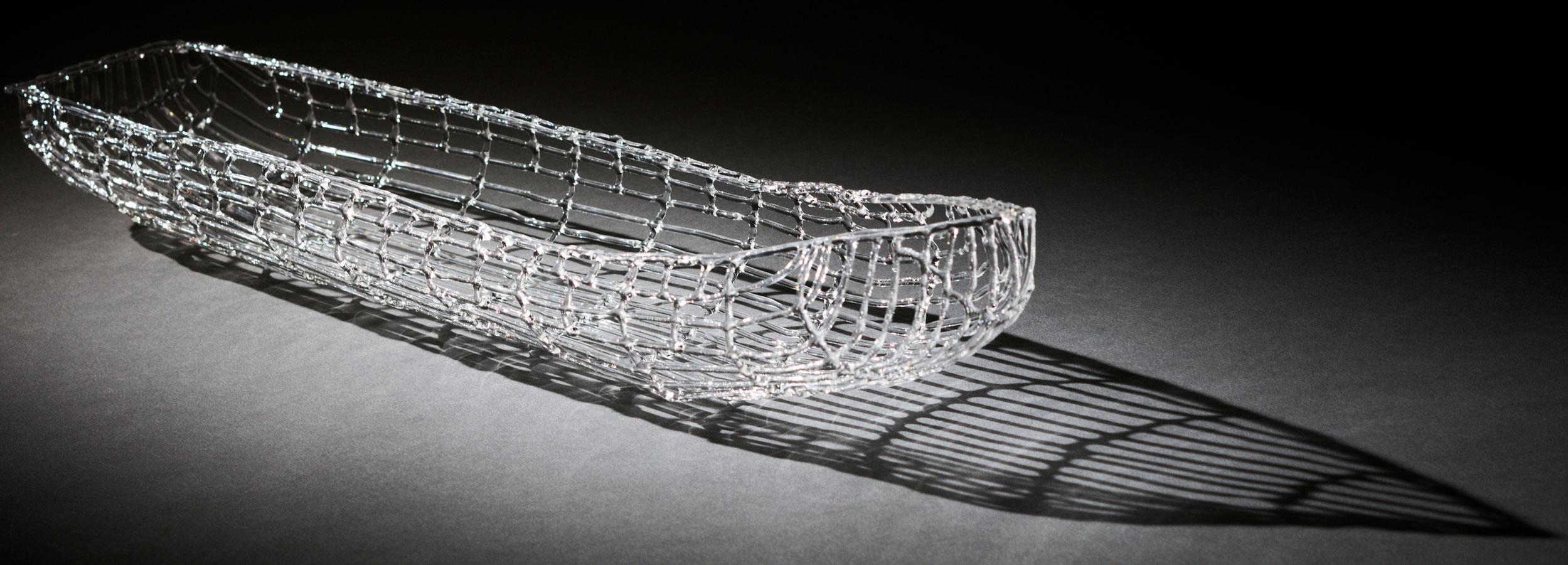
Katie Spiers, Currach
Ireland has become the primary home of my practice and I’m currently based in Co Sligo, although Arizona is still an important place for me personally and professionally. The two landscapes are almost opposites. Arizona is dry, expansive and intensely geological while Ireland is wet, layered, boggy and full of very visible histories. Moving between the two has made me much more conscious of ecology, material and the ways landscape shapes how we understand time and our place within the natural world. That thinking feeds into Studio Dúlra, the new studio I’m developing in Sligo. Dúlra refers to the natural world in Irish, which felt very fitting for a studio rooted in material, ecology and making. The studio has a very personal approach. People can come to us with an idea that they want to realise in glass, whether that’s for their own artwork, a product or something more sentimental, and we help them find a way to make it happen within their practical needs and budget. My glass botanicals have become something of a signature studio offering too. Someone might come with a memory, person or particular plant they want translated into glass, which I really love. I also teach workshops through the studio, and collaborate with spaces including Leitrim Sculpture Centre and The Glass Farm. There seems to be a bit of a glass renaissance happening in Leitrim at the moment, which is lovely to see and be part of.
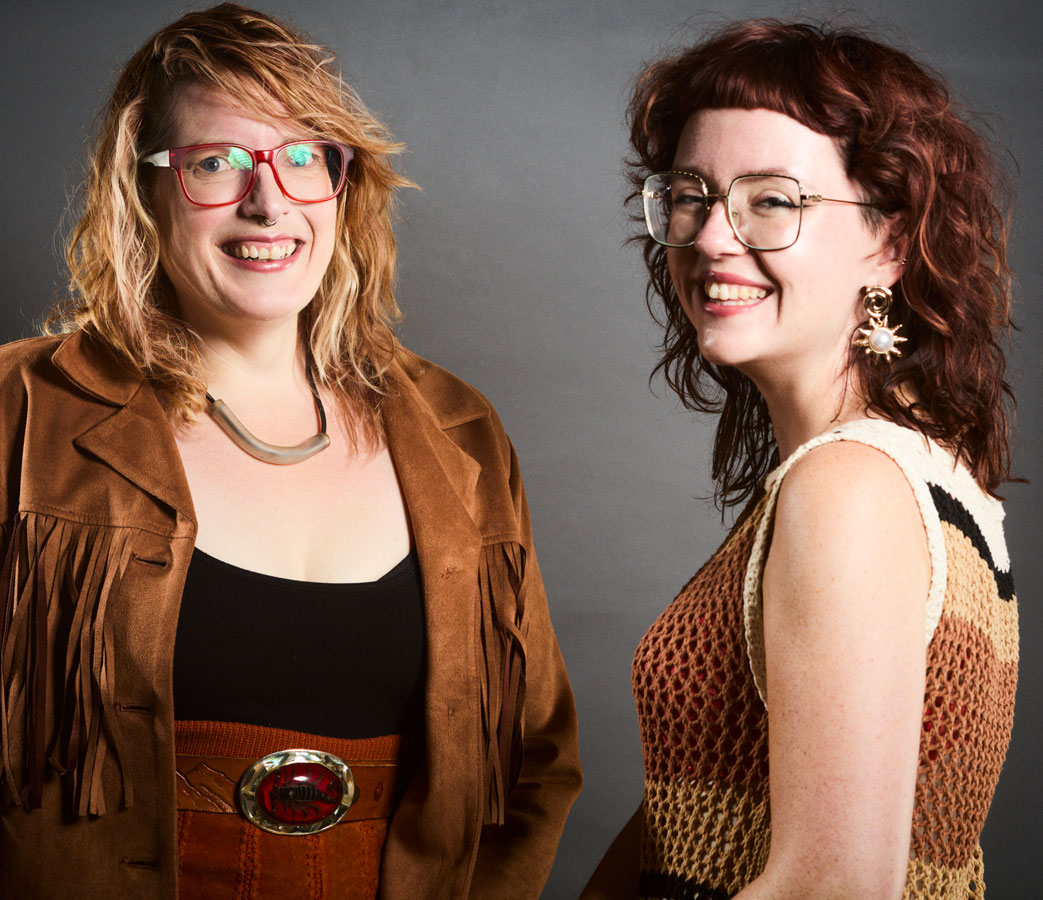
Of Sand and Ash exhibition is currently at the National Design & Craft Gallery in Co Kilkenny, which I co-curated with Ava Hayes for the Glass Society of Ireland. We wanted to present contemporary glass as something much broader than the traditional idea of the glass object. The exhibition brings together artists working in sculptural, architectural, experimental, performative and process-led ways, and shows just how expansive contemporary glass practice can be. We structured the exhibition through a series of thematic chapters: Heat and Breath, Time and Pressure, Surface and Trace, Light and Structure, Object, Vessel and Form, Expanded Glass, and In the Making. Those chapters allowed us to think about glass not only in terms of finished objects, but in terms of the forces that create them. For me, one of the most exciting things about glass is that every piece is effectively a record of transformation. Even something that appears completely still contains a history of heat, gravity, movement, breath and decision-making.
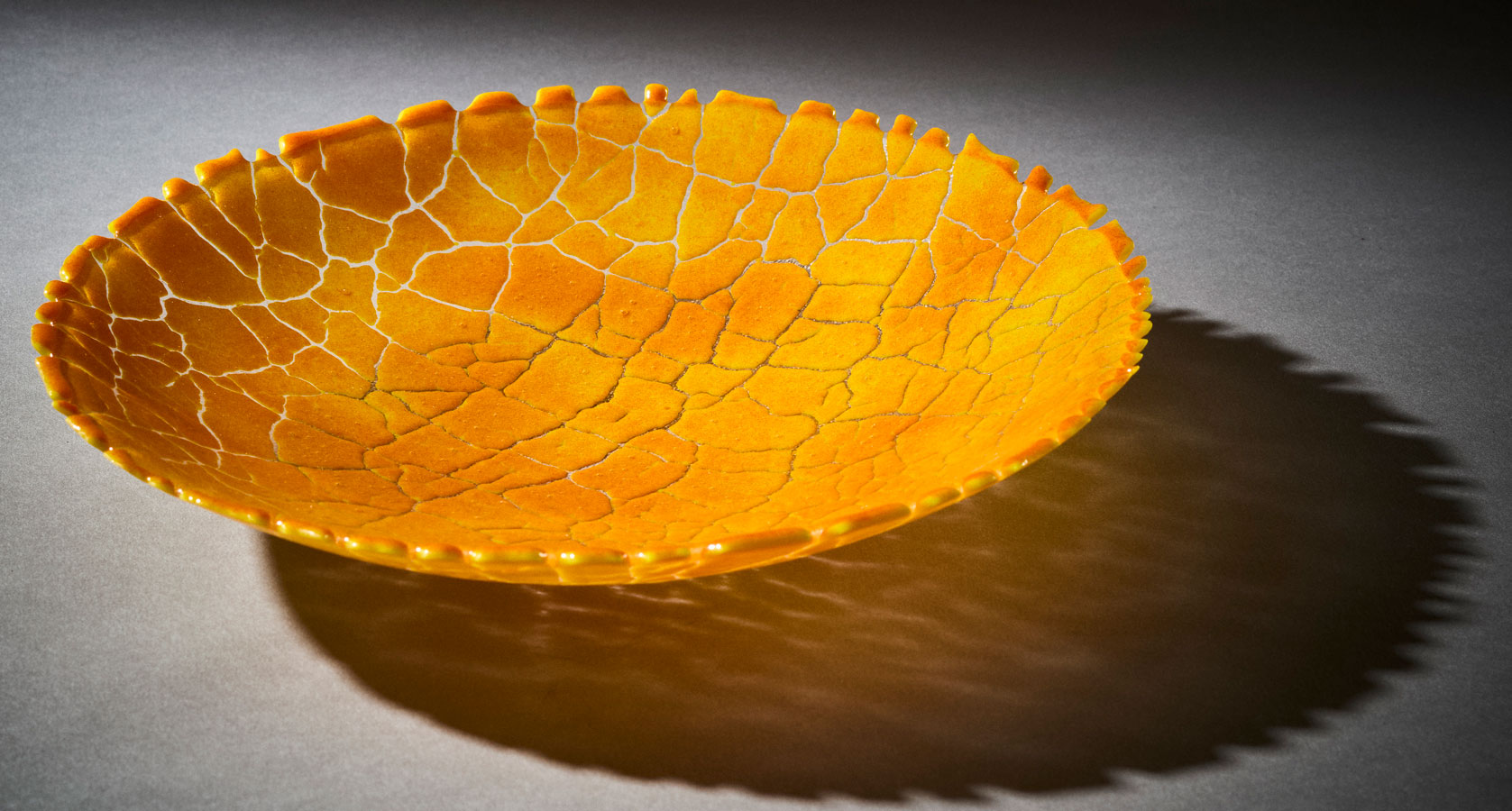
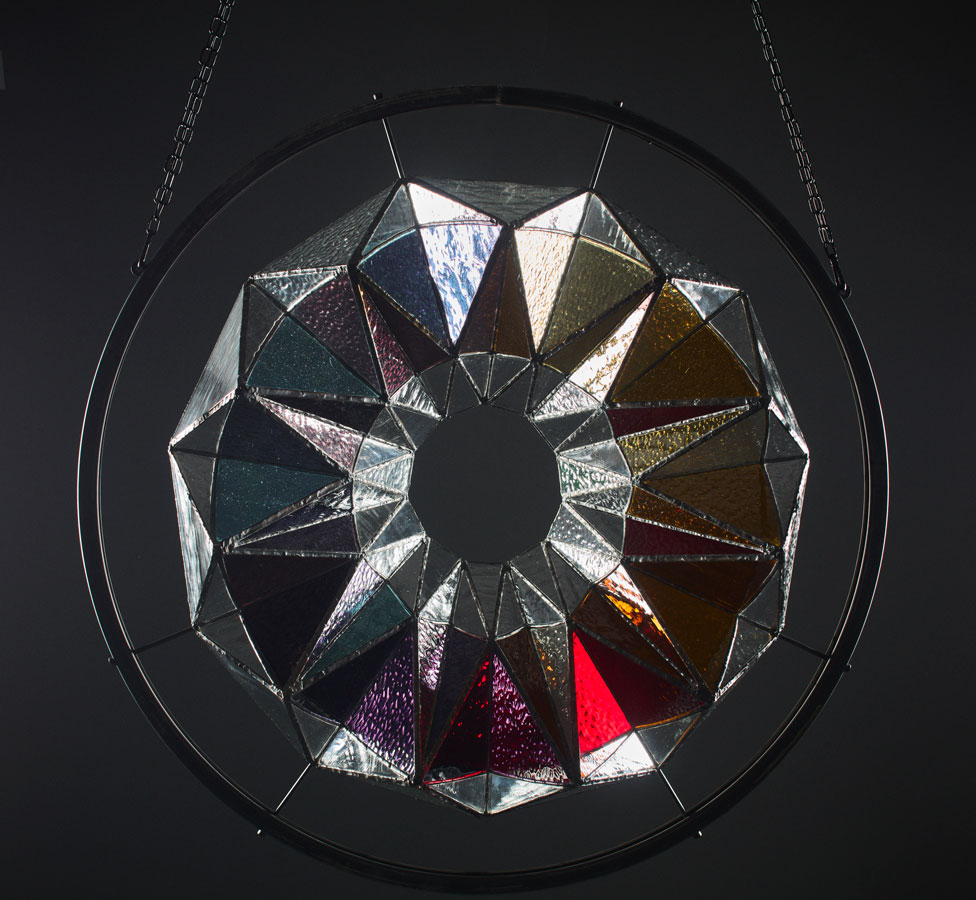
Trish Goodbody, Sun Circle
One of the things I love most about glass is that there is no point at which you have finished understanding it. There will always be another technique or artist doing something that you didn’t think was possible, or another material problem to solve. Almost anywhere you go in the world, there’s a glass artist who wants to meet you, make something together, offer you a place to work or host you for a few days, and vice versa. It has been a wonderful catalyst for adventures, friendships and continued technical development, although it has also given me a very convincing excuse to travel enormous distances in pursuit of a particular flame, furnace or obscure piece of equipment.
Need to know: Of Sand And Ash is at the National Design & Craft Gallery, Kilkenny until October 24.
SEE MORE: Artistic License – Donna McGee