

Learn more about the Belfast-based artist and her practice which has a strong focus on women’s lives …
I grew up in rural County Armagh, where my childhood was divided between running wild outdoors with my siblings, and quietly drawing and painting at home. My mother often tells me that from a very young age I would carefully copy the pictures hanging on our walls, confidently telling anyone who would listen that I was going to art school, long before I even knew if such a path truly existed.
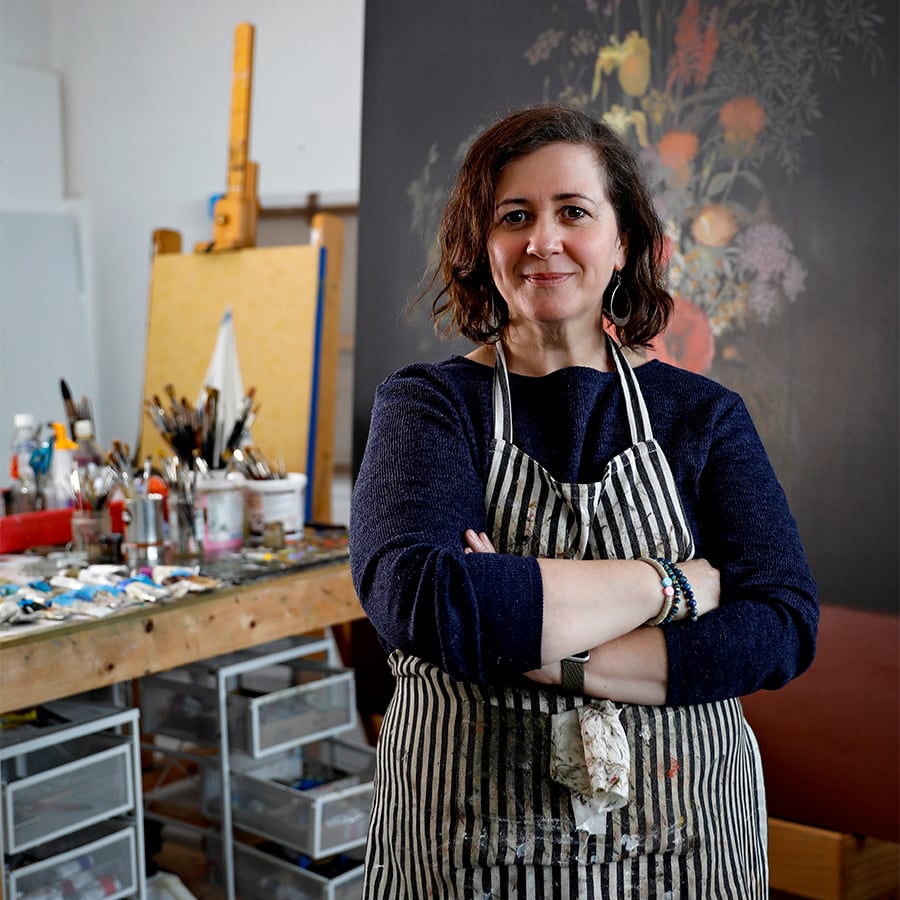
Thankfully, it did, and my journey to becoming an artist began with a real sense of determination. At 17, I studied at the University of Ulster, graduating in 1996 and a year later I joined QSS Studios in Belfast. It’d the oldest studio group in Northern Ireland, and I continue to work there today.
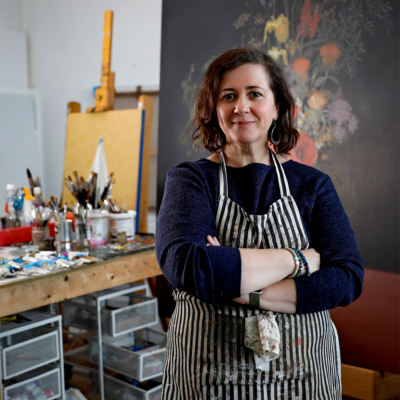
Having an affordable studio early in my career was vital in sustaining my practice. A dedicated studio is more than just a place to work, it shapes your mindset. Stepping inside becomes a quiet signal: I’m here to create. It’s a space for focus, but also for freedom, a place that allows for mess, experimentation, missteps and starting over. Unfortunately, like so many studio buildings both north and south, ours is now facing redevelopment; the outlook for affordable creative spaces is increasingly uncertain.
I work primarily in paint, though my practice often expands to include materials like embroidery, wallpaper and textiles. I’m particularly drawn to still life, a genre historically associated with women, partly because they were excluded from studying anatomy required to produce the so-called “high genre” works of portraiture, history or religion.
The work I make brings together elements of mythology, history and personal experience, with a strong focus on women’s lives. I like to use everyday objects, many from my own home and family, and domestic spaces to tell subtle, layered stories about gender, class and identity, especially within Irish history. While rooted in an Irish context, the work engages with themes that resonate across women’s histories globally. In recent years, I’ve turned much of my attention towards wallpaper and fabric, two materials deeply embedded in the domestic realm, with their own rich cultural and historical associations.
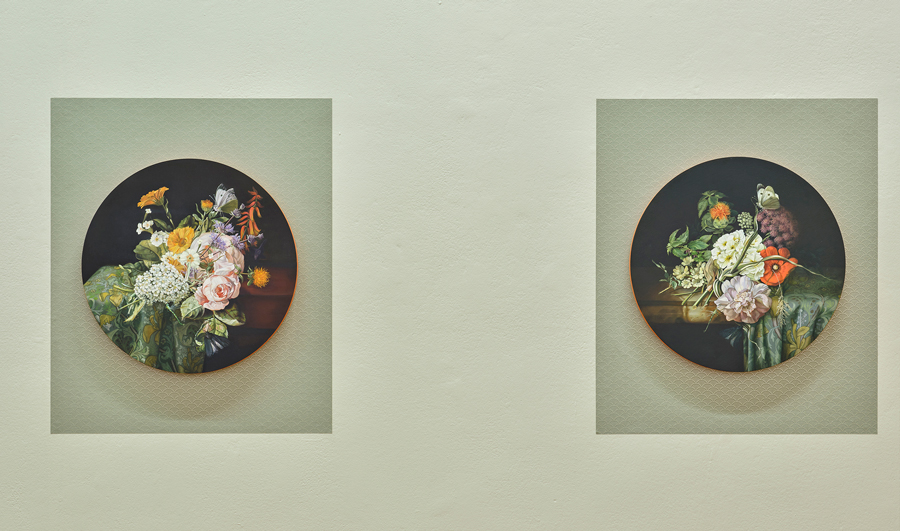
My university years were shaped by a distinctly male-dominated environment. All my lecturers were men, and the artists I studied were almost exclusively male – Hopper, Wyeth, Freud, Balthus and so on. At the time, I absorbed this without question. Only later did I begin to recognise how unaware I had been, or perhaps how carefully I had been taught not to see, the absence of women and their vital contributions to contemporary art. That realisation marked a quiet yet profound shift in my practice. I began to actively seek out and immerse myself in the work of women artists. I discovered the incredible work of Paula Rego, Louise Bourgeois, Judy Chicago and many more. Closer to home, I was deeply affected by the work of Alice Maher, Dorothy Cross and Rita Duffy.
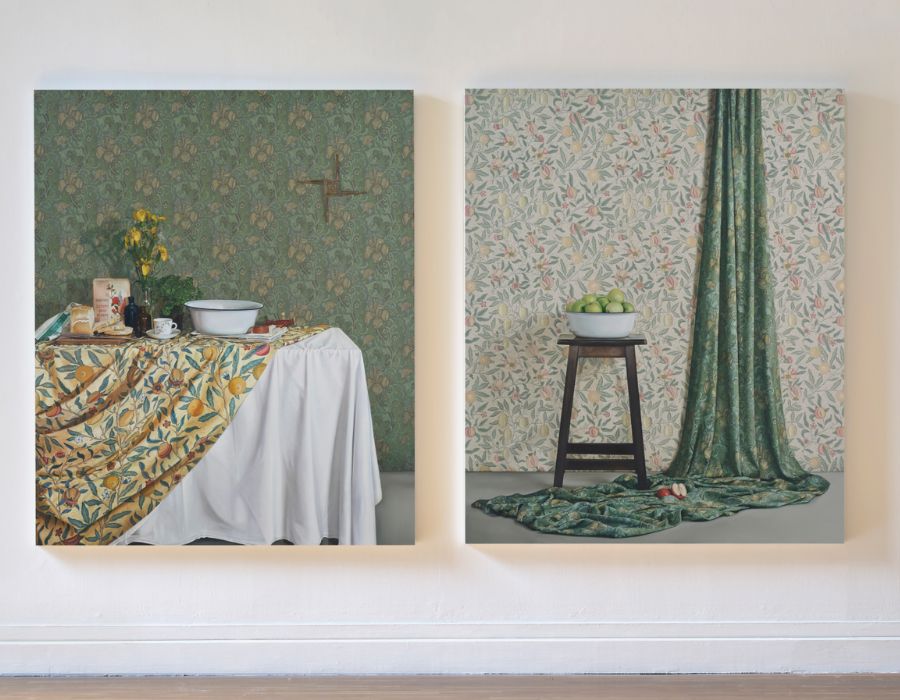
My recent solo exhibition “In Plain Sight” builds on a body of work I’ve been developing since 2016 and grew from a collaboration with my husband, Dr Mark Benson. His 2017 PhD at Queen’s University explored abortion in Northern Ireland from 1900-1968. A period of history that included UK’s 1967 Abortion Act, which didn’t apply in Northern Ireland, that left women with severely restricted access until decriminalisation in 2019.
Through sealed court records, Mark uncovered harrowing stories of women who had suffered, and sometimes died, while trying to end unwanted pregnancies. In the absence of legal provision, everyday domestic objects including knitting needles, soaps, washing powders and herbal teas were repurposed as tools of survival. I was struck by the tension between these familiar, comforting objects and the brutality they concealed, a darkness that nostalgia often erases.
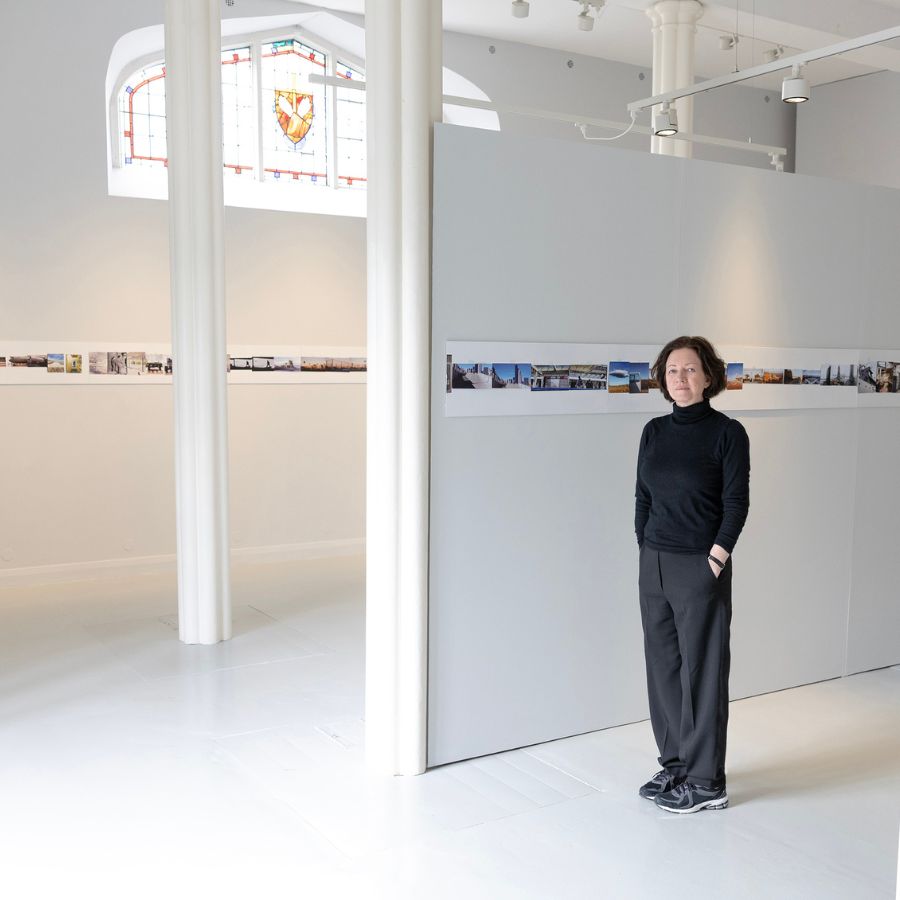
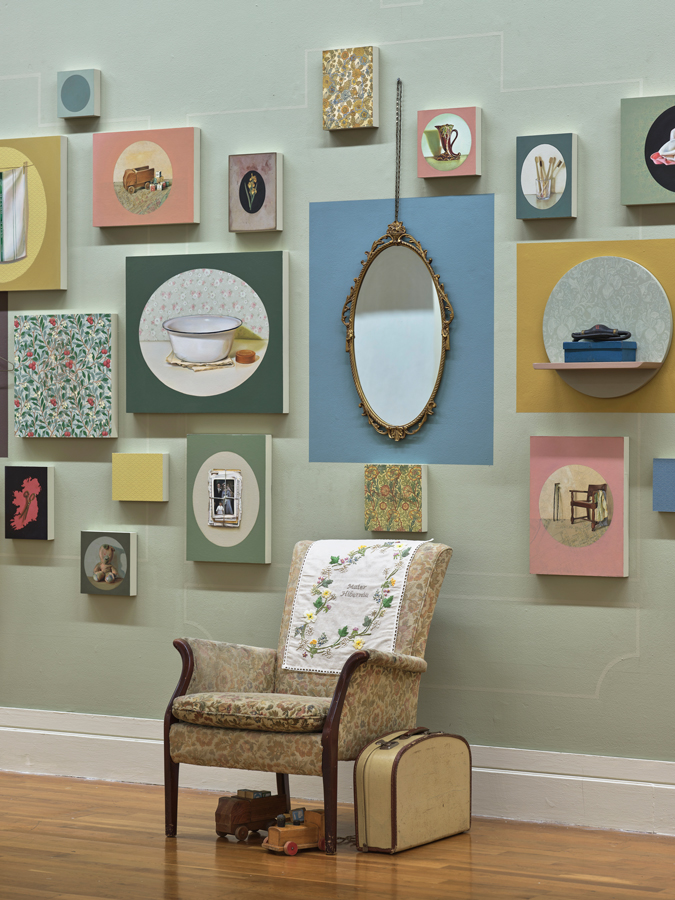
I wanted to honour the women whose choices were denied by Church and State, recovering their silenced voices, and transforming records of suffering into acts of remembrance and resistance. One of Many, the first piece in the series, spans 22 metres and includes 126 works created over four years. At first glance, the household objects appear modest and nostalgic, but together they map women’s lives, each item bearing witness to the struggle for bodily autonomy.
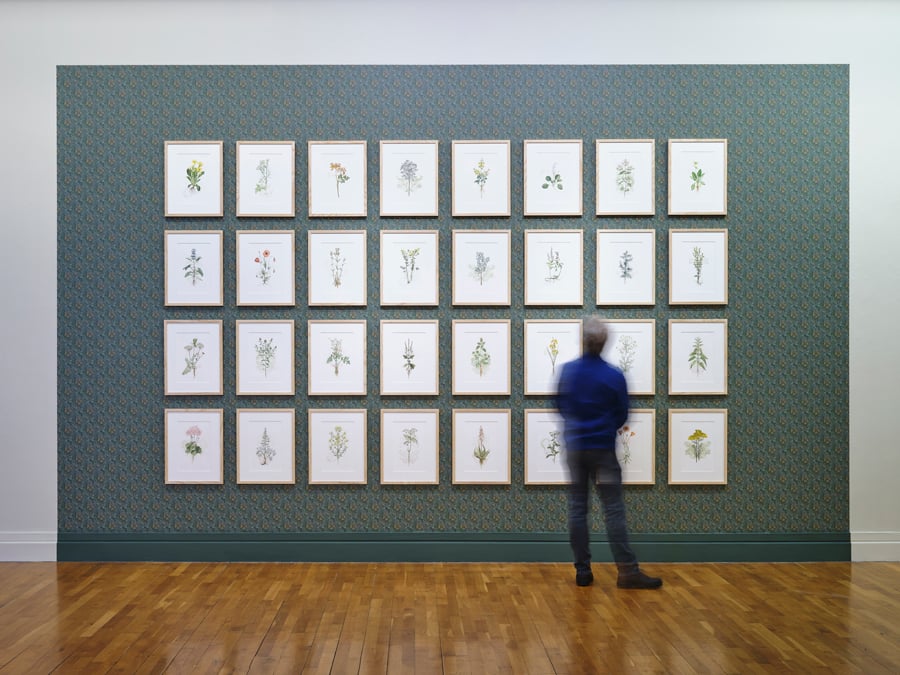
I currently have an installation of watercolours, “Mater Natura: The Abortionist Garden” included in Constellations, a group exhibition at FE McWilliams Gallery in Banbridge in Northern Ireland. The exhibition features the work of 14 artists drawn from the Irish State Collection, held at the Crawford Gallery in Cork.
The series features 32 delicate paintings of European herbs and flowers historically used to induce abortion; the number echoes the women in all 32 counties of this island. At first glance, the plants seem familiar, but on closer look some reveal themselves to be growing through the female pelvis and lungs shaped like Ireland, others thread through the uterus and heart, and some take root across the island itself. The delicate watercolours nod to traditional botanical illustration, a highly respected and conservative genre, but beneath their surface lie subtle, hidden layers that push the works into a contemporary context.
The images are set against Victorian green floral wallpaper. The wallpaper design is my own creation and uses botanical ingredients from an ancient herbal remedy once used to end pregnancies. Set against this opulent wallpaper, the watercolours present a quiet grandeur that belies the darkness beneath. Their symbolism is subversive, speaking to women’s experiences without ever being explicit.

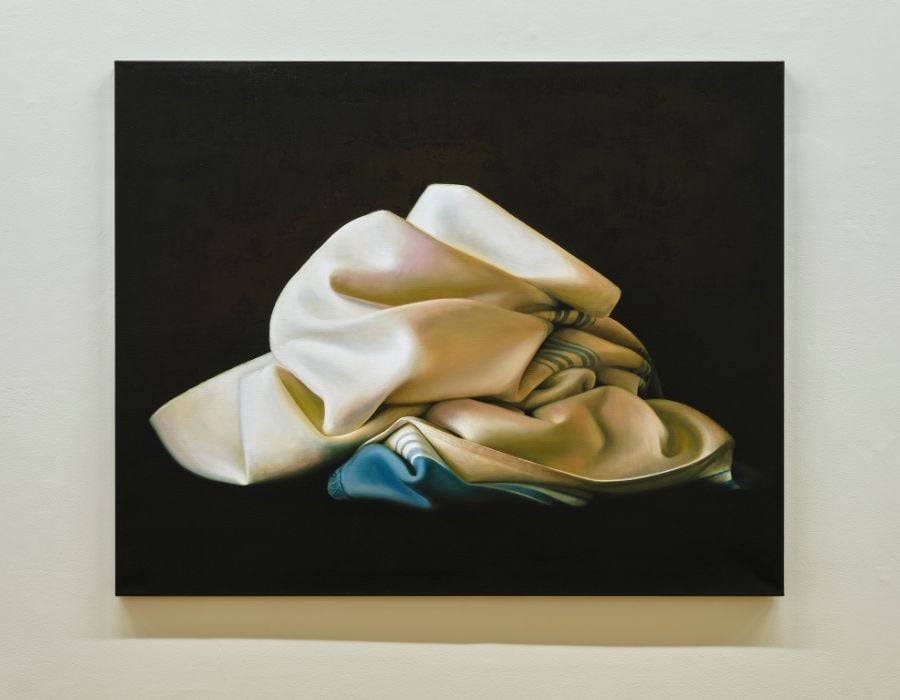
In “Six Months Gone” at the Culloden Hotel [as part of the hotel’s 150th anniversary], I draw on the myth of Persephone who was abducted by Hades and forced by Zeus to spend half the year in the Underworld. In the painting, a draped floral silk spills across the canvas, which is patterned with the botanical ingredients of the ancient remedy once used to end pregnancies; a knowledge that was quietly passed down through generations. At the base, a wilted peony and a split pomegranate hint at Persephone’s abduction while she gathers flowers. While she is gone, her mother Demeter, goddess of agriculture, grieves so deeply that nothing grows. Unaware of the consequences, Persephone eats six of the twelve pomegranate seeds offered to her in the Underworld. As punishment, Zeus decrees that she must spend six months below with Hades and six months above with her mother. Her yearly descent and return become a mythic explanation for the Earth’s cycles of fertility and barrenness. Behind them, wallpaper blooms with plants linked to women’s reproductive knowledge, drawn from Mater Natura. Persephone’s enforced descent is a metaphor for the long shadow male authority has cast over women’s bodies in the Church, State and Irish society.
I deliberately make work that operates on more than one level. By grounding it in traditional craftsmanship and using everyday objects, I hope to draw people in. Once they’re in front of the work, I want them to linger a little longer and notice the subtle layers within. You could think of it like a Trojan horse, appearing as one thing, but secretly carrying something else.
I want my latest body of work to be a conversation starter. Women’s lived experiences are too often ignored, overlooked or hidden, and it’s hard to have a conversation if people walk by or are turned away by aggressive or overtly provocative imagery. Drawing the audience in is a key part of my process, inviting them to pause, look closer and engage with the stories my work holds.
Sometimes, those conversations are simple, and other times complex and profoundly moving. Recently, I had a beautiful chat with a four-year-old admiring Mater Natura. We talked about her favourite plants and what she liked about them. In that moment, she didn’t need to know anything more, she was simply enjoying them, and that was enough.
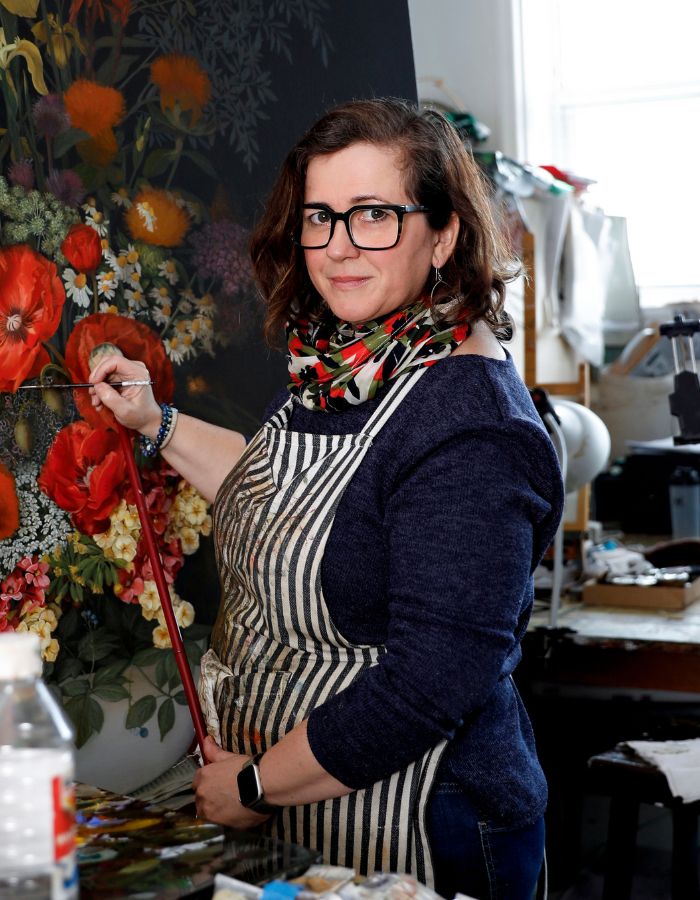
Being an artist isn’t without its challenges. I often hear, “You’re so lucky to do what you love every day,” but like any job it has its highs and lows. For artists, that often includes financial uncertainty and the constant crippling question: am I good enough?
Still, I wouldn’t trade it for anything. I imagine I’ll keep painting until I literally drop. Being creative isn’t something I can switch off, it’s just part of who I am. What I love most is that moment in the studio each day: making a cup of coffee, turning on Radio 4, sitting at my easel. Then comes that pause before you start to paint, when you carefully study your palette and your canvas. Even when faced with an intimidatingly large canvas and a long road ahead, there’s a quiet certainty, I know that I’m exactly where I’m meant to be. www.jennifertrouton.com; @jennifertrouton