

The news you need from the ground up …
EXCEPTIONAL CONTRIBUTION
The Royal Institute of the Architects of Ireland (RIAI) has awarded its lifetime achievement award, the RIAI Gandon Medal, to architects Sheila O’Donnell and John Tuomey for their outstanding contribution to architecture in Ireland, the UK and Europe. Having established their practice, O’Donnell + Tuomey in Dublin in 1988, Sheila O’Donnell and John Tuomey have left an enduring legacy with a human-centred architecture that celebrates local and historic context, while positively impacting our social and cultural infrastructure. A major housing project by the practice is Timberyard on Dublin’s Cork Street. Read more about it here.
FROM COMPETITION TO REALISATION
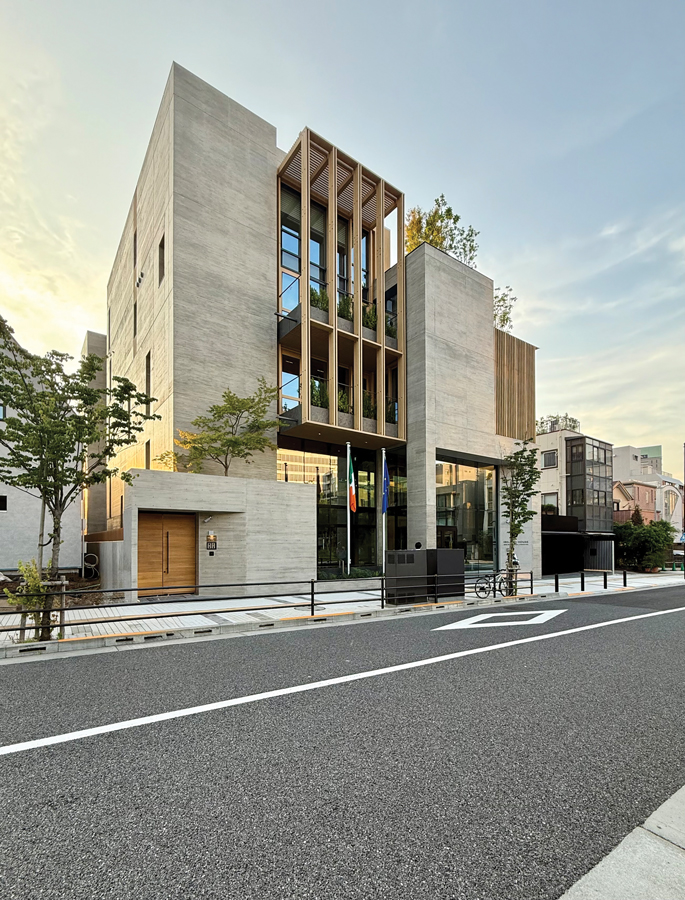
An RIAI and Department of Foreign Affairs competition to design Ireland’s new embassy in Japan, Ireland House Tokyo, was won by Henry J Lyons Architects in 2019. The new building accommodates the Embassy and official residence, as well as offices for a growing number of Irish state agencies and a performance space. Ireland House Tokyo is expected to raise Ireland’s profile in Japan.
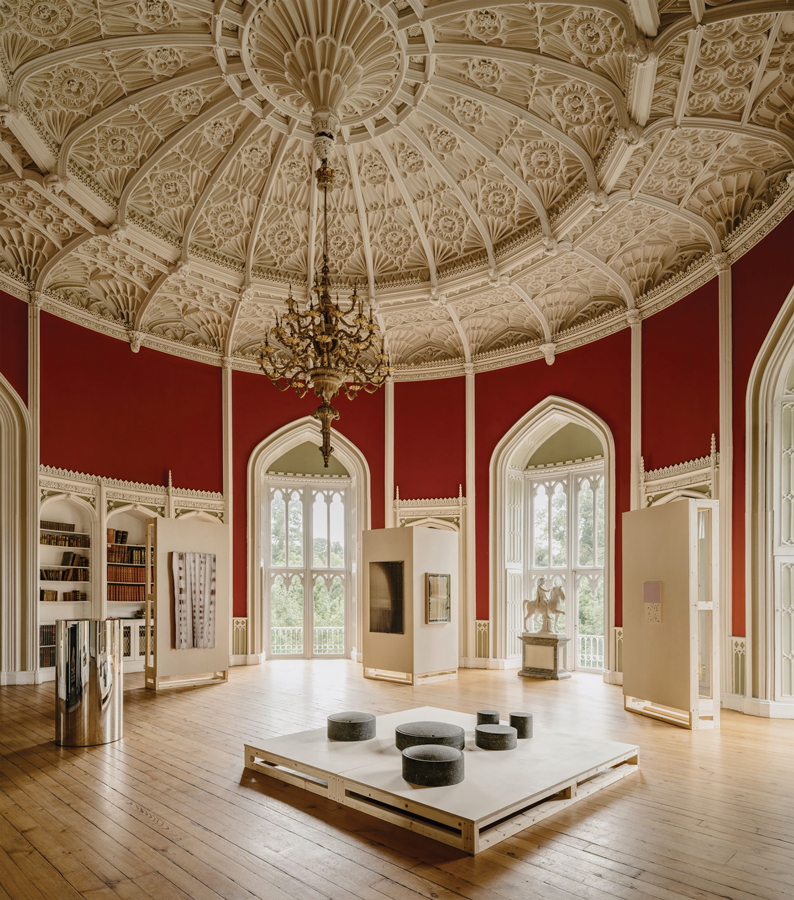
SLANE CASTLE’S ART PROGRAMME
Slane Castle is one of Ireland’s most well-known architectural icons – as a venue for legendary concerts and now, as the setting for RTÉ’s new series Traitors. In September, its stunning library and reception rooms were transformed into an ambitious new contemporary art programme – CAIM. Derived from the Irish word for sanctuary, CAIM reimagined Slane Castle’s historic grounds and state rooms as a sanctuary where art and landscape converge. The exhibition featured a stellar line-up of works, from paintings to immersive installations, sculptures and multimedia – all engaging with themes of protection, ritual, and humanity’s bond with the natural world. A programme of events is planned; find out more at www.caimatslane.com.
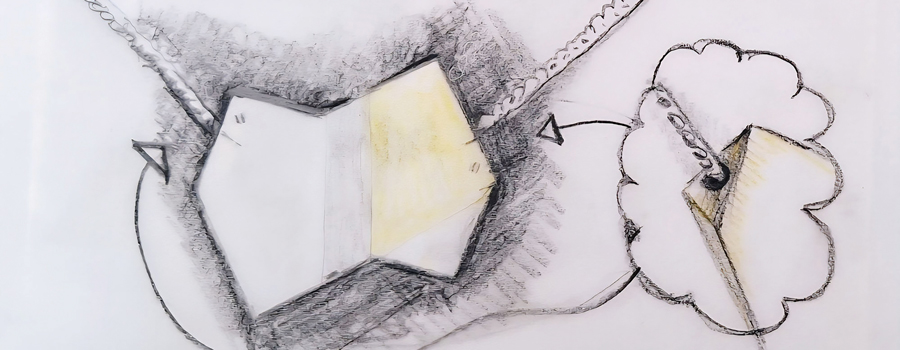
ARCHITECT-DESIGNED JEWELLERY
When Joanne Maher MRIAI heard about a jewellery design competition for architects by Stonechat Jewellers and the RIAI, she instantly thought of the strong geometry and play of light on whitewashed gables of Irish cottages. Maher believes that Irish vernacular architecture evokes a deep sense of place and connection to our heritage. She says: “I wanted to develop a pendant that reflects this familiar beauty and the architectural strength of these traditional forms.” She called it ‘Abhaile’.
Ann Chapman, founder of Stonechat Jewellers, is delighted with the winning entry: “Joanne’s design beautifully bridges her architectural background with contemporary jewellery. Abhaile is thoughtful, striking, unique – it tells a story while remaining effortlessly wearable.” The pendant (€200) is available at Stonechat Jewellers in Dublin and online with a pair of matching earrings (€180).
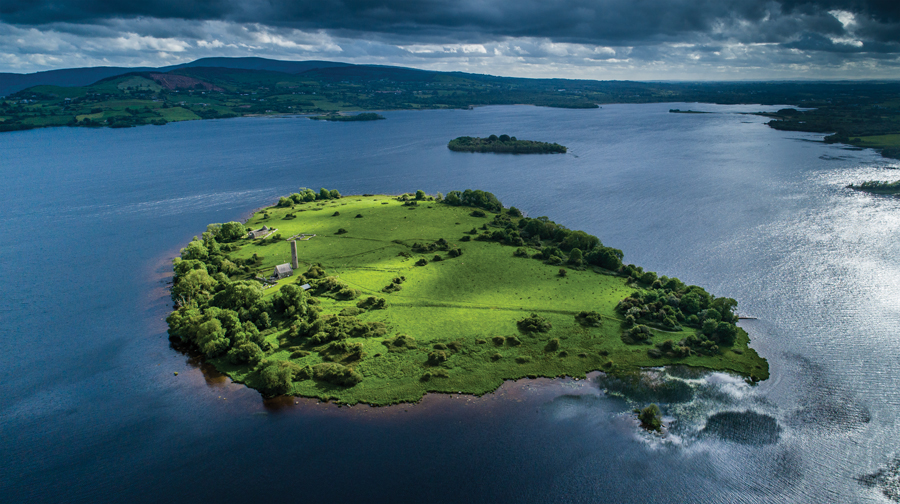
Photograph by Fionn McCann.
ARCHITECTURAL STORYTELLING
Inis Cealtra, ‘Holy Island’, lies in the middle of Lough Derg in Co Clare. Once a monastic settlement, the island is home to a round tower, the ruins of several churches, high crosses and historic graveyard. The old Mountshannon Rectory on Scariff Bay looks across the lake to Inis Cealtra and has been carefully repurposed by McCullough Mulvin Architects into a new exhibition and interpretation centre, telling the story of the island.
The project combines the restoration of the Rectory (1905) with an extension, all within a sensitively devised landscape setting. It provides an exhibition space, administrative offices, cafe and shop, along with a full energy and accessibility upgrade. Architect Valerie Mulvin FRIAI found inspiration in the character and proportions of the original Rectory with the contemporary addition of a ‘thick-walled’ entity, like a traditional Irish tower house, covered in a barrel vault, and finished in brickwork to closely match the original. Around the Rectory, gardens sweep down to the bay where boat trips depart for the island.
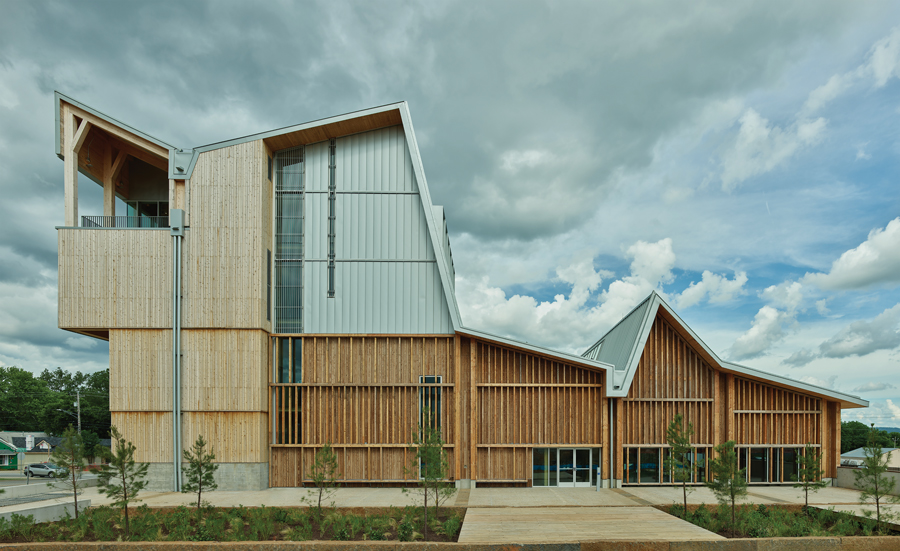
Photograph by Tim Hursley.
GRAFTON ARCHITECTS’ FIRST BUILDING
Recognised globally for their contextual and human-centred buildings, Grafton Architects have become increasingly concerned with climate change. In recent projects, such as the ESB headquarters, they successfully demonstrated how we can naturally ventilate and cool our buildings through clever design solutions as city temperatures rise.
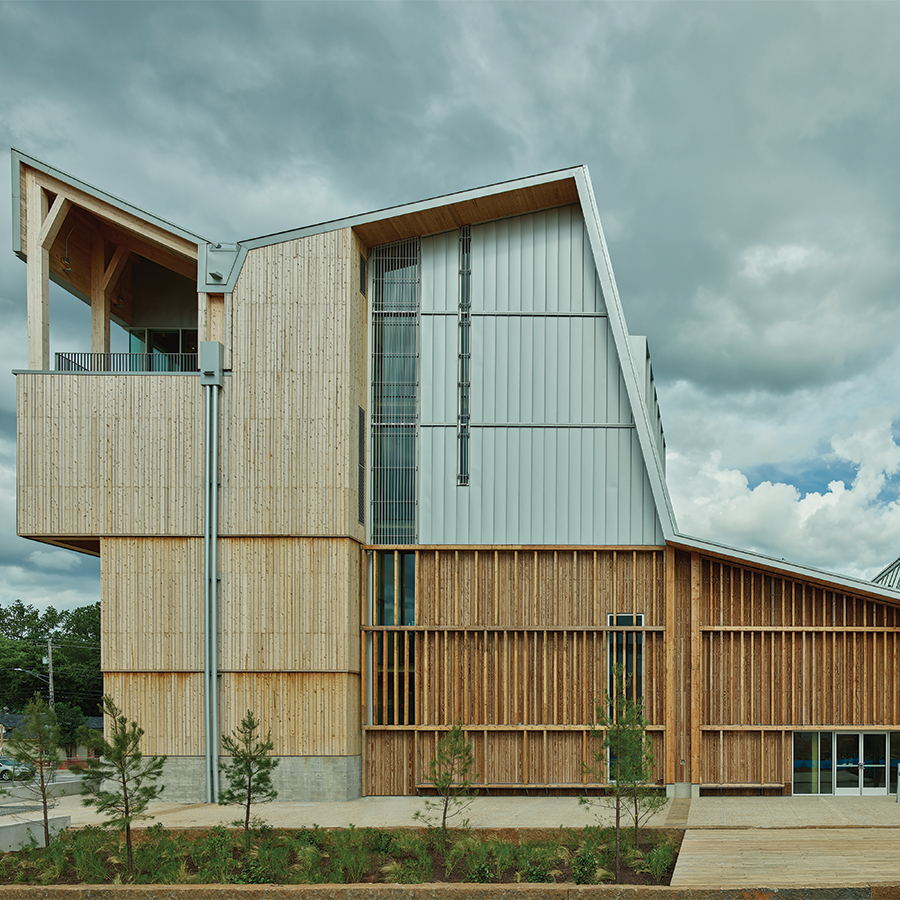
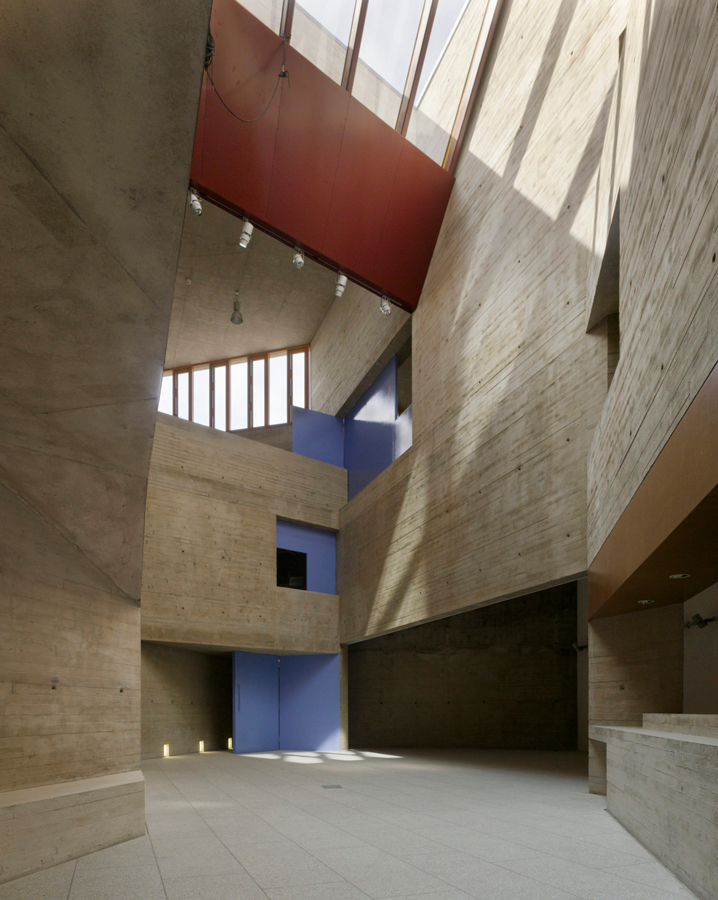
Their new Anthony Timberlands Center for Design and Materials Innovation at the University of Arkansas has gone even further by employing timber, an inherently sustainable material, from the building structure to the furniture. It is also the first US project by Grafton Architects, who have delivered buildings around the world from Lima and South Korea to London, Paris and Milan. The Guardian recently described it as “heroic” and “one of the most significant buildings for the future of architecture in North America”.
The Anthony Timberlands Center demonstrates timber construction to the fullest extent possible, sourced from Arkansas forest and mills. Designed for the Fay Jones School of Architecture and Design, it houses classrooms, studios, seminar and conference spaces, and a flexible lecture hall and gallery space, atop a double-height fabrication shop floor. “Our design envisions the new building as a ‘Story Book of Timber’, where timber would be both the structural bones and the enclosing skin,” says Grafton co-founder Yvonne Farrell. “Responding to the local climate, we proposed a canopy of light and air, a cascading roof with glulam rainwater gutters, covering the open-air yard, the fabrication shop, and connecting the teaching spaces, where upper galleries form educational and social vantage points.”
At a challenging time for sustainability in the US, this visionary project by Grafton Architects is an important contribution to climate change action. It also supports the region’s timber economy with initiatives including a new timber design innovation degree programme, a digital fabrication laboratory, and wood-centred affordable housing research. There could be important lessons for Ireland’s building industry in Grafton’s new timber architecture.