An Insider’s Guide To Montenegro
Author and photographer Ivana Maksimovic shares her favourite spots in Secret Montenegro …
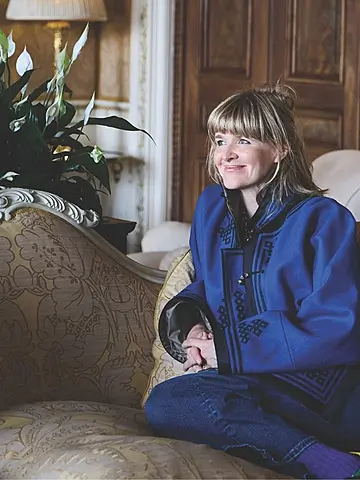
“The coast of Montenegro is like a wild and untouched land – its mountains rise abruptly from the sea, and the people live as though in a world apart, full of a fierce, untamable energy,” so said Edward Lear. For designer, author and photographer Ivana Maksimovic, it’s a place where she spent childhood summers and returns each year. In her new book, Secret Montenegro, she shares her favourite hideaway places – one of which is the Bay of Kotor.
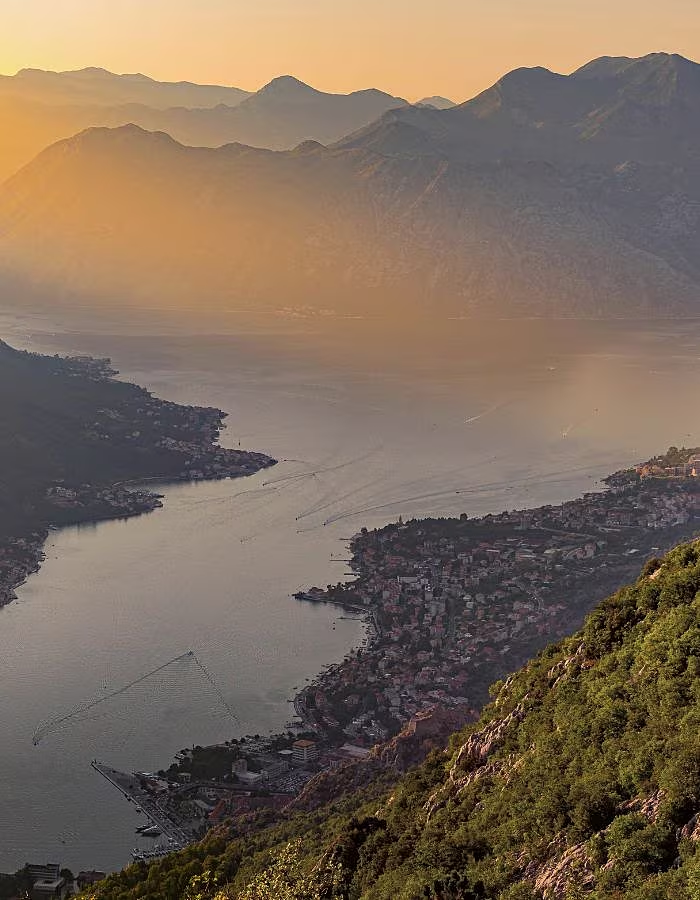
“Nothing can prepare you for the breathtaking drama and fairytale quality of the Bay of Kotor. Tall, verdant mountains rise steeply out of the still waters of the bay itself. The sea is an astonishing mix of brilliant turquoise and deep navy. There’s something about the shape of the place that always makes me feel protected, sheltered from the wind by the high mountains and shielded from the wilder sea by the enclosure of the fjord itself. The hills are dotted with fortresses and the bay is flanked by the ancient towns of Kotor, Perast and Herceg Novi where the architecture tells of Roman, Byzantine, Venetian and Austro-Hungarian influences.
In Kotor itself, one of my favourite things to do is wander the narrow cobblestoned streets, which remain deep in shadow for much of the morning. Venetian fortresses, and Catholic and Orthodox churches jostle each other here, expressing their own chapters in the dense history of Montenegro. Just as the bay is protected by mountains, so Kotor is fortified by legendary walls. These stretch for 2.8 miles, rising up the slopes of Mount Lovcen to the San Giovanni fortress. They were constructed incrementally between the 9th and 19th centuries, and at points are 65 feet high. Start early in the morning and scale these walls to be rewarded with a sweeping panorama of the bay below.
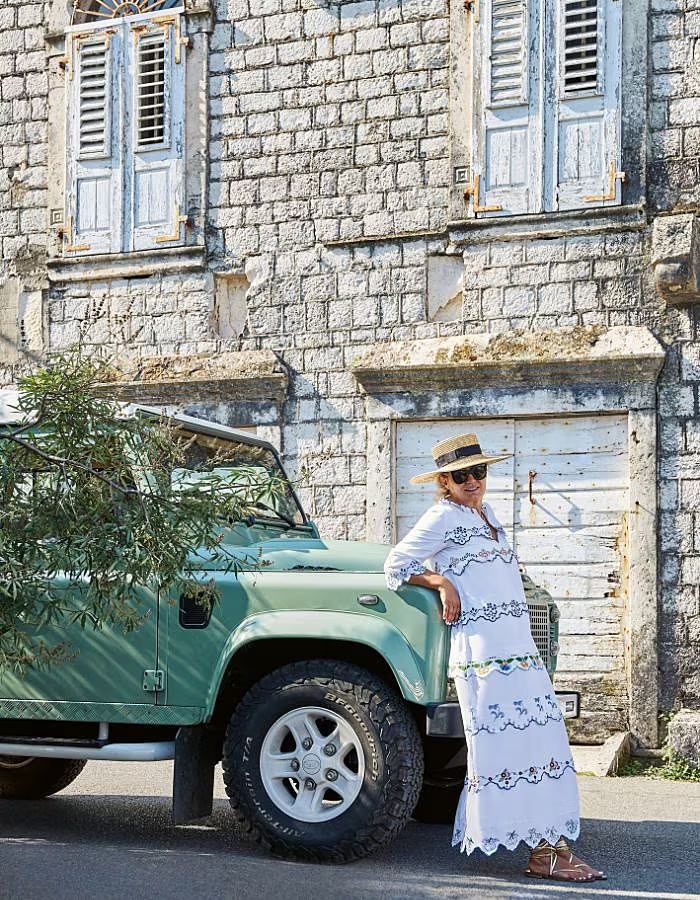
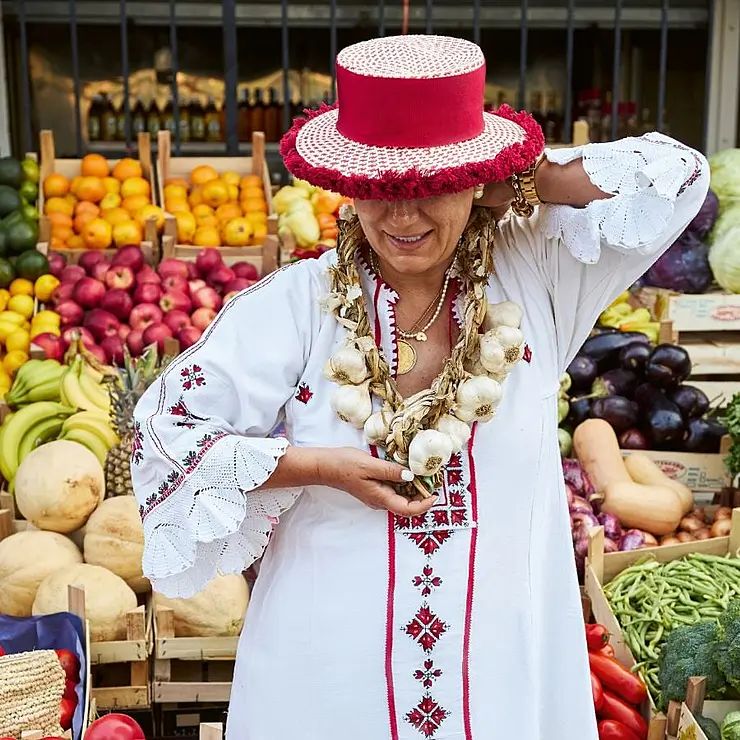
“On Saturday mornings, I wake up early and head to the food market nestled under the arches of the town walls, distinguished by tall limestone fortifications that were completed in the 14th-century. No-one can tell you how old the market is; presumably it has been here forever, piled high with produce from the north. I like to have breakfast here, savouring the tomatoes, which are naturally the pride of the region and, like watermelon, considered holy fruit. Then there are the smoked hams and soft cheeses redolent with flavour, which must – of course – be washed down with rakija. Here is the local kale, blitva, routinely cooked up with potatoes and served with every fish dish. All around are garlands of garlic, tiny wild strawberries, cloudy olive oil from the south, the eye-watering rakija, figs, carob, and pomegranates.
Then I head into the old town for coffee on the main square in front of the Hotel Vardar. This is where older locals still dress up for Saturday morning and sit discussing politics as the town wakes up. As Kotor is nestled at the bottom of the Lovcen mountains, the sun’s rays don’t penetrate the place until mid-morning; the walls are so high that most of the old town stays steeped in shade. The churches ring their bells and you can wander through the streets, passing Roman, Gothic and Baroque windows, catching fleeting glimpses of inner courtyards, other lives.
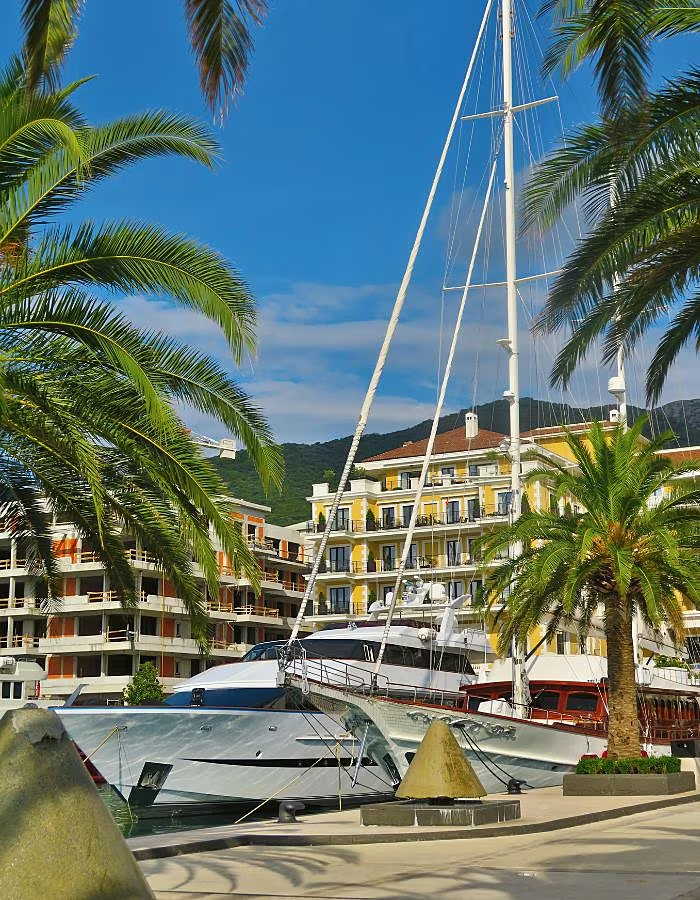
At one time, Porto Montenegro was a sleepy and semi-derelict shipyard town tucked along the curve of the bay, a place of mid-century architecture and brutalist residential buildings. Now it could not be more different; what was once a naval base has metamorphosed into a glamorous marina for the superyachts that populate the dock. Striped mediterranean awnings and upscale boutiques speak of the chic and ultra-luxurious destination it has become.
The trip here by boat is a familiar journey for me. I come across the bay to the glitter of the port to meet friends, have supper or a cocktail on the promenade, and marvel at the spectacle of all the yachts. But I am equally happy to slip away again and head back home over the waves through the warm summer night.
Take the ferry across the Verige Strait in the Bay of Kotor and you’ll be afforded a breathtaking twin vista of steep cliffs and a timeless landscape dotted with stone villages. On one side sits the ancient town of Kamenari and on the other the equally early Lepetane. The crossing itself is almost impossibly narrow – just 372 yards wide at one point – and the name Verige comes from the chains (verige) that were historically stretched across the channel to block enemy ships from entering the inner bay. Now, it means that you can avoid the romantic yet serpentine drive along the coastline and instead slip across the still waters of the bay while enjoying one of the great views in Europe.
Once I’ve made the crossing, I like to visit a traditional bakery that sells cheese or meat pies which I eat with yogurt, a classic Montenegrin breakfast. I eat this outside before continuing my journey down the coast, passing the lighthouse and countless miniature bays, offering space for just a handful of sunbathers.
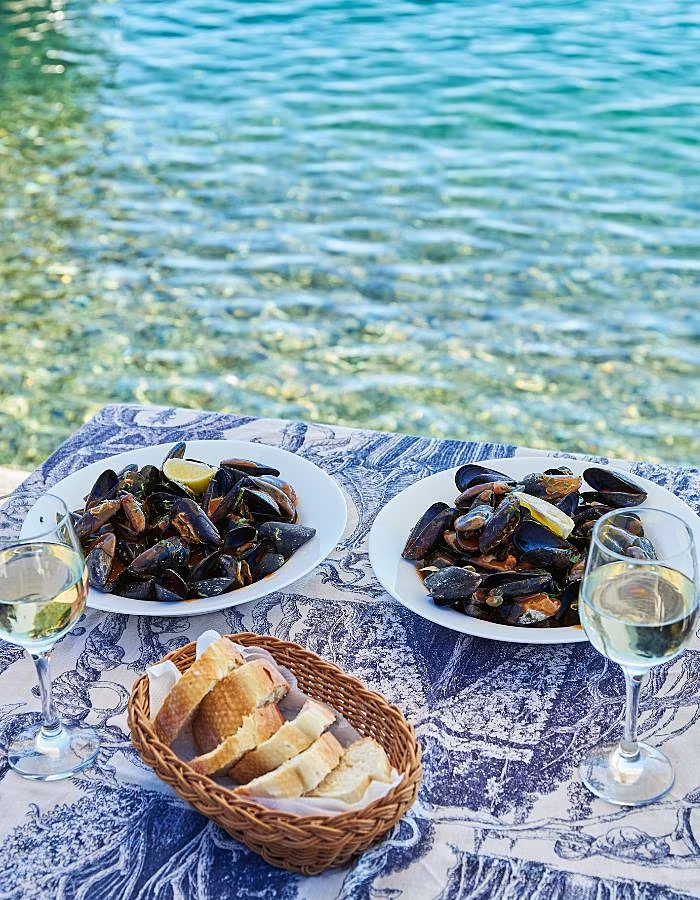
Nestled among these is one of my favourite destinations, a diminutive hut with just three or four tables. It’s a mussel farm where a diver collects mussels from his underwater creels and cooks them there, then in an ad-hoc kitchen moored to the dock. We enjoy them cooked in garlic and white wine with two slices of bread, with the sunlight glinting off the waves all around us. I cannot think of a meal that makes me happier. But if you’re seeking another type of experience, you can follow the road westward to the historic town of Herceg Novi and an altogether different, more luxurious destination, the One&Only Portonovi hotel, with its exceptional amenities and world-class dining options. But that is a whole other journey, for a whole other time.
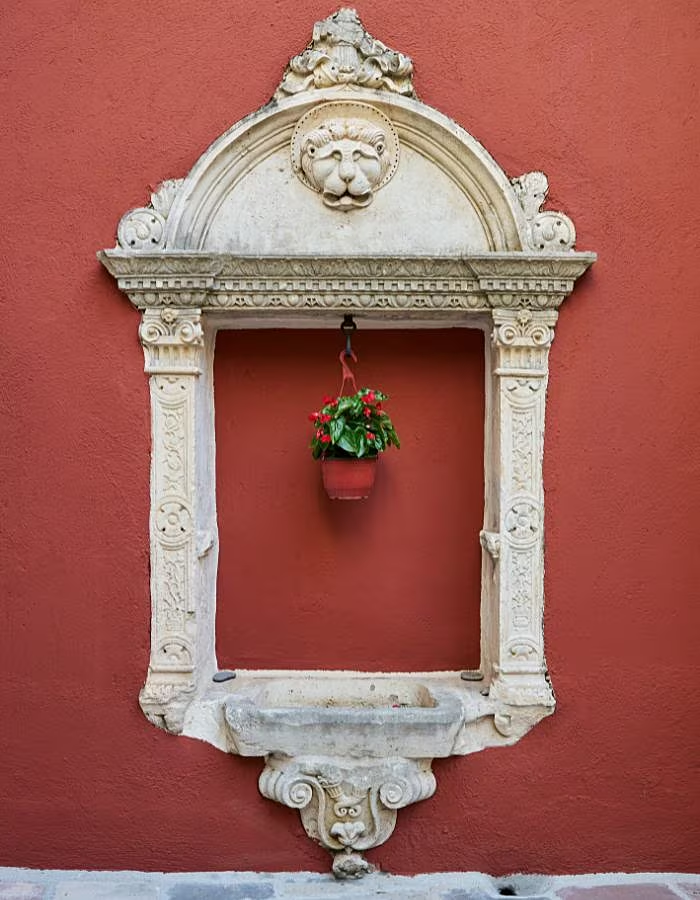
After the market, armed with fresh cherries and wild strawberries, I visit my friends in their home, Palazzo Pima, a magnificent example of 17th-century Venetian architecture. Built from soft Adriatic stone by its first owners, the Pima family, it’s dominated by one of the longest balconies on the coast. At the beginning of the 19th century, it was bought by Captain Tomo Lipovac, a sophisticated man whose great friend was Petar II Petrovic Njegos, Prince-Bishop of Montenegro. Njegos was a poet and philosopher who authored The Mountain Wreath, a modern epic written in verse, considered the supreme masterpiece in Montenegrin and Serbian literature. He was a regular visitor, alongside the key intellectuals and avant-garde thinkers of the day, and his portrait was gifted to the family and still hangs here proudly.
During the First World War, the palace hosted army troops; it later became a nautical school and was nationalised during the socialist era, only to be finally returned to its owners. It was restored to its full glory after the major earthquake in 1979 by the Lazarevic family, descendants of Tomo Lipovac, who live here to this day. The principal bedroom still contains the bed where Emperor Franz Joseph of Austria slept during his visit to Kotor. Early Venetian mirrors, a rare collection of icons from the 17th to the 19th century, Biedermeier furniture, the original blue-and-white-tiled stove, and a collection of the finest porcelain. All these are braided into daily life, loved, used and cherished by generations of the Lazarevic family, young and old.” @ivanamalondon
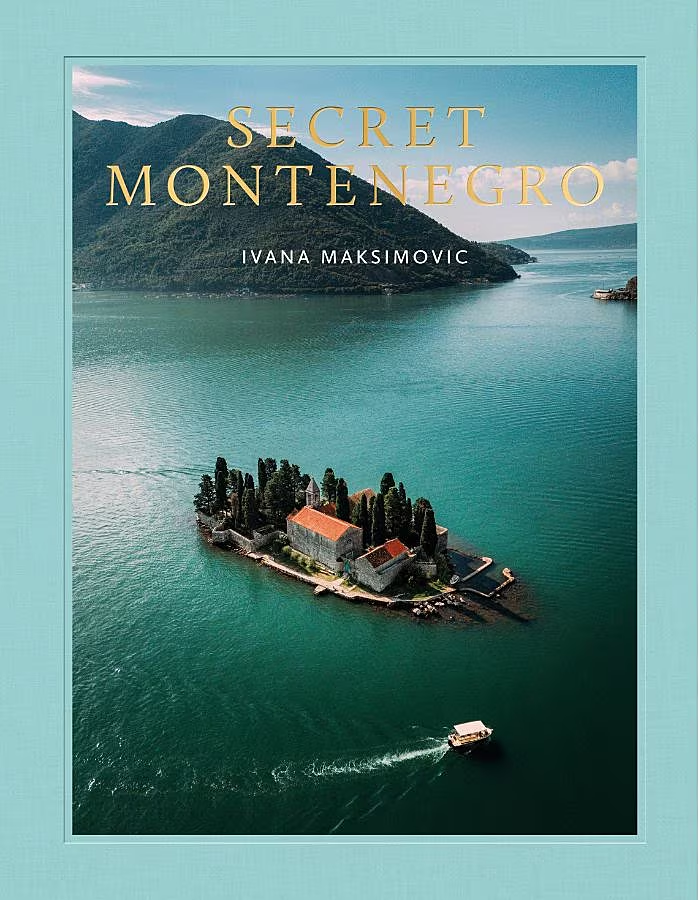
For more of Ivana’s recommendations read, Secret Montenegro, Vendome Press, €45.
SEE MORE: This Hotel Has Been Described As The Most Beautiful Place On Earth