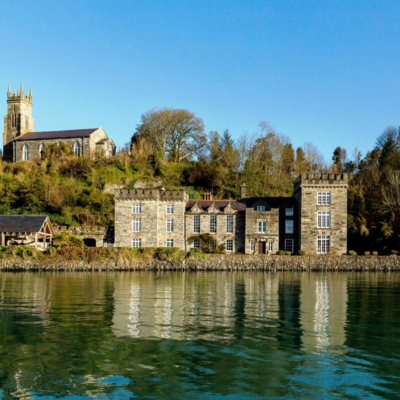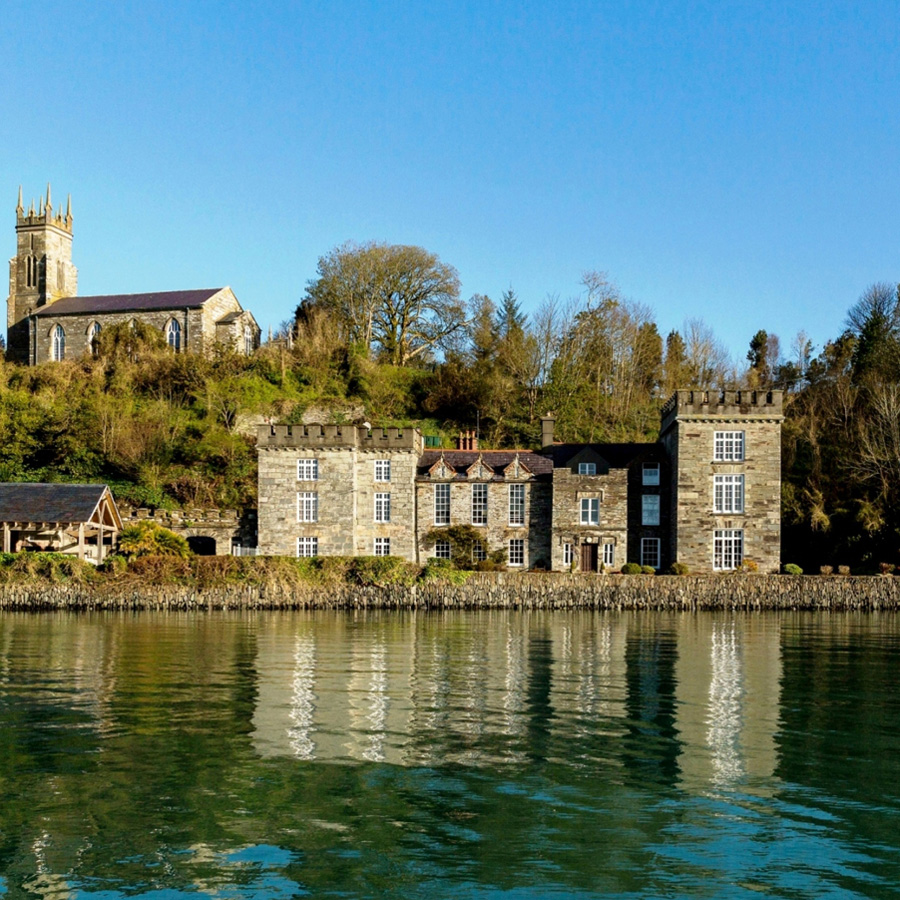

Set on four acres, just outside the heritage town of Abbeyleix in Co Laois, a once derelict Victorian house is quietly becoming the home of one of Ireland’s most considered new hospitality projects …
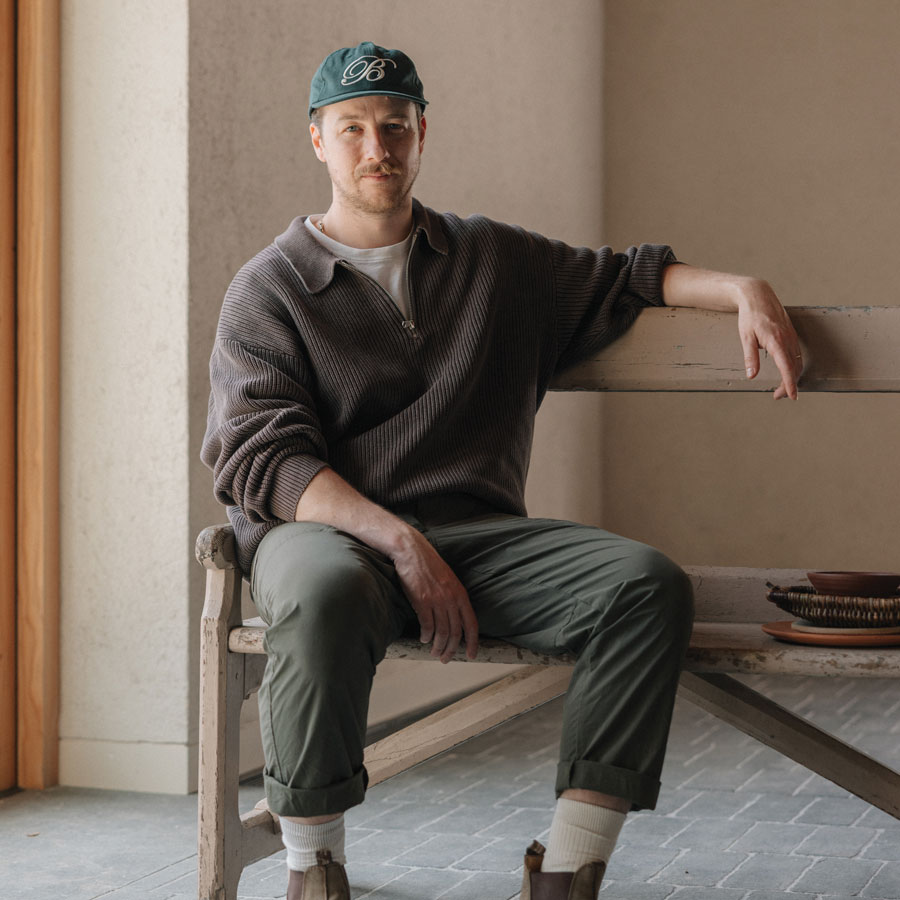
Opening in July, Ómós is a 16-bedroom guesthouse and restaurant rooted in the idea of craft. For chef and founder Cúán Greene, Ómós represents a long-held ambition: not simply to open a restaurant, but to create a space that is inherently rooted in its surroundings. “I wanted a project that paid tribute to craft, and one that could only be in Ireland,” he says – an ethos evident in every surface, object and material choice throughout the site.
The project centres on Millbrook House, a property built in 1885 on the grounds of the Abbeyleix Estate, once home to the De Vesci family. When restoration work began in 2024, the protected structure was little more than a shell. Damage and neglect had pushed it into dereliction and only the external walls remained intact. Interior walls had collapsed; nature had taken over. Yet its bones were salvageable, and Greene – majority shareholder in the project, alongside investors including John Collison, co-founder of Stripe, who now owns the estate – committed to restoring the house with integrity.
Both the complete restoration of the main building and coach house, and the design and build of the new restaurant, relied on the expertise of specialist craftspeople, led by Chicago-born, Irish-based architect Ryan W Kennihan. Noel Ryan of Heritage Masonry was responsible for the stonework, using local materials and following traditional methods – only 700 new bricks had to be sourced, the rest were salvaged from the original structure. Sash windows were reproduced by Timeless Sash Windows based in Co Meath. Master plasterer Liam O’Farrell, part of the Abbeyleix Estate team, took on the external repointing, and also reproduced interior mouldings, cornices and ceiling roses on site, working from tiny fragments of the originals that were salvaged.
Inside, the existing staircase was moved to allow for two additional bedrooms, and an oval skylight was introduced, drawing light from ceiling to ground floor and creating a sense of openness. Ten bedrooms are housed within the main building, with six more located in the coach house overlooking a brook that once fed the mill; floor-to-ceiling windows in these rooms frame the landscape for a total sense of escape.
Copenhagen-based designers Cassandra Bradfield and Sofia Olsson of Asca and Rebecca Norberg of Relief Gallery partnered to work on the interior design, a daunting if enticing task for the design studios. Working closely with Greene and architect Kennihan, the design team set to work learning everything they could about vernacular Irish design, visiting back and forth from Copenhagen throughout the project to capture the building’s flow, light and its surrounding landscape. “Every suite has its own identity based on the colour of the light it receives throughout the day,” Cassandra Bradfield of Asca explains, ensuring no two are alike.
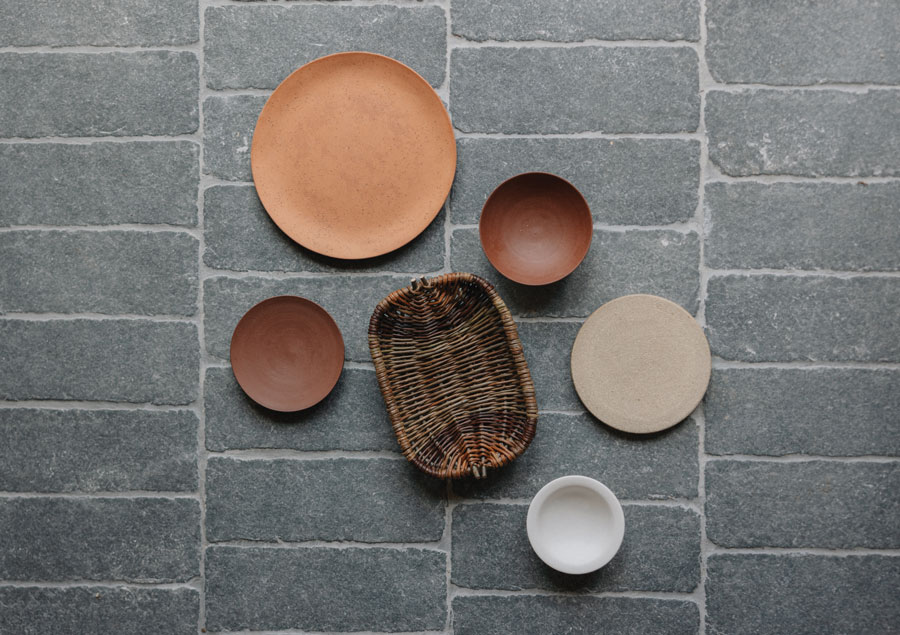
Red plate, Siobhán Joyce; red clay bowls, David Holden; beige plate, Fermoyle Pottery; white bowl, Claire Dooley; willow basket, Hanna van Aelst.
DESIGN DETAILS
Greene was passionate about embracing the use of Irish materials throughout, from McKeon Stone’s Kilkenny limestone in the guesthouse bathrooms to Connemara marble in the restaurant WCs, and the Douglas Fir timber that wraps the restaurant exterior. Each item of furniture has been hand-selected by the design team, using a number of Irish craft speople to fulfil their vision. Eric Philips, who is based in Kilkenny, made the tables, benches and seats for the breakfast room; beds were built by Wicklow-based Bear Creations, finished with headboards upholstered in Mourne Textiles fabrics (a different shade for each bedroom). Other items were sourced from European design houses, including the incredible glazed ceramic bathtubs made by Studio Loho in Belgium, which are a focal point in the suites, while the Portuguese tiles in the bathrooms (chosen on a visit to the factory and handmade in diff erent shades for each room) were designed to reflect the light. De La Espada in Portugal, known for its modern artisan joinery, was commissioned to create a number of furniture items in the guesthouse. Every item brought in feels cohesive and appears right at home in its new setting.
Art also features prominently throughout the guesthouse and restaurant, with pieces acquired by Ómós, as well an exceptional private collection loaned by a loyal supporter of the project since its inception as a Substack newsletter in 2020. Other paintings are loaned by the Kevin Kavanagh Gallery in Dublin. Artists include Maria Simonds Gooding, Damien Flood, Stephen Lawlor, Charles Lamb and Louis le Brocquy.
“I wanted a project that paid tribute to craft.”
THE RESTAURANT
Greene was clear from the outset that the restaurant should be a separate building – a destination in its own right but one that would feel entirely rooted in its surroundings. Designed by Kennihan, the structure draws on Irish farm buildings, while nodding to Scandinavian and Japanese infl uences. “When Ryan moved over from Chicago 20 years ago, he immediately saw something special in vernacular Irish farmsteads. Even though he had never designed a restaurant before, leaning on an architect who celebrated Irish buildings and farm buildings made total sense for this project,” Greene explains.
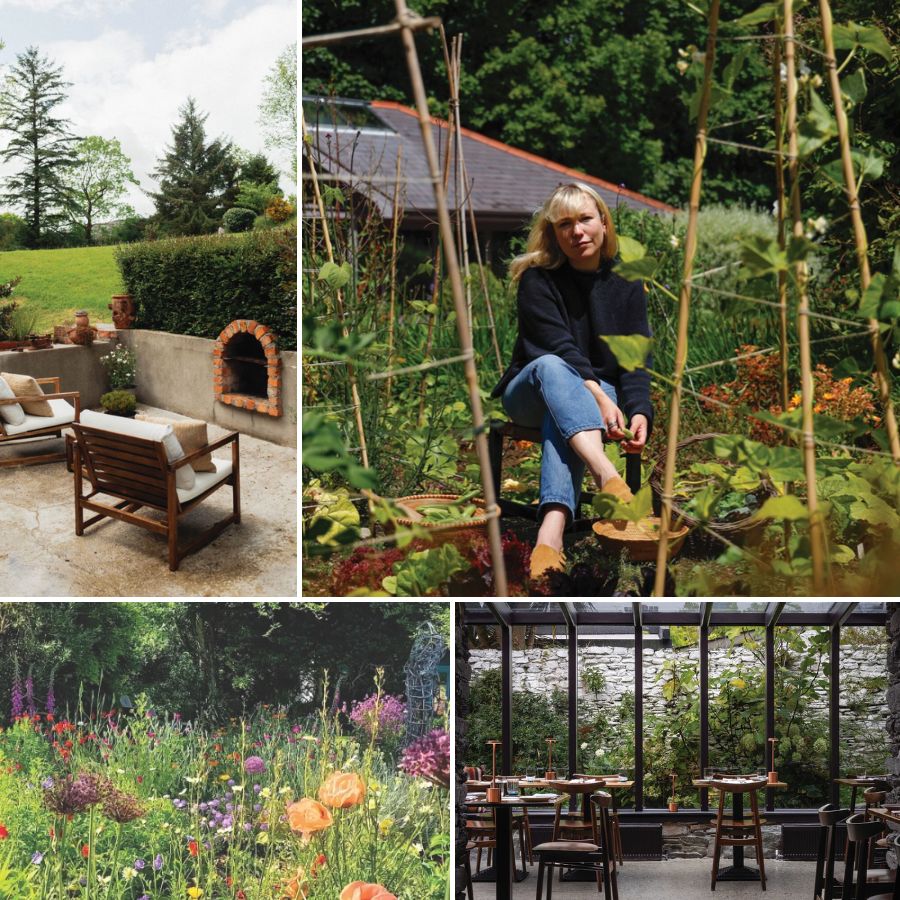
Wrapped in Douglas Fir with a copper roof and overhanging eaves to protect the timber, it features Irish stone and generous glazing overlooking the courtyard and market gardens. Inside, vaulted ceilings heighten the sense of space, while walls are finished with horsehair plaster by Studio Loho, lending texture and depth to the modern build.
Greene enlisted a schoolfriend of his to make the restaurant furniture. Michael Murphy of Non Violent Cutlery in Wicklow crafted all chairs and tables from a single oak tree. The restaurant will seat 32 guests across 13 tables, with a private dining room that seats up to ten. Transparency and connection with diners was central to the restaurant layout with its open kitchen, which Greene describes as being of central importance “for connectivity with guests”. The kitchen has no pass; dishes move directly from counter to table. A barbecue with open fi re functions as both cooking tool and focal point, while a central brushed steel wine bar anchors the room.
For Greene, how the food is presented is as important as the food itself, and certainly not an afterthought. The tableware, he notes, influenced the cooking as much as the other way around – an approach shaped by his time at Noma in Copenhagen. “The curation process began before I knew what the menu was,” he says. “So the ceramics guided the food.”
It’s immediately evident when speaking to Greene that what truly distinguishes Ómós is its relationship with makers and emphasis on design. Every ceramic, basket, spoon, plate, bowl has been commissioned specifically, and the makers and craftspeople he has chosen to work with are central to the project. Greene has been deeply engrained in the entire process, a somewhat unique position for a chef, and his own touch is woven into the entire essence of Ómós: “When you spend time with makers and you learn their craft you also develop an appreciation for it and a new respect.”
He travelled the length of the country to meet each maker and learn more about their processes before inviting them to visit the site and engage with the vision for Ómós. “It’s a relationship, the more you invest in people and bring them along, the more they trust you. Forming community is absolutely essential for me,” he says.
Among the makers are ceramicist David Holden from the Dingle Peninsula, who harvests his own clay; basket maker Hanna van Aelst, who grows and weaves her own willow in Tipperary; and Clare Dooley, a local ceramicist from Co Laois. Other contributors include Éamonn O’Sullivan from Hewn Spoons, based in Ennistymon, Co Clare, and ceramic artist Siobhán Joyce, whose plates and bowls are formed directly on rocks by the sea, retaining their natural contours.
His own family has also been greatly involved. Greene’s mother, glass artist Róisín de Buitléar, has created the water glasses, blown in Jerpoint in Kilkenny and etched with hedgerow-inspired motifs that refl ect the local landscape. She also sourced vintage crockery and glassware from France, which will be used for breakfast service and cocktails, tying in influences of Greene’s time spent growing up in Langeudoc as a child and the culinary influence it had on him. Greene’s father, Terry Greene, a typographer, came up with the project’s name, finding the word Ómós, which means homage, duty and respect.
This is all central to the feeling Greene wants guests to have when they walk into the space. “I want people to experience a sense of wonderment. A sense of place and connection to place,” he explains. Having worked internationally at Noma and Geranium in Denmark for many years, with shorter stints hosting pop-ups in New York, Bangkok, Berlin and Iceland, it’s always been a dream to open a restaurant at home. “This is Ireland, we built this in Ireland and designed this in Ireland and we want it to feel like Ireland. But even more than that, we want it to feel of Ómós. We don’t want it to feel like it could be anywhere else.”
You get the sense that every carefully considered detail is going to leave a lasting impression on visitors. “What I really want people to feel is a sense of calm and belonging. I think that’s what these heirlooms – which is what all of these items are – embody too.” @___omos