



Writer Rebecca Willis on the stories our clothes hold – and how they make a clearout difficult
If we could suffer a bout of amnesia that applied only to our clothes, clearing out the wardrobe would be easy. It is our memories that give our garments their special powers and make us want to cling on to them: when we first buy them, our clothes are a blank canvas, but over time they gather emotions and then, like Proust’s madeleine or a piece of music or a particular scent, they can whisk us back down the corridors of time to a long ago party or wedding or the first day at a new job. So throwing clothes out can feel like burning your diary or forgetting an old friend – an annihilation of your personal history.
I realise that is not a particularly helpful thing to say if you happen to be standing in front of your wardrobe planning a big clearout. But to look on the positive side, it does mean you have another way of telling your life story: you can play a kind of Desert Island Discs with your wardrobe, picking out the ones that narrate a particular chapter – and it’s much more colourful than a plain old CV.
Choosing just eight items is hard, though. Mine change every time I play, but today they include my first bra, bought by my mother from M&S, covered with a pattern of pale blue flowers, and barely functional because it didn’t have much of a job to do. From the same era is the loathsome red school hat, so identifiable that old ladies used to phone the school and report us for eating in the street (that would be a full-time job today). Later comes the gold dress I made from a jumble-sale curtain, which I wore when I inadvisedly sang for a student band. And later still comes the witty, cream-coloured Moschino suit that looked like a couture toile and was decorated with flower-patterns made of press studs and hooks-and-eyes … and which my sister minded my wearing to her wedding because it was almost-white. That’s another story, but I trust you get my point – that all our clothes have stories to tell.
“Throwing clothes out can feel like burning your diary – an annihilation of your personal history.”
We know the stories of our own clothes inside out, but other people’s clothes tell us things too. Scientists estimate that up to 90 per cent of human communication is non-verbal. What we choose to wear – or in some cases what we are compelled to wear – is a part of that. Humans are sophisticated primates who can attribute meaning to objects in a way that other animals cannot. So a person’s clothes can indicate their religion, their sexuality, their income and the job they do, as well as giving us clues about their personality. Prince or prisoner, policeman or partygoer, priest or paramedic – we can tell at a glance what their likely role is, because we are fluent in clothes even if we don’t know it.
This has a flip side of course. The language of clothes can be used to tell lies and to dissemble just as words themselves can. In Hebrew, the root of the word “clothes” is the same as the one for the word “deceit”, and the root of the word “coat” is the same as the one for “embezzlement”. In modern English the words “cloak” and “fabricate” are linguistic reminders of how clothes can be used to manipulate the truth.
Con artists and spies know that dressing the part is the crucial first step to being believed. Elizabeth Holmes, the biotech fraudster behind Theranos, donned Steve Jobs-style black turtle-necks, while the “fake heiress” Anna Sorokin found that the “right” clothes and accessories helped fool rich New Yorkers into thinking that she was one of them. And Frank Abegnale Jr, the subject of Spielberg’s film Catch Me If You Can, must have had the skills of a Hollywood costume department.
Some clothes can make people disappear. When Richard Gere decided to research a role by going around New York disguised as a homeless person, no one recognised him. And it has been shown that the real-life equivalent of an invisibility cloak is the high-vis vest – especially when accessorised with a clipboard.
We use clothes to deceive ourselves, too, because what we wear affects us psychologically. TV presenter Kirsty Wark told the audience at THE GLOSS Gala in 2023 that being properly dressed makes her perform better. When my then-teenage son got his first smart overcoat, he said that it made him feel “more purposeful”. They were both articulating what we subconsciously know: that clothes can affect our mood and bearing, that they can give our self-confidence a boost and help us up our game. Conversely, they can help us switch off: we wear baggy, unstructured clothes when we feel like slouching around, and would find it harder to relax in a tailored suit and high heels.
Like actors, we can harness the power of clothes to help us get into our roles. Our wardrobes are the props cupboards of our lives.
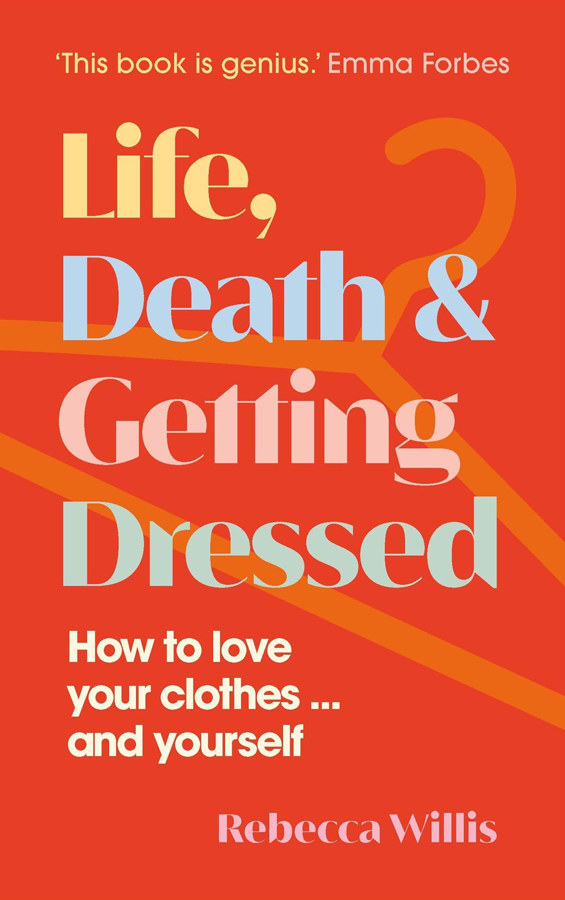
Life, Death & Getting Dressed, How To Love Your Clothes … and Yourself (New River) is out now.