


One of the most elegant features of these period townhouses are their elevated living and dining rooms – the piano nobile …
Image; The dining room on the piano nobile features oak-veneered joinery by Abington, which conceals an additional kitchen with dumbwaiter.
Located on the first floor, these rooms benefit from light and views, thanks to tall ceilings and windows. And yet they can pose a challenge for today’s residents, as we enjoy more connected spaces for living, cooking and dining, with easy access to our gardens.
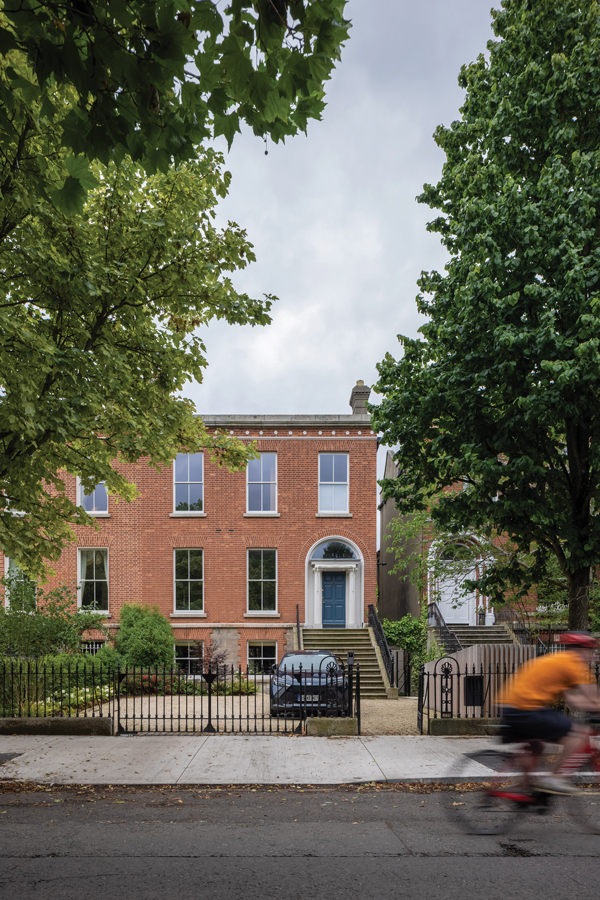
Colin McDonnell MRIAI, founder of Found Architecture, was asked by his clients, a Dublin family with three children, to solve exactly this conundrum: how could they enjoy the upstairs rooms in their Victorian home, while not feeling disconnected from family life in their contemporary kitchen extension downstairs?
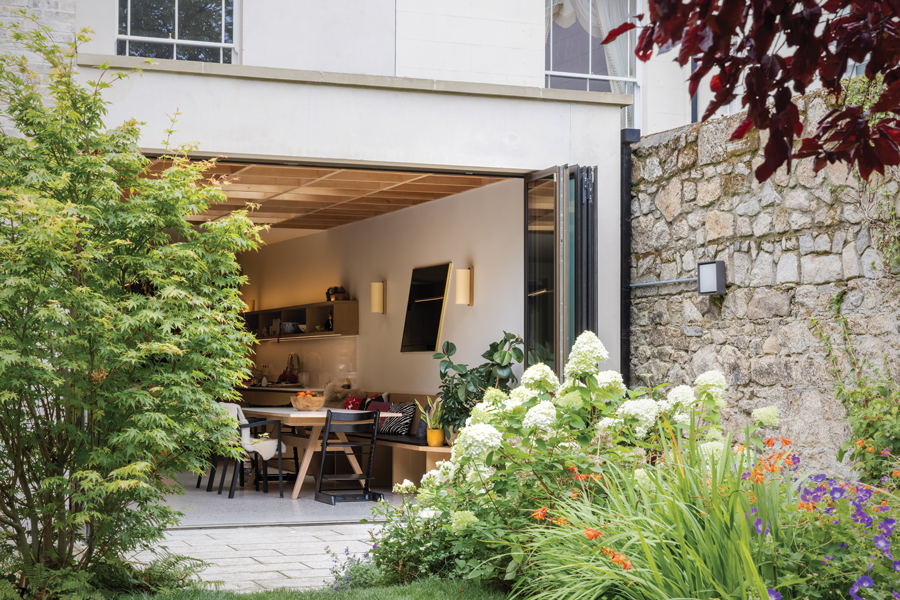
Fully retractable glass doors allow the garden to “flow in” to the house.
McDonnell found the design solution in a series of flowing spaces, which link the new kitchen directly to the original upper-level reception rooms via a new stair, mezzanine and secret door. The dining room’s bespoke oak joinery also hides a small kitchenette next to a dumbwaiter. These practical interventions ensure the upstairs rooms are central to everyday family life.
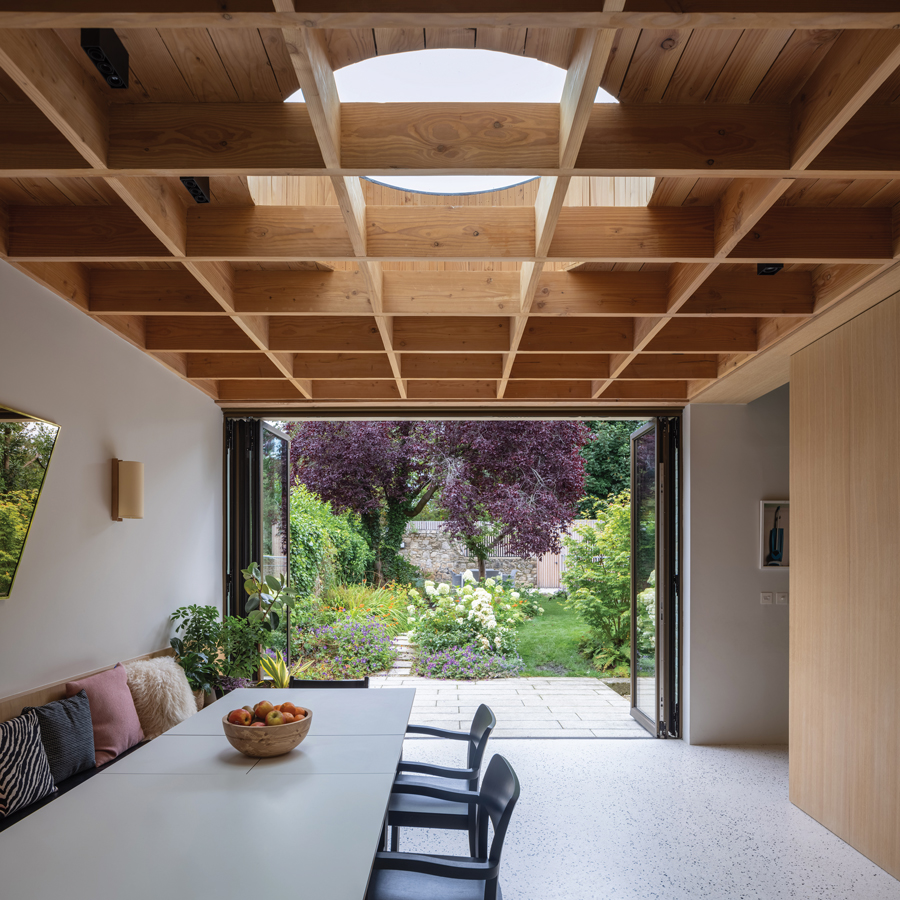
Rooflights in the douglas fir timber ceiling illuminate the informal dining area. The floor is terrazzo.
McDonnell was brought in early in the process, when the clients considered buying the house. While the house was in poor decorative order, it was found to be structurally sound, having good bones and many original features. As it’s a protected structure, McDonnell brought in additional expertise from a conservation architect. Original features were carefully restored and only replaced where necessary.
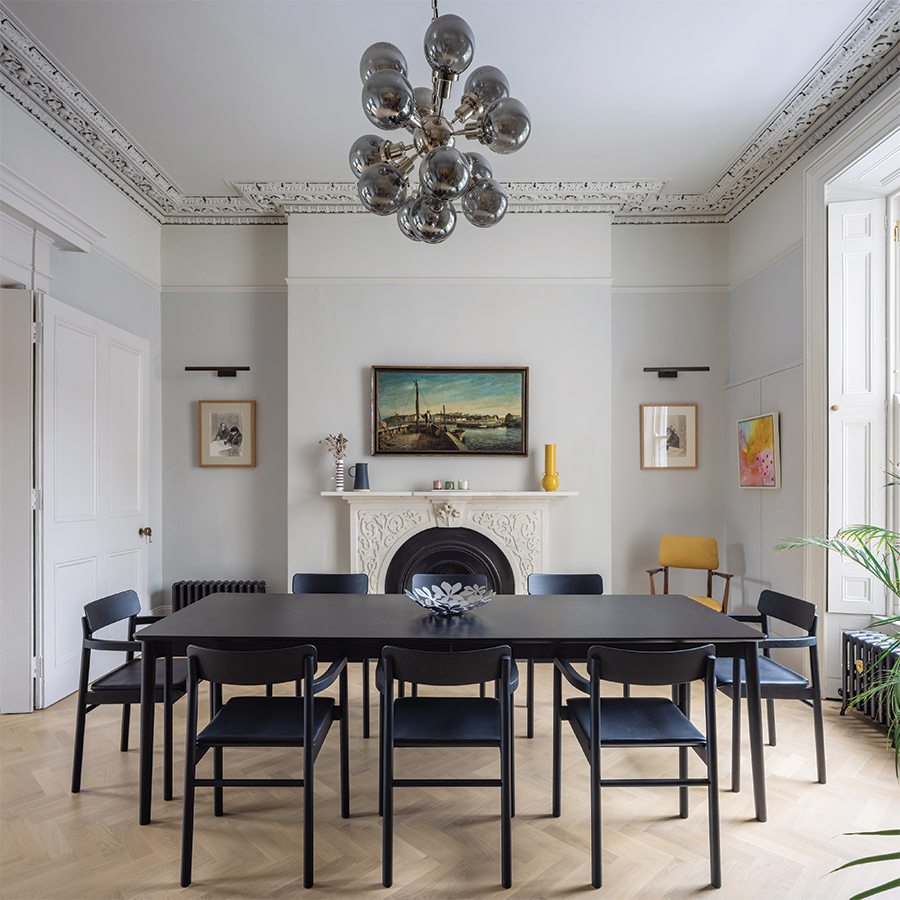
Original features including cornices, fireplace and windows were restored.
The modern extension fulfils the family’s additional requirements: it creates a family hub around the kitchen with the desired connection with the landscaped garden, while providing additional bedroom space in the extended return. An innovative aspect was the use of cross-laminated timber for the structure. Timber is not only a sustainable material, it also ensures a quality finish due the prefabrication, thermal efficiency and construction speed. This thoughtful renovation is an example of how period homes can be adapted to contemporary living – with every room part of everyday life.
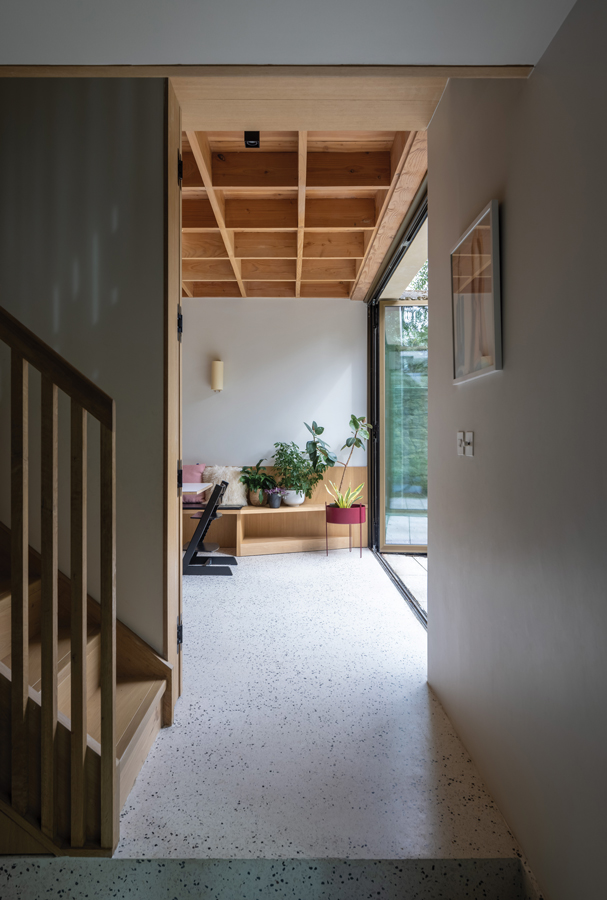
An important feature is the new solid oak “secret stairs” connecting upstairs and downstairs.
DESIGNER’S EYE: FOUND ARCHITECTURE
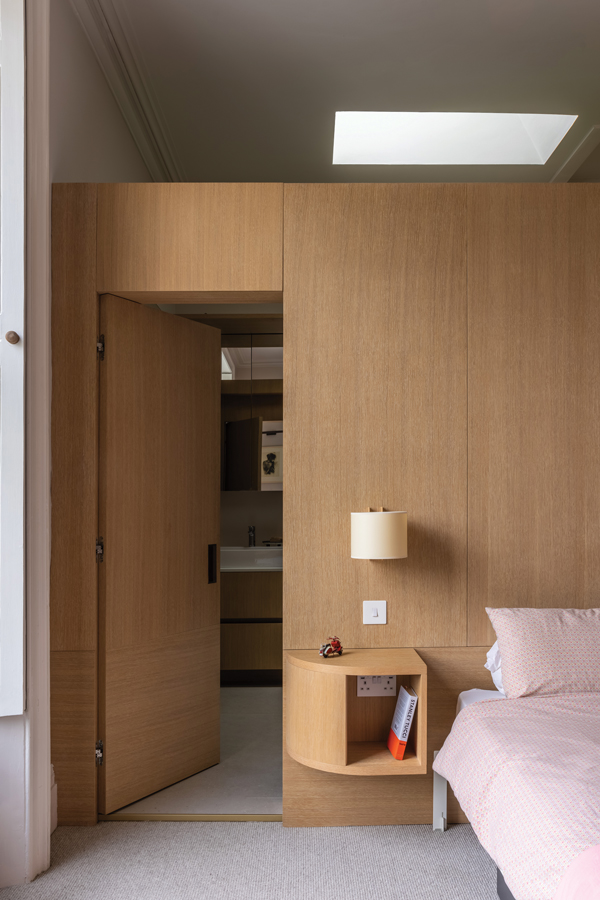
Bespoke joinery creates clever bedroom storage – from elevated bedside tables to a spacious walk-in wardrobe. Tucked in behind the oak panelling is also an en-suite bathroom.
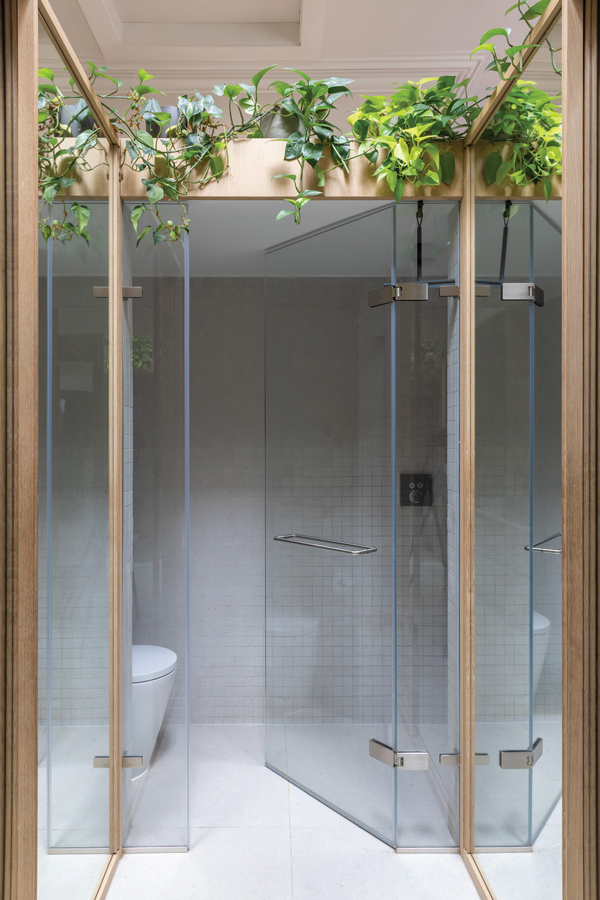
Smart glass doors and off-white tiles create a sense of space in the en-suite. To preserve the bedroom’s period proportions, the joinery stops short of the ceiling.
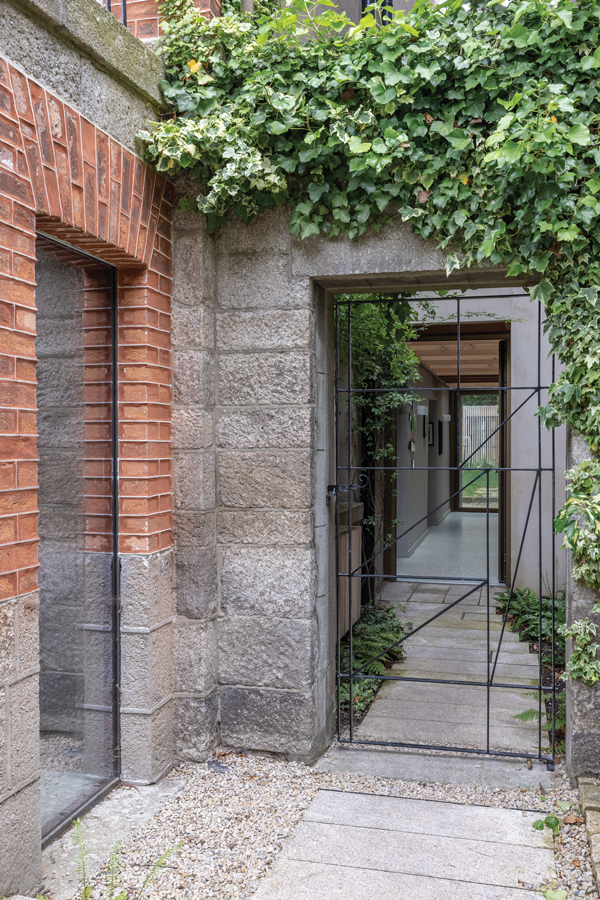
Old meets new in the entrance courtyard. New windows are set into the brick and stone walls, and the design of the gate is based on the original plan of the house.
SEE MORE: An Architect And Interior Designer’s Home To Work And Live In