




Confined within city limits, urbanites have embraced the foraging trend and all it delivers – food, flowers and a greater connection to the natural world. How do we get started and who’s picking what, where? …
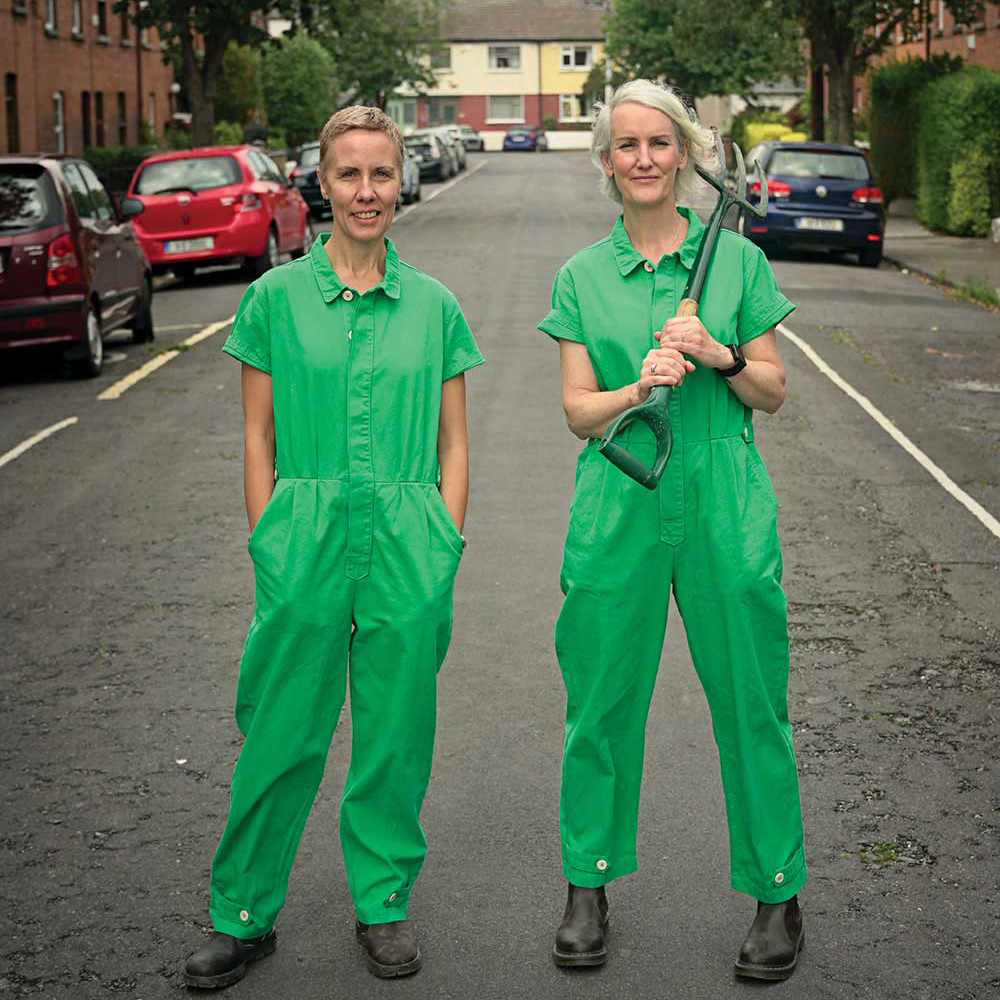
Francie Duff and Sonia Reynolds
“I spent a lot of my childhood in Wicklow,” says Francie Duff, co-founder with Sonia Reynolds of the luxury Irish gifts company Stable Ireland. “And Sonia grew up in Armagh. With little to do indoors, we were happier outside, roaming around, playing conkers, picking up edible wild fruits, seeds and nuts along the way. We built shelters in the woods from branches, ferns and mosses, and made elaborate fairy homes from sticks, flowers, grasses and leaves. We pressed leaves and flowers and at Easter, we would collect bare branches which we painted white, decorated and placed in a big pot on the table with wild primroses and bluebells. Both of us have brought these habits into our own homes and the traditions continue on in our own families today.
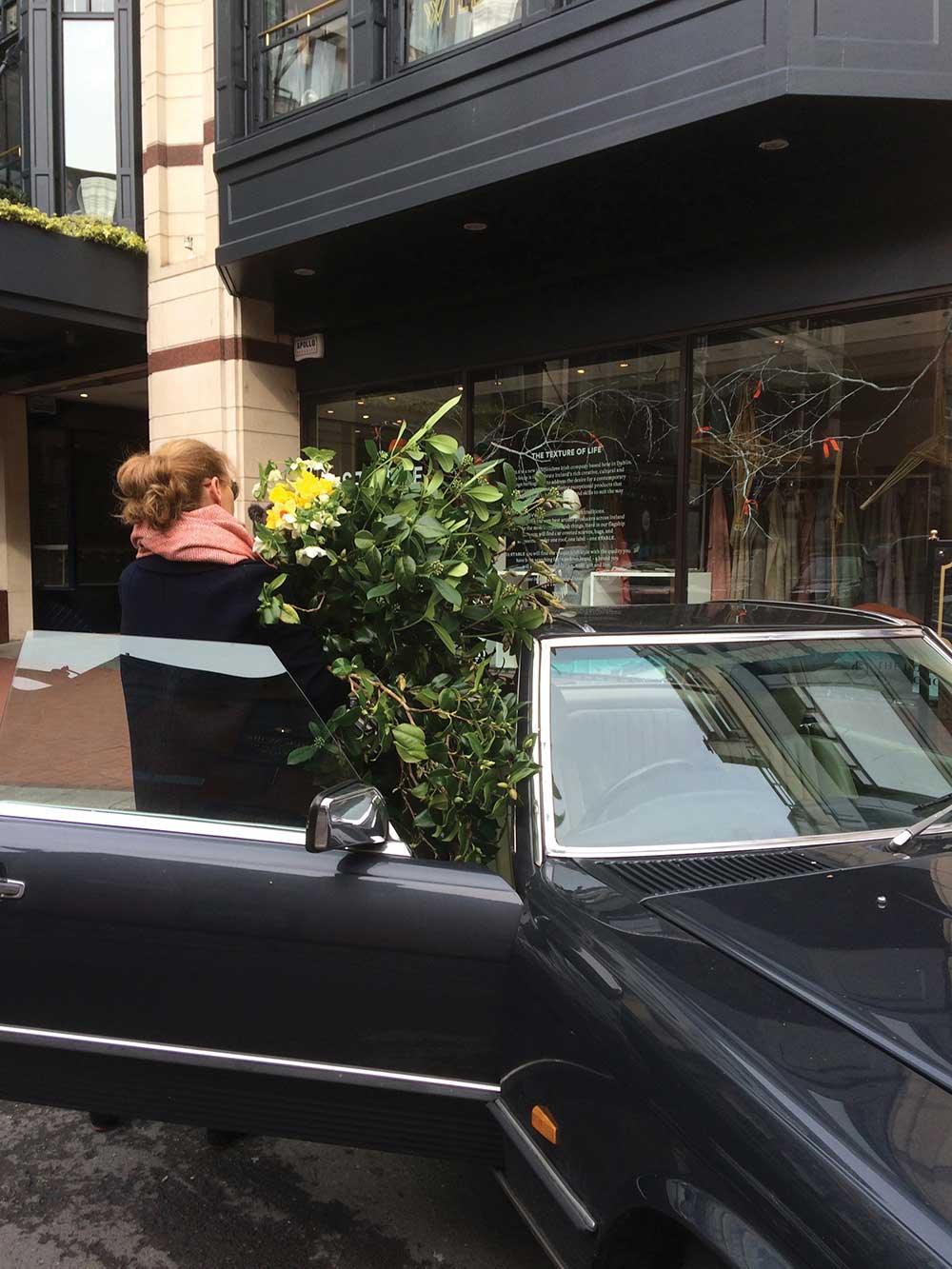
“We have also always made a feature of bringing fresh wild greenery into Stable. We gather up windfalls from overhanging trees on roadsides and lanes around Dublin. When we take road trips around the country, we come back with the boot of the car full of branches and wild flowers. Elegant beech branches budding in May will last weeks and weeks. Ferns, laurel and tree ivy look fresh and beautiful and form a great backdrop for flowers. We often pick up windfall quinces and put them in a bowl; their zingy-sharp scent fills the air.
“From early March onwards, we forage for food too, in seasonal sequence: spring nettles, wild garlic, wood sorrel and alexanders, summer hawthorn leaves, elderflowers, gorse flowers, marigolds and nasturtiums, late summer fraughans, wild strawberries, damsons, cherries and plums, autumn hazelnuts, ceps and chanterelles and cauliflower fungus. On holiday, the sea shores of the west coast yield edible seaweed, mussels and clams at low tide. We are always careful how and when we pick, mindful to only take what is surplus and in season.”

Morwenna Gerrard
Architect Morwenna Gerrard lives in Blackrock, Co Dublin and is a habitual forager. “As a country girl (growing up in Co Tipperary), I didn’t have a word for foraging, it was just what we did, naturally, every day. We gathered blackberries or rosehips or nuts, mainly for the nature table for school, but also to make things in the kitchen. I still have the habit.” She says that SoCoDu offers surprising good pickings: “I get bay leaves from a huge bay hedge up the road – much less wasteful than buying a jar – and nettles, dandelions and sorrel and wild garlic in the fields nearby.” The latter she uses in a stir-fry or pesto. “There are gooseberry and raspberry bushes and a cooking apple tree in Carysfort Park and a walnut tree in the grounds of the UCD Smurfit School.” Morwenna’s children were introduced to the Owls programme at school where they learn to identify what is safe to eat. “The key thing is to forage in places where weedkiller isn’t used. It’s great that Dun Laoghaire-Rathdown Co Council has introduced a policy of not using pesticides, and of re-wilding specific areas.” As well as foraging for ingredients (including samphire and seabeet at Seapoint) she gathers foliage to fill huge clear vases. “I use the cuttings after pruning in the garden: birch catkins, dogwood branches and magnolia twigs.”
Catherine Cleary and Ashe Conrad-Jones
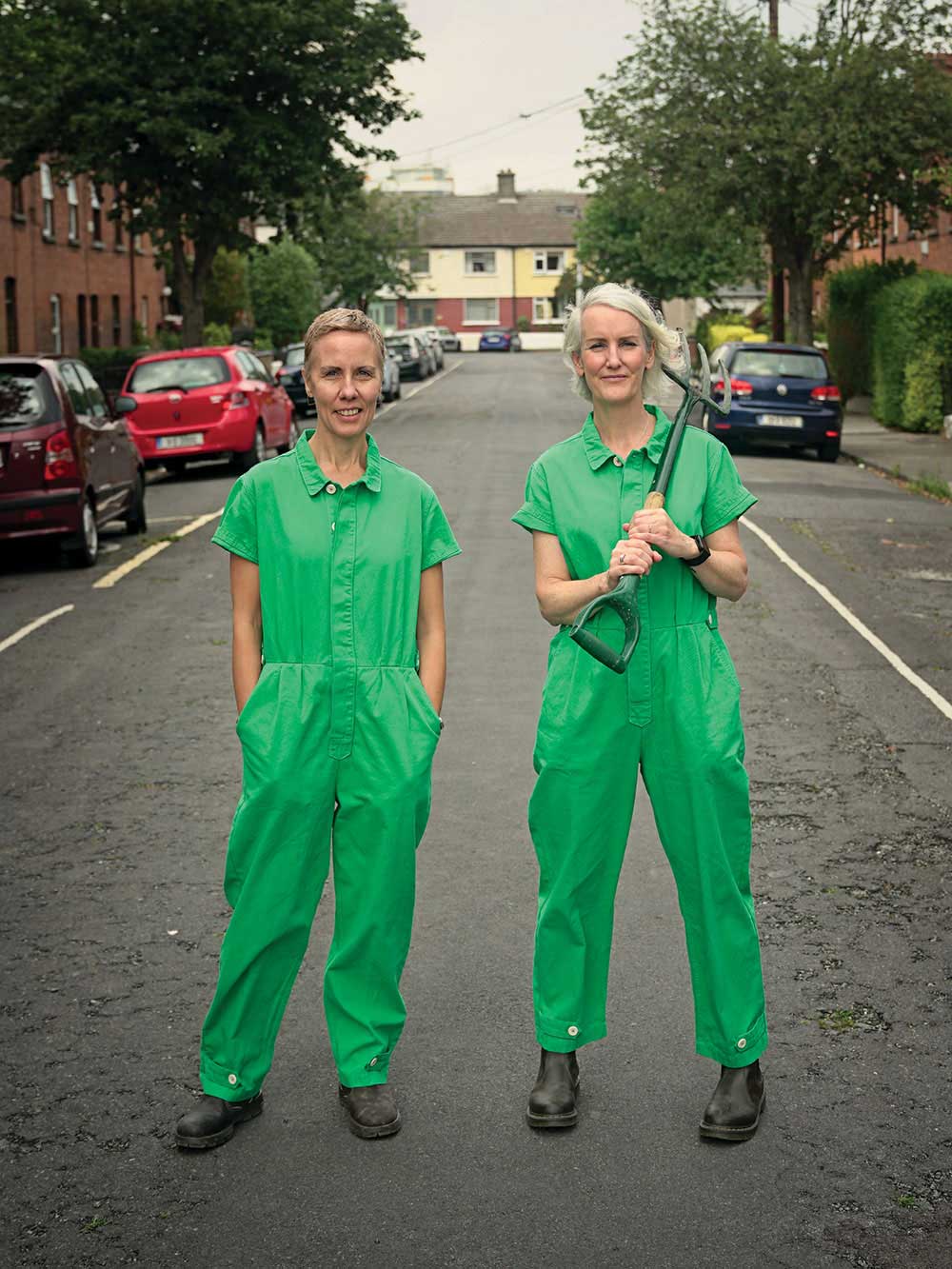
Both fervent foragers, Catherine Cleary, formerly restaurant critic at The Irish Times, and Ashe Conrad-Jones set up PocketForests, a social enterprise dedicated to the planting of small urban forests.
“A curious thing happens when you head out to forage for food. Call it mindfulness or connecting to nature, but you feel part of something bigger and more capable. Your veg patch might be struggling but there’s a world of food out there minding itself, an edible miracle. Something else has got our back.
“It’s about more than just food. We have evolved to lean in to the plant world, how it looks, smells and tastes. Plants are our oldest living ancestors, our wisest teachers. So even if you come back empty-handed, you’ve fed your spirit.
“Nothing in a supermarket says summer quite like freshly picked elderflowers. And rowan berry marmalade contains lots of vitamins to get you through winter. Irish hazelnuts are all the sweeter for being tricky to winkle out of their shell. Crab apples make jelly pinker than a Haribo. Birches give us sap in spring. Our native trees and shrubs feed a web of life around us and the insects feed the birdsong that brightens our spirits on the darkest days.
“Locked down to 2k in the Liberties, the country’s greyest neighbourhood, Ashe and I looked hungrily at potential green spaces. We used the lens of Japanese botanist Akira Miyawake and his idea of compact native forests. Trees make the best street forage, above the car exhausts and leglifting dogs. We could grow an edible one-minute city with a pocket forest on every street in just the space of one parked car. This is our mission.” www.pocketforests.ie
Pia Fennell
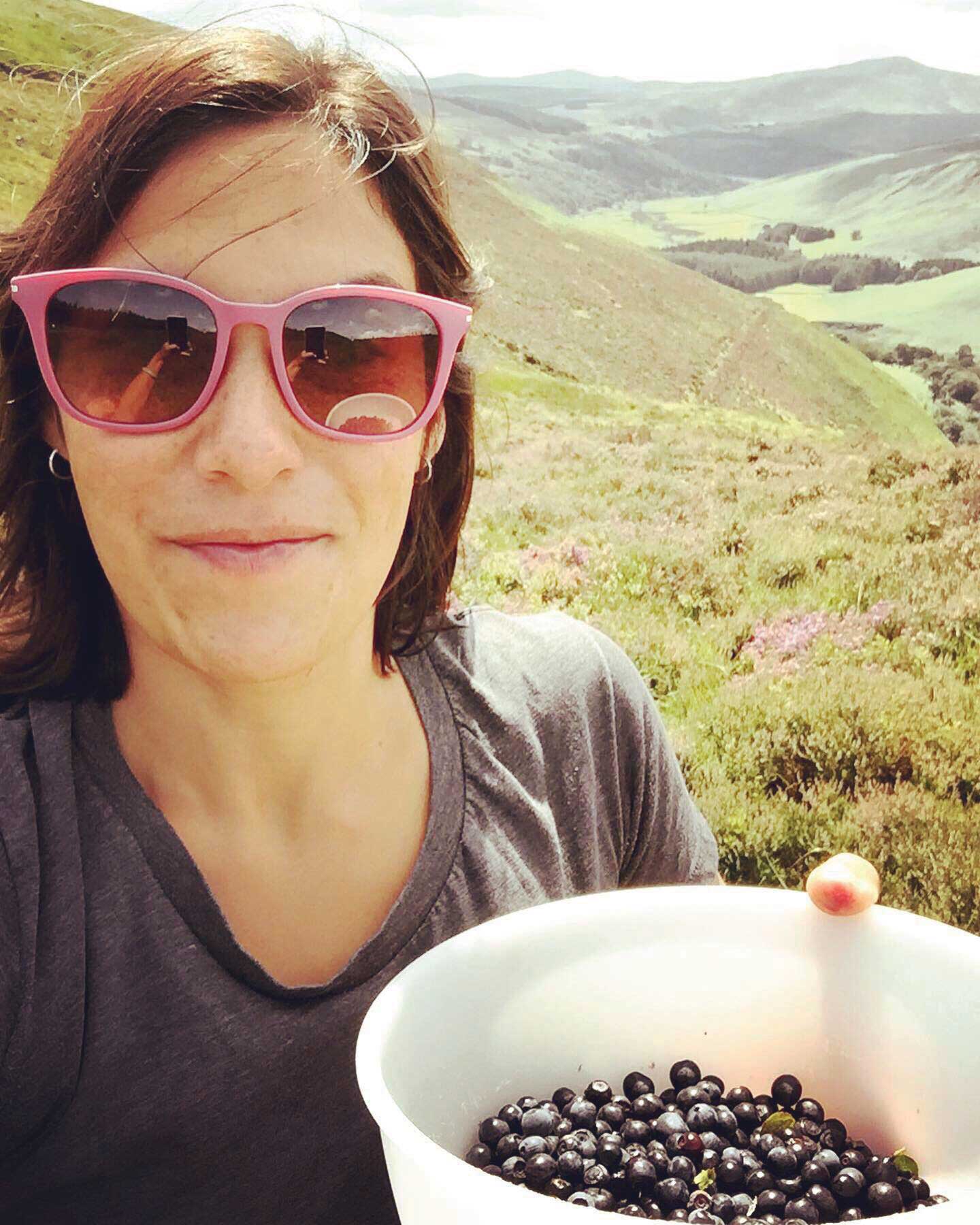
Writer and New Yorker Pia Fennell found foraging useful as way to get to know her adopted city of Dublin better and to introduce her children to the natural world.
“I’ve spent my life living in bustling cities, so my interest in foraging takes some by surprise. I live in The Liberties, a part of Dublin rich in history and culture, but sorely lacking in green space. I used to head with my family to the mountains or the sea nearly every weekend where the amazing abundance of wild Irish food is obvious. But discovering something edible and free in my inner-city Dublin neighbourhood is positively thrilling. Once I got comfortable identifying forageable plants “in the wild”, I discovered that edible plants can be found everywhere in town: the edge of a car park, along the Grand Canal, in local parks and playing fields. Every walk becomes a little hunt, and an opportunity to look closely at trees and shrubs. My young children have become adept at identifying berries and plants. It’s basically a great game of hide-and-seek for them, and bringing something home to cook and eat makes it even better.
“Foraging has also become a gentle way to keep us connected to the cycle of seasons and traditions. Early spring means wild garlic, autumn walks are for mushrooms, and we look forward to Fraughan Sunday in July, when we collect wild bilberries to make a pie. Many of the plants we call weeds are seriously undervalued: nettle soup or dandelion cordial remind us of their worth.
“I’m delighted urban foraging is becoming more popular. There are so many resources available: books, workshops and apps, great for identifying dodgy mushrooms! Wherever you live, being aware of your landscape is rewarding and can yield delicious results.” @fennellseed

Samuel Arnold Keane
Samuel Arnold Keane is a forager, an illustrator and a musician, among other things. His Urban Forager booklet, above, identifies ten edible weeds easily found in the urban landscape, with details of their health-giving properties.
“Foraging fosters an intimate relationship with our environment. We tap into an ancestral activity. We become part of the flow rather than spectators of the outdoors. We begin to truly care for our environment – the beach we comb, the forest we walk, the derelict land we trespass into, the small slices of the city’s landscape. We start to stand up for it. This is where I believe environmental action truly begins.
“So many books on foraging approach it from an academic perspective. I prefer to use a language that is colloquial, poetic, that tells a story. The booklet itself is printed on recycled papers and designed using a folding pattern rather than glues.
“Growing up in cities – Lyon, and then Dublin – I found slices of wilderness in the cityscape, derelict land, ditches, abandoned tracks. I was lucky to grow up with one such space (a terrain vague) at a hop over my urban garden wall. I craved this overgrown and peaceful place. I felt I could be in the middle of a large luscious ecosystem and forget the city for a while. When I moved to Dublin, there was the coastline, which I call the “Magic Line” in my Seaweed Forager booklet (coming soon).
“Foraging can help with community building when people gather, preparing and preserving wild foods and materials for various uses, and it is an activity for all ages and abilities.
Samuel hopes to give more foraging workshops this spring/summer and create more printed works to inspire people to forage and deepen their connection to their local environment. “I always say: gather carefully, wash thoroughly, prepare lovingly, eat whole-heartedly.” @samyelyel

Sharon Greene
“In 2008, while out picking blackberries on our farm in Co Offaly,” says Sharon Greene of The Wild Irish Foragers, “our daughter Emily looked up at the hedge and asked: ‘What is that?’ She didn’t know what a rosehip was! We realised we were assuming that sort of local, natural knowledge was being passed on to the next generation but of course, it takes a concerted effort. That night, we rooted out an old recipe for rosehip syrup. Emily drank it from a little cup, still warm from the pot. We began to research old Irish recipes for foraged food: our interest grew and our connection with our land deepened further.”
In 2013, the Greenes started The Wild Irish Foragers & Preservers. From their land they hand-harvest wild rosehips, elderberries and elderflowers, damsons, gorse, rowanberries, sloes, spring nettles, blackberries, honeysuckle, goosegrass and clover. From these they make syrups, sauces, fruit cheeses, jellies, pontack (an elderberry sauce) and Shrubs – apple cider vinegars infused with rowanberry, gorse, honeysuckle and dandelion. It’s a family affair: husband Gordon is chief forager and Sharon makes all the products in small batches. www.wildirishforagers.ie
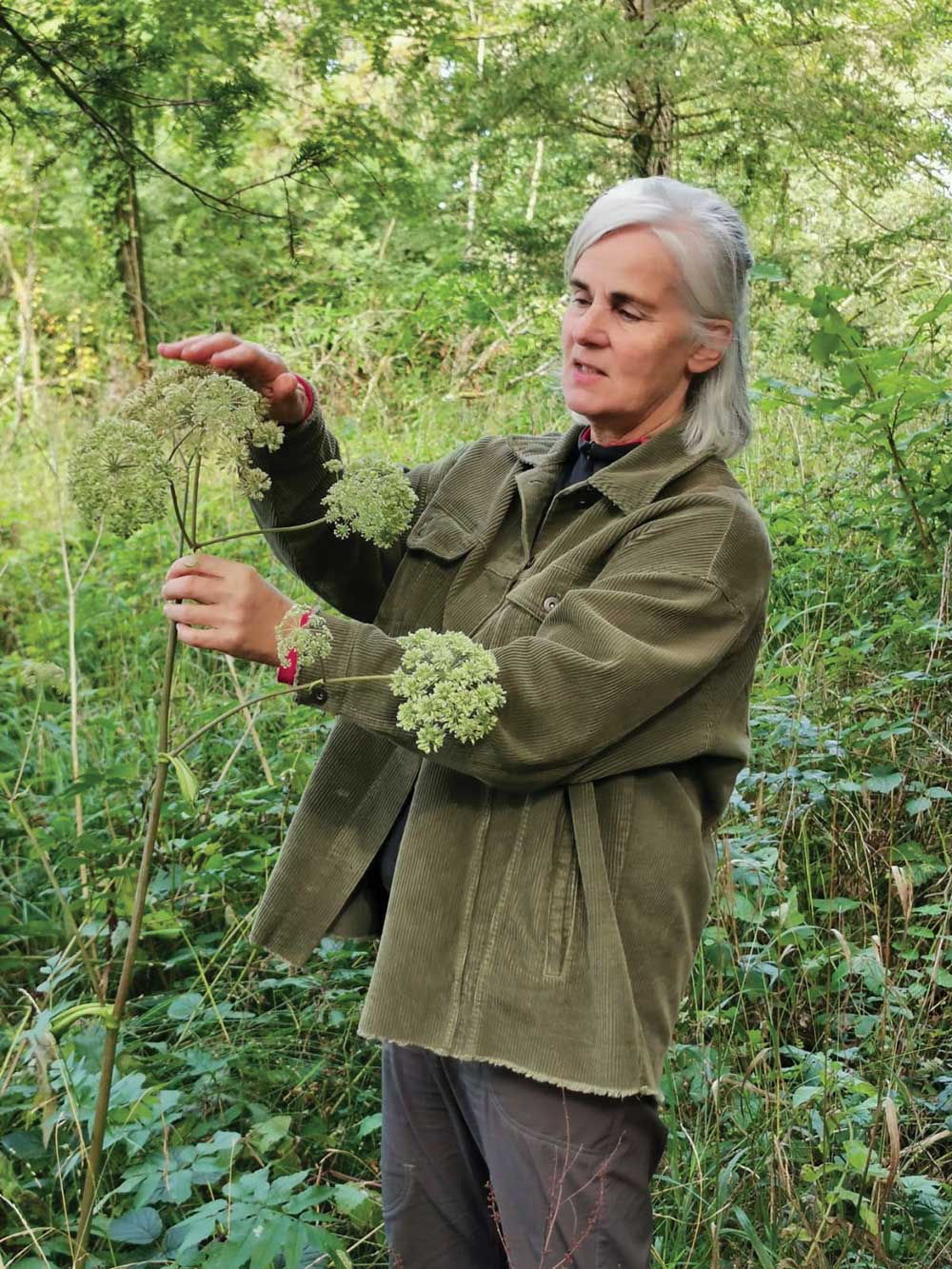
Mary Bulfin
Foraging has been part of Mary Bulfin’s life since she first accompanied her grandmother on woodland walks as a child. Now she teaches foraging: find her courses at www.wildmary.ie. “My mother also taught me a huge amount about nature and we were reared on good food, much of it wild – rabbit, watercress and mushrooms. For me, foraging means being out in beautiful nature and knowing the food I find, cook and eat is organic and wild, adds to the pleasure.”