

The renowned sculptor talks about her new exhibition and what she hopes visitors will take away from her work …
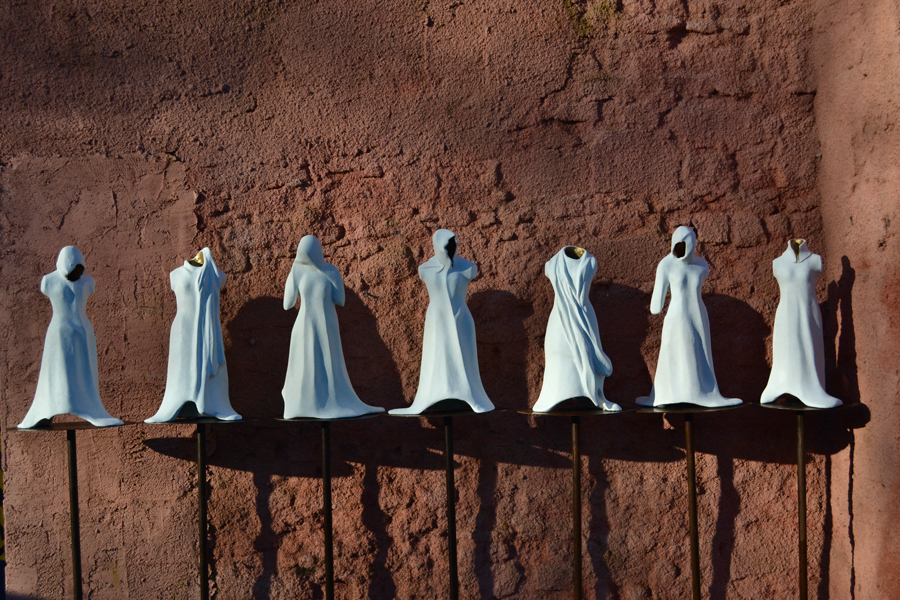
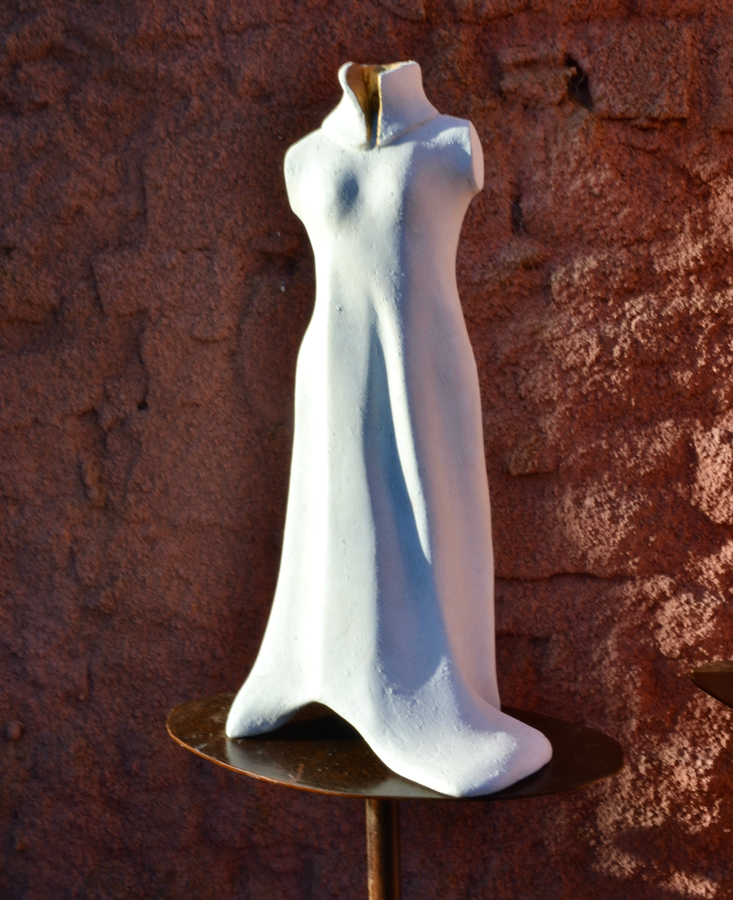
Inspired by a remarkable group of women who lived and worked in religious communities between the sixth and sixteenth centuries, Catherine Greene’s exhibition reflects on their care and quiet influence – lives combining spirituality with healing, music, writing and art. At the centre is the cloak, a recurring sculptural form that feels both open and protective.
On becoming a sculptor: My interest in sculpture was more of a dawning realisation that working in three dimension was far more exciting to me than using colour. Making sculpture would have become more a concrete aspiration during my first year in NCAD where one does a general course in all disciplines before specialising towards a specific trajectory. However, in tandem with sculpture, drawing has always been an equally important part of my practice.
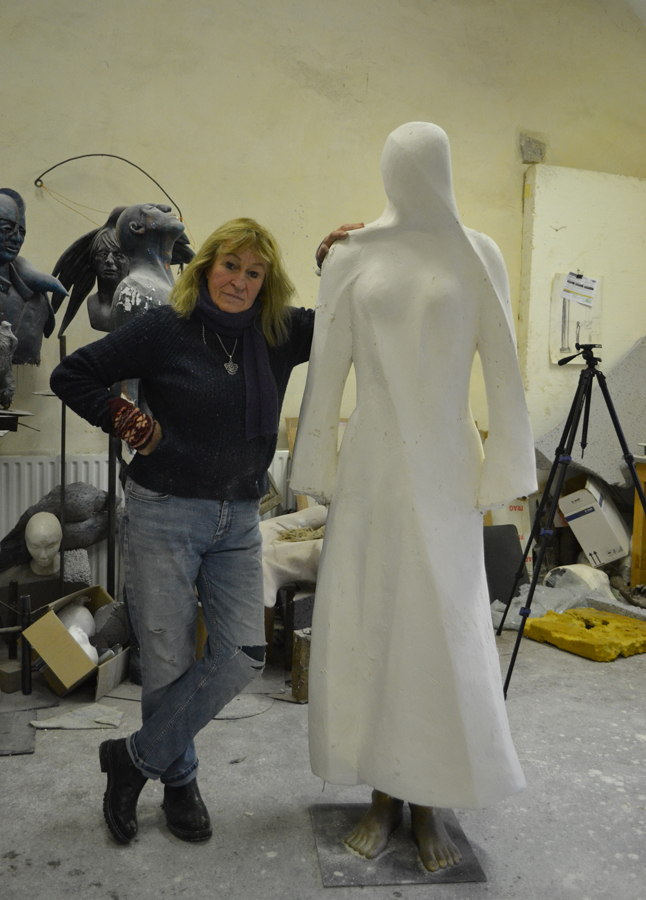
Because I am a figurative sculptor, life drawing has played a vital role in my studio life. I used to do life modelling, so I got to know both sides of the easel. I spent time doing self-directed life drawing sessions facilitated by the RHA some years ago which was wonderful. Trying to organise a model in the countryside is much more difficult. My very first muse was Camille Claudel who worked with and for Rodin. She designed the Gates of Hell. Sadly, as so often the case, she was almost obliterated by Rodin and spent a great part of her life in an asylum as a result of his treatment. Interestingly, Gwen John – who was a painter and Rodin’s lover after Camille – did not suffer the same fate, perhaps she never gave herself so completely as Camille. I tend to think of mentors as living and, until their deaths a few years ago, Elizabeth Frink and Magdalena Abakanowicz were very influential in how I saw the figure. I loved their work and still do.
On her studio and practice: I live in the countryside on the borderline of South Kildare and Carlow. After many years of making do in a basement, my studio is now in a converted shed. It’s a lovely place to be. It has everything that I need to conceive and realise projects in a small and large scale way. It’s literally across the yard from my home. Being in the studio is a daily practice beginning early. I have not tended to work from photographs; if anything, I’m stimulated by images in my imagination that arise from reading. For example, William Dalyrymple’s book The Holy Mountain led to a whole series of works based on the Middle Eastern Stylites, culminating in a solo exhibition. At the beginning of any new project or idea that’s percolating, I make a series of small sketches both on paper and in clay. From there, I decide if these ideas are interesting enough to me to take further. Ideas that are exciting lead to a point where you make works until the excitement that propelled one in the first place fizzles out.
Public commissions is another aspect to my work. Some of these include for The Royal College of Surgeons in the Anatomy Room, The Memorial to Dermot Morgan in Merrion Square, the work outside the Sutherland School of Law in UCD and The Thomas Francis Meagher Memorial in Waterford City.
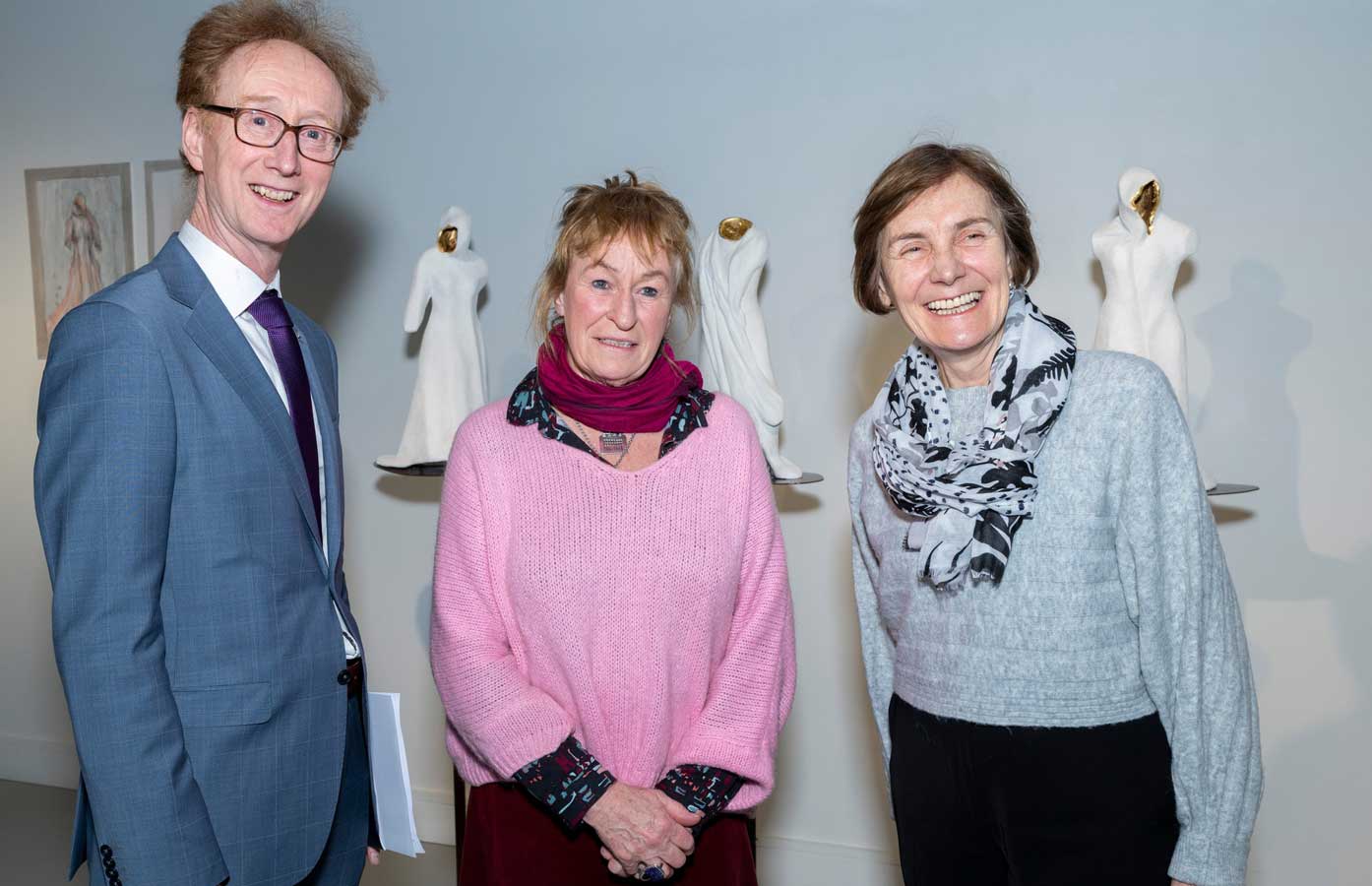
On her new exhibition Absence/Presence: I was invited by the Cultural Officer to the EU in Ireland to consider making a series of works about St Brigid and women of her statue from Europe, so I thought that it would be very interesting to explore that idea. I researched women who sparked my interest and who I felt could represent four aspects of life: healer, painter, writer and musician. All of these women lived their lives in convents, all of whom became incredibly important, beginning with Brigid in 540AD to the 16th century. Hildagard Bingen, who was a composer and Abbess, Plautilla Neilli the Renaissance painter, and mystic and writer Julian of Norwich. Despite the inherent bias towards women, particularly those who excelled in any given sphere, these four women managed to navigate and succeed against overwhelming male dictates of their time.
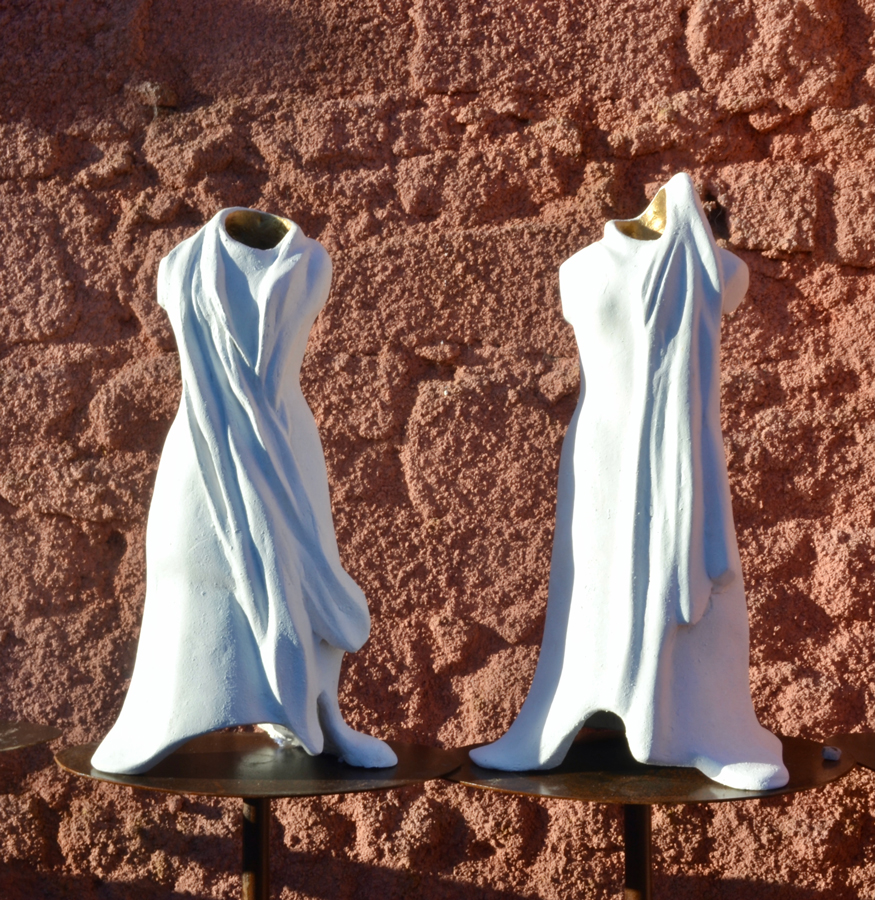
The symbolism of cloaks: The cloak serves as the central metaphor of the exhibition. It becomes a non-figurative embodiment of the collective experience of these women: a form that contains, protects, and simultaneously reveals and withholds. The cloak suggests a quiet power and an active silence – a space in which complexity is held rather than simplified. It gestures toward an ecumenical, maternal lineage that predates and transcends doctrinal divisions. In this context, the cloak welcomes those historically marginalised or excluded, gathering their stories without imposing a singular identity or image. It resists the visual language often applied to female sanctity; instead offering a vessel for multiplicity, ambiguity and resilience. Through this symbolic gesture, the exhibition honours the profound, lasting influence of these women – not through depiction, but through the evocative presence of what remains when literal representation is set aside.
On the viewer: You make work because you want to fulfil some desire within one’s own self. It’s impossible to anticipate how the viewer will see what moved you to create in the first place, but the desired effect is a sense of your endeavour. I hope that they see why and how I wanted to convey the absence and yet real presence of these remarkable figures in history.
Need to know: Absence/Presence is at the Europa Gallery Dublin until March 13; @catherinegreene9