In The Company Of Nature: House of Hackney Founder Frieda Gormley
By The Gloss
On her newly-published book, shifting Mother Nature from muse to business partner and rewilding the idea of business itself …
Nature has always been a source of inspiration for Frieda Gormley, who grew up near the Phoenix Park in Dublin: “I had a very early immersion in nature,” she explains. “Whether I knew it or not, that upbringing created a sense of belonging in the living world.” It’s no surprise then that the company Gormley would eventually launch, alongside her husband Javvy M Royle, would be deeply inspired by the natural world. Cult British brand House of Hackney, the luxury interiors company best known for its opulent floral and fauna wallpapers, fabrics and home accessories, also draws influence from William Morris and the Arts and Crafts movement.
It was very important from the start that all products were made in the UK. The couple set out with “no background in interiors and no little black book” knocking on doors until they had formed a small portfolio of family run and heritage manufacturers across the UK. Sixteen years later, these skilled artisans still produce their products and Gormley describes them as being like family. “This wasn’t just a business to us; it was a living, breathing system, created to nurture craftsmanship, support meaningful employment and cultivate joy and lasting beauty inspired by the natural world in the most sacred space of our lives – our home.”
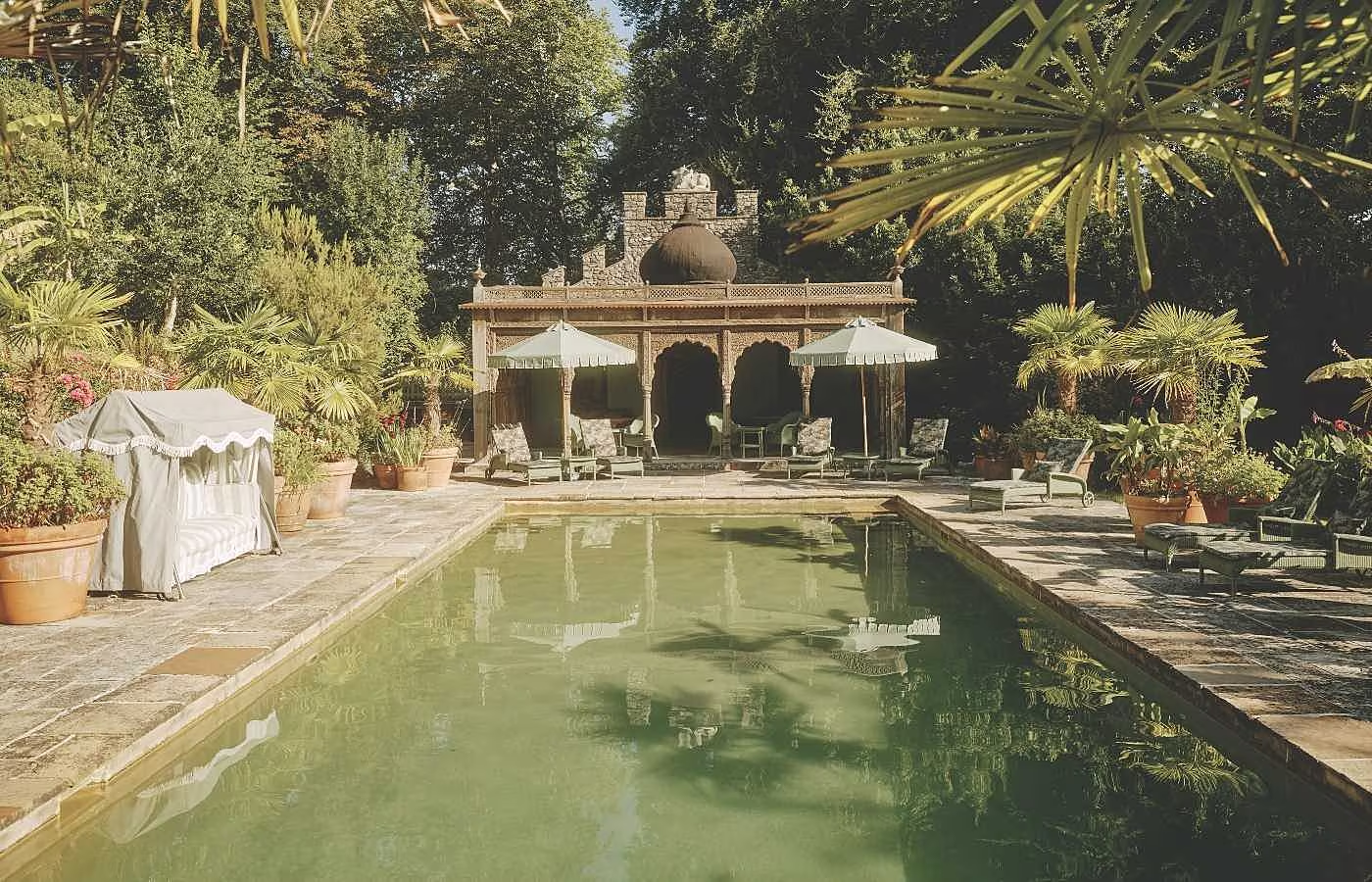
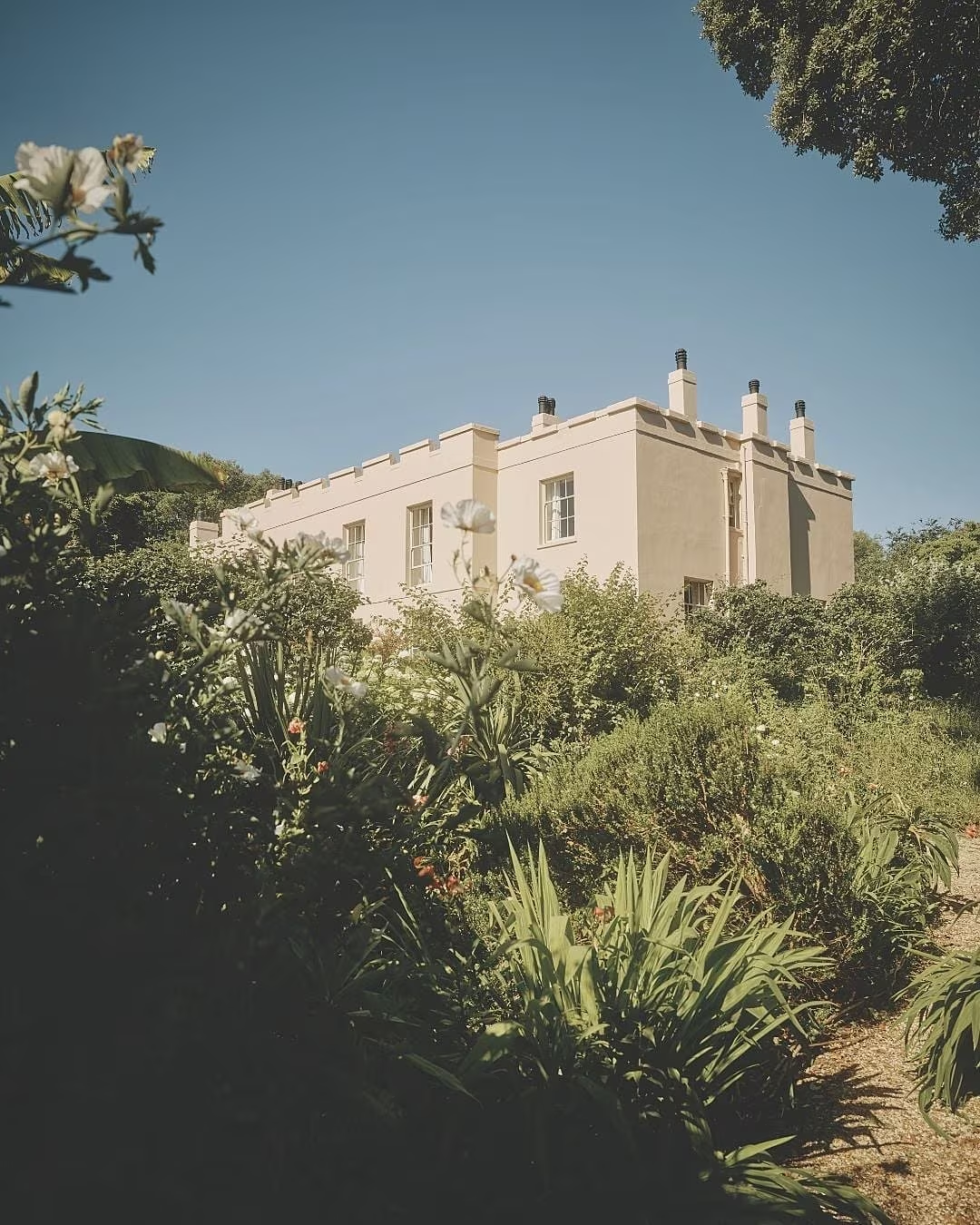
Trematon Castle sits on a nine-acre estate of ancient woodland, orchards and sub-tropical gardens, with a natural pool and Indian pool house surrounded by palm trees.
In a new book by Gormley, In The Company of Nature, she describes struggles with investors, chaotic board meetings and times when the couple barely had enough money to eat. She speaks of putting their home up as collateral for their business, of wresting control back from a private equity firm and of just how wrong exponential growth was for their business both ethically and economically. “There can be a dangerous mythology around entrepreneurship which can airbrush out reality,” Gormley explains. “We are often told stories of effortless success and vision and growth but rarely the fear and uncertainty. Every chapter of my life has shaped me, so it was important to me to include within the book moments of vulnerability, uncertainty and what could be perceived as failure but what is all part of the process of becoming.”
A key aspect of this “becoming” was Gormley’s growing desire to connect with nature. Having holidayed regularly in Cornwall, when the opportunity arose to move to the extraordinary Trematon Castle, which overlooks Plymouth Sound (part of Prince William’s Duchy of Cornwall), the couple did everything in their power to become custodians of the estate.
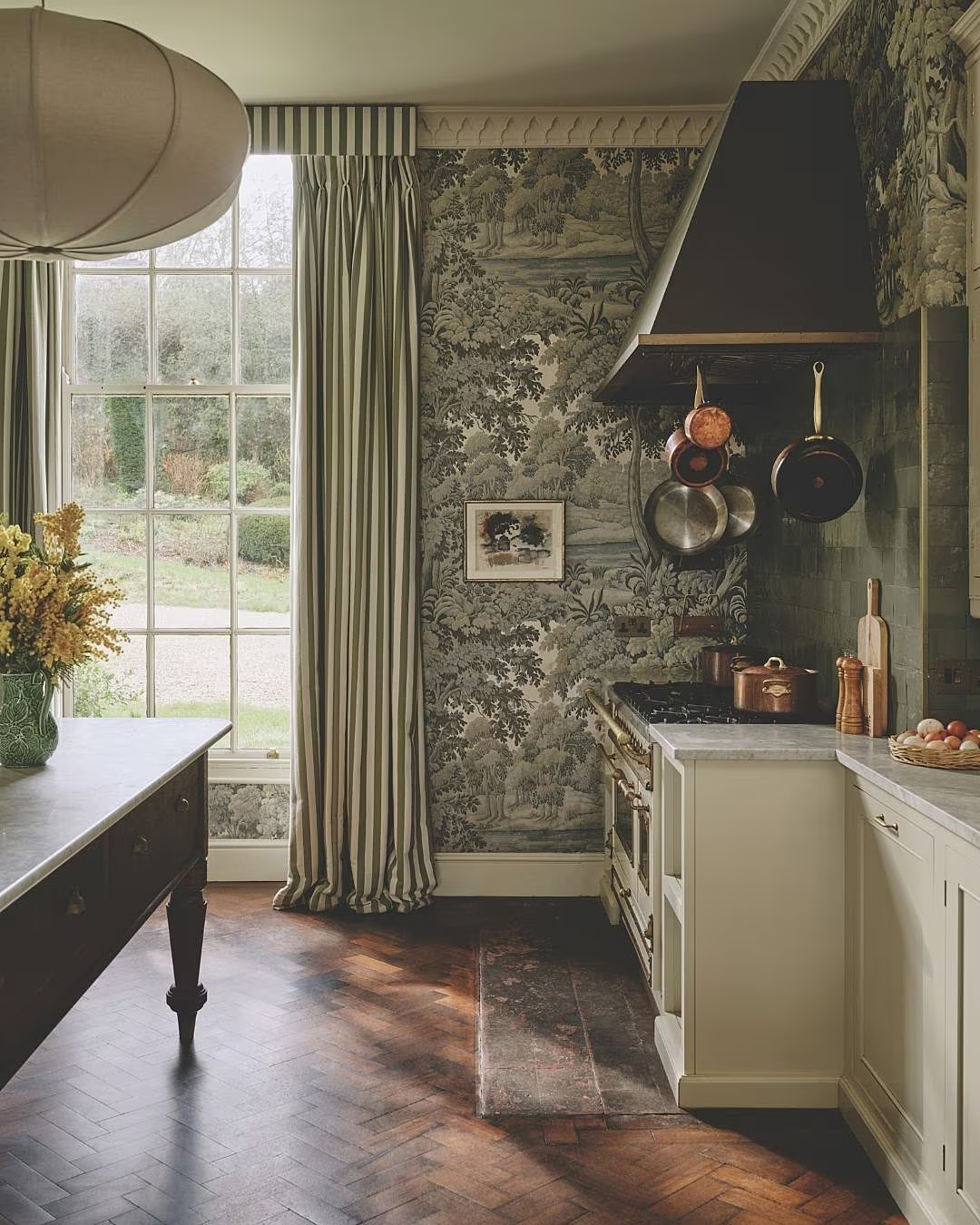
The kitchen features House of Hackney’s Plantasia wallpaper in sage and Trematon Stripe Jacquard curtains in verdigris.
The nine-acre estate is characterised by its Georgian-era house, Norman castle walls, and gardens which were redesigned by the previous leaseholders – acclaimed landscape gardeners Isabel and Julian Bannerman. By the time Gormley and her husband got the keys to Trematon and made the move with their two children, Javi and Lila, the gardens had become overgrown. “Friends who visited us in the early days were daunted for us but we weren’t daunted at all,” she admits. “Luckily my husband is greenfingered and we found a gardener who had previously worked at Trematon, a knowledgeable guy in tune with our way of doing things. More than aesthetics, it’s about working with nature’s cycles and systems.”
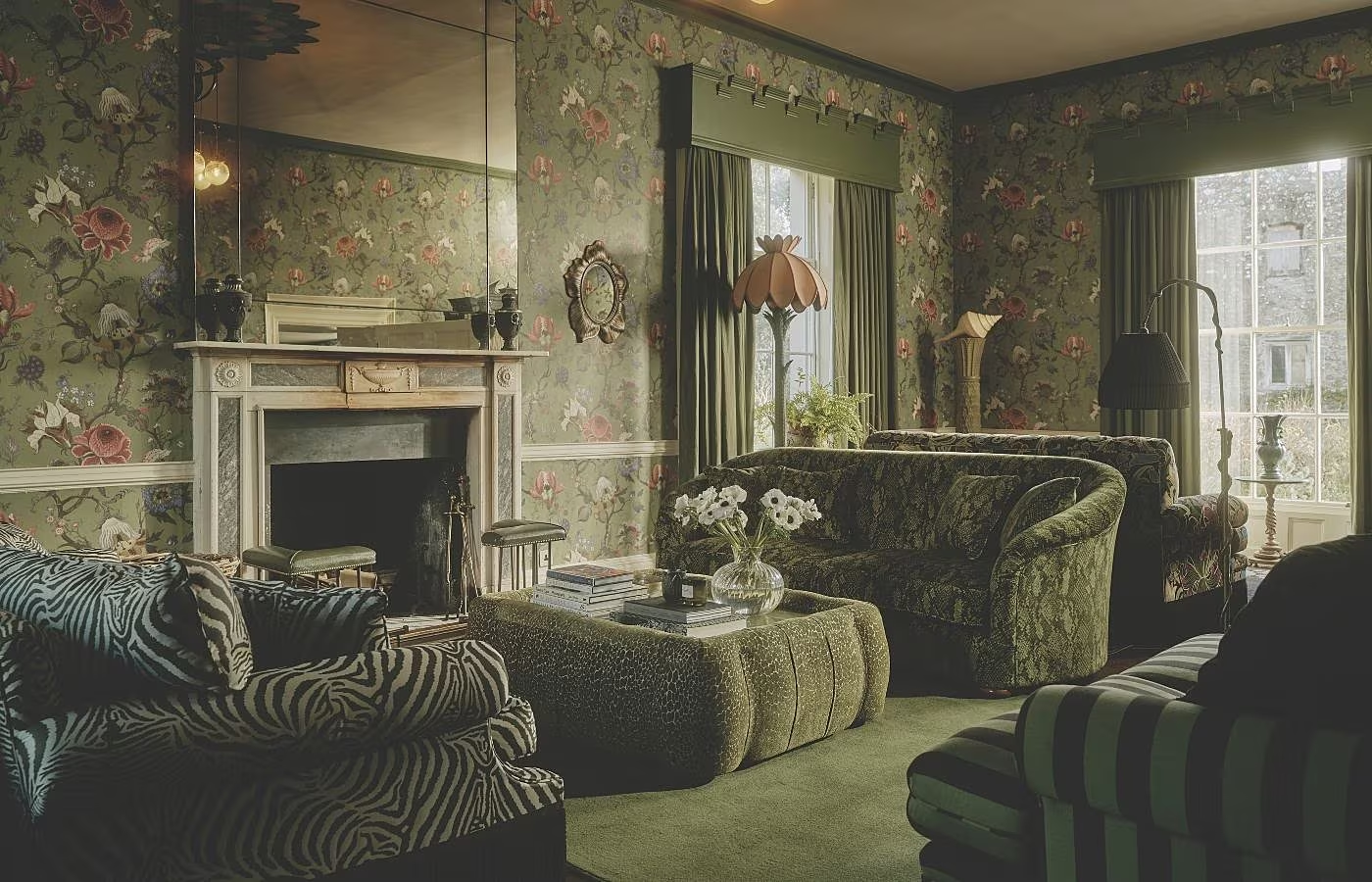
In the living room, the walls are covered in House of Hackney’s Artemis wallpaper in jadeite. The sofas and ottoman are from the furniture collection, upholstered in the brand’s nature-inspired velvet and jacquard fabrics.
Now in year seven of their 20-year lease, Gormley says that the longer the family has lived on the estate, the more nature has influenced her decision to run her business with nature at its heart. “The more we observed, the more nature started to become our teacher. Our neighbours, regenerative farmers, began to tell us about the upsides of regenerative farming and we began to wonder how we could bring the principles of regeneration into our business. We had just become a B Corp, and were often written about as being a ‘sustainable brand’, but the idea of regeneration blew our minds.”
Gormley says that the current economic system, which endlessly exploits natural resources to produce products, is completely unsustainable and she posits a radical new structure in which a business’s impact on nature would be measured in the same way that its financial profit and loss is. “Imagine if businesses restoring biodiversity, soil health or watershed resilience received tax benefits and on the flipside companies that are degrading ecosystems had to fully account for those costs? It would reshape corporate behaviour,” she says. “What is so shortsighted is that we depend on nature for business, it is a life support system. As environmentalist David Brower famously said: ‘There is no business on a dead planet’.”
In 2023, House of Hackney enshrined its commitment to the protection and regeneration of nature, becoming the second company in the world (after Faith in Nature) to legally appoint “Mother Nature” and “Future Generations” as directors of the company – the voice of these somewhat abstract board members is represented by Charmian Love, a sustainability activist and co-founder of B Lab UK, a non-profit organisation that supports certified B Corporations.
This year, House of Hackney will lodge the social and environmental costs of goods sold alongside its financial results, the company is working on a “greenprint” for regenerative business, developing a wallpaper from plant waste and has pioneered a regenerative cotton velvet for the interiors industry. “It’s about everything from governance to supply chains to internal culture to how responsible we are with our platform,” says Gormley. “We could have become a charity, but we believe that businesses can play a really important role. I feel proud to produce beautifully made things that bring joy into people’s lives, but for us it can’t just be product for product’s sake.”
As she sits in the magnificent gardens at Trematon I ask her how hopeful she is that businesses can be not just sustainable, but restorative. “I see a beautiful world ahead with us rolling up our sleeves collectively and redefining what ‘good’ looks like. The plants are our elders, there is so much we can learn from nature and I am thankful to the garden for its teachings.”
In the Company of Nature: Regenerating Business, Community and the Living World by Frieda Gormley, Chelsea Green Publishing, is out now.
SEE MORE: How I Write – Imani Thompson