



From towers to tableaux, colour-coded stacks to leather-bound tomes on tables, here’s how to organise your collection …
“I would be content if my children grew up to be the kind of people who think decorating consists mostly of building enough bookcases,” says American author Anna Quindlen.
A private library represents not simply the sum total of books that someone has acquired through his or her life; rather, it mirrors and fleshes out a range of serious interests. In his essay “Books Unread”, the American preacher Thomas Wentworth Higginson writes about running out of shelf space and summoning his joiner. When the latter asked him: “Have you actually read all these books?” he responded: “Have you actually used all the tools in your tool box?” No – the key point is that he has them on hand in case he should need them.
In this sense, the library is more a working tool, for consultation, than simply a storehouse of books read. Collectors might build a library around core interests. The novelist John Fowles collected travel books, old murder trials and historical memoirs; for him, these genres were like “science fiction in reverse” – little time capsules of the periods they were written in. Most guides to collecting advocate the principle: specialise or waste your money. Other rules of thumb: a book’s value is linked to market demand; the condition of a book, and whether it has a dust jacket, is crucial to its value; one should adopt a “buy low, sell high” mentality by looking for books that have not yet shot up in value – the closer to the publication date the better.
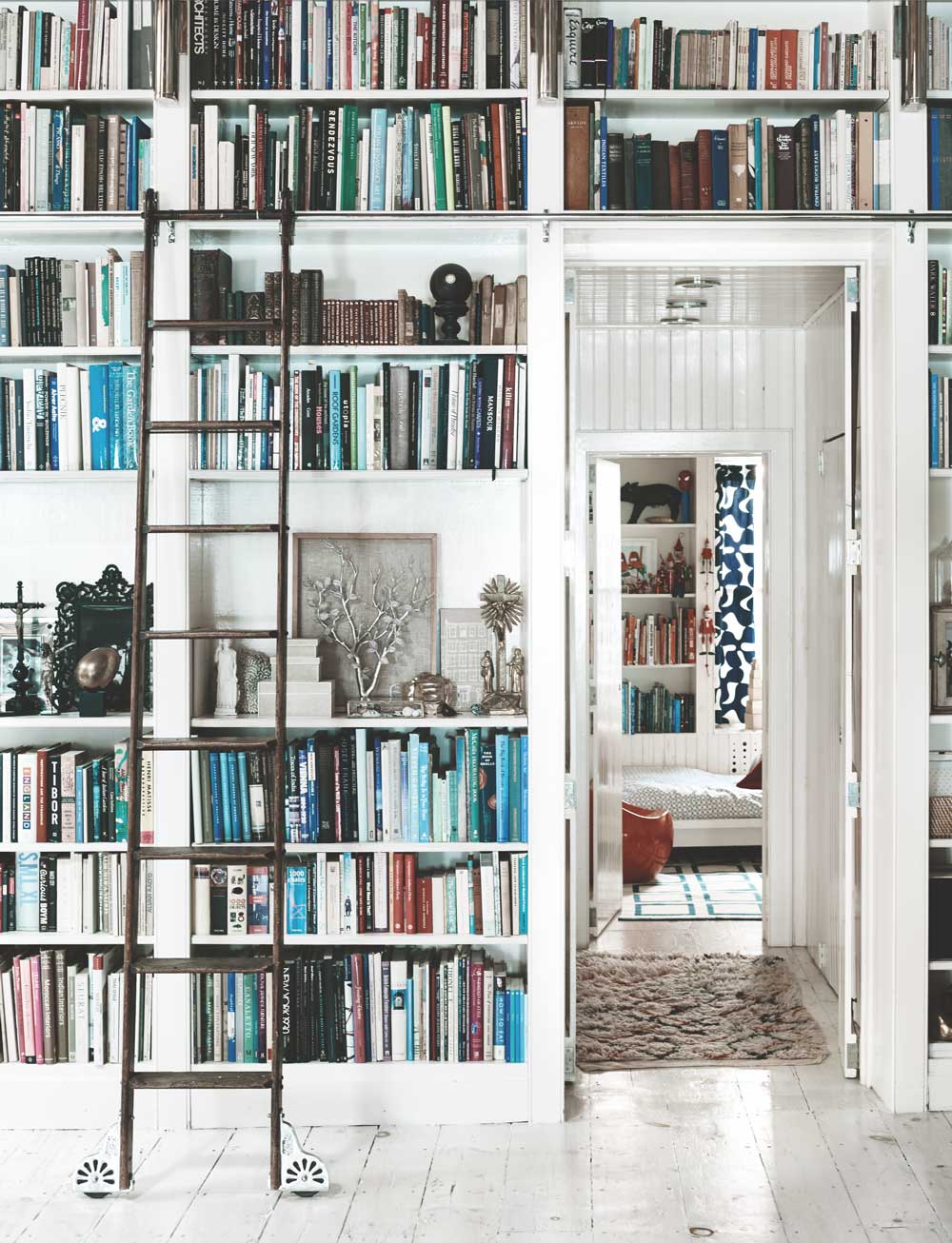
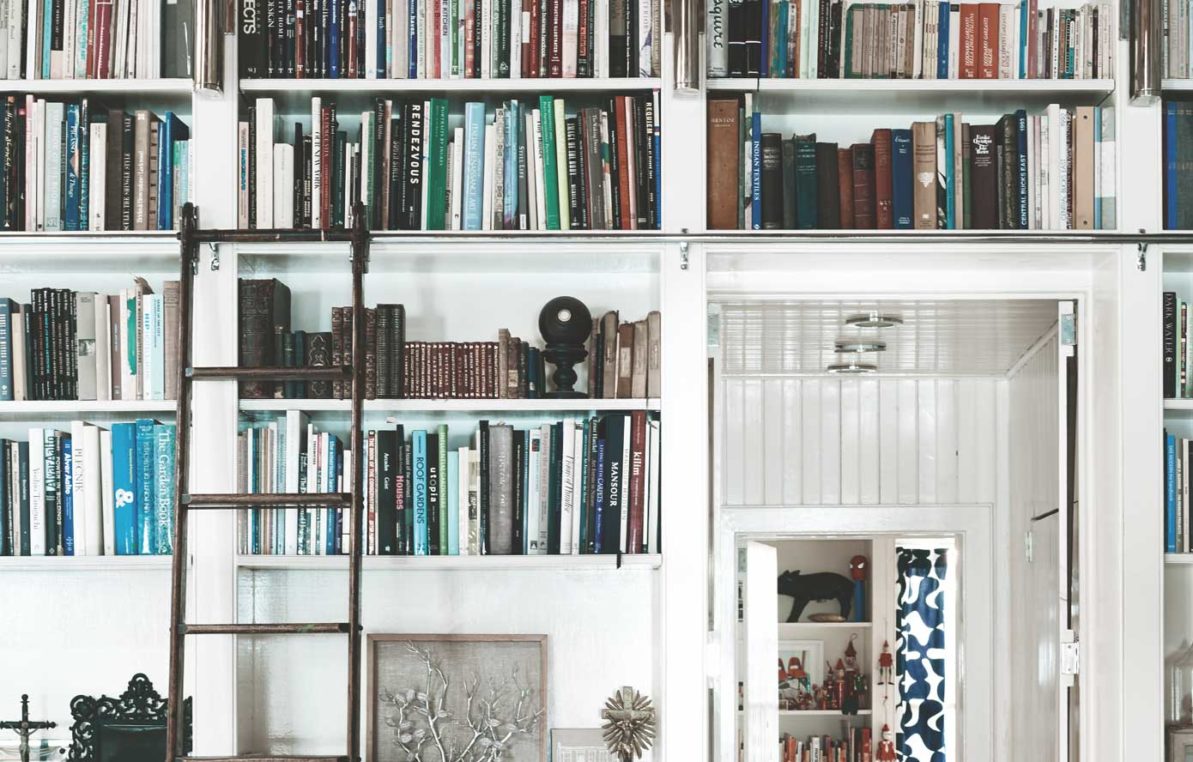
In this apartment, a wall of bookshelves doubles as a room divider. The heavy iron ladder, attached to a metal rail at the top and castors at the bottom, slides along to provide access to books at this end of the space, and tableware at the kitchen end.
In Anne Fadiman’s essay “Marrying Libraries”, she points to the incompatibility between her and her future husband’s modus operandi: “His books commingled democratically, united under the all-inclusive flag of Literature. Some were vertical, some horizontal, and some actually placed behind others. Mine were balkanised by nationality and subject matter.” Ultimately, her “French garden” approach overcame his “English garden’” one. The most common compromise is to divide books into genres and then organise alphabetically by author within those groups. If visual effect trumps accessibility, arrange by size – as Samuel Pepys did in his famous library of 3,000 books – or by colour. An interesting variant is by publisher, especially those with visually distinctive covers, such as Granta or Gallimard. Other possibilities are by order of acquisition, publication date, or by the Dewey Decimal system.
In kitchens, books can add personality and colour in a monochrome space. Cookbooks are not merely repositories of recipes, but reminders of rites of passage: shared student digs, bachelor pads, settled coupledom. Every stain tells a story: of romantic trysts, raucous dinner parties and fraught family lunches.
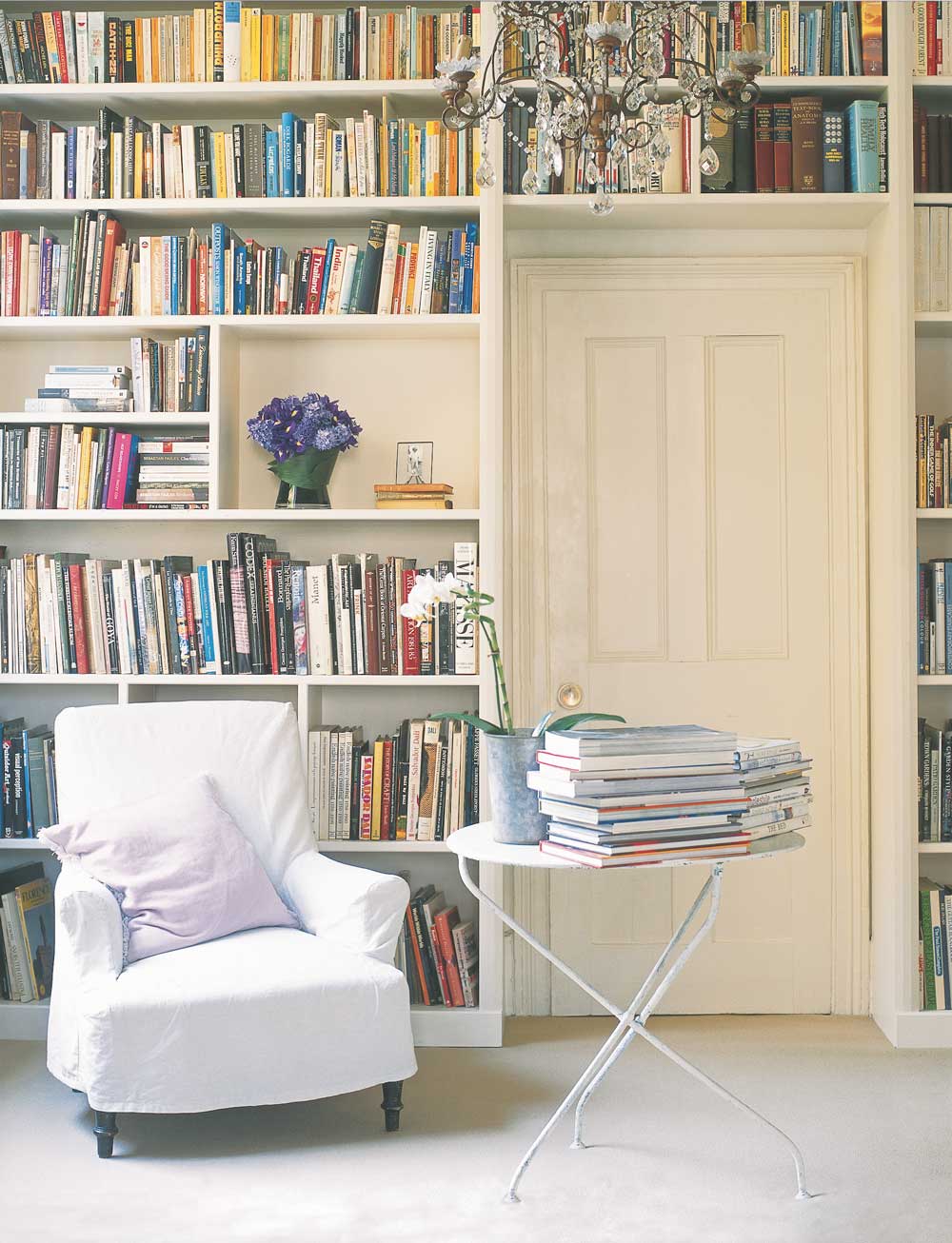
It looks dramatic to flow bookshelves round a doorway, but take care not to swamp the architectural features. Here, two upright bookcases keep the entrance defined.
Just as “dressing for dinner” now sounds like an anachronism, the enclosed dining room may also be fading, along with the formality that accompanies it. Books work well here. They are convivial companions for the solitary diner or to spark dinner-party banter. All that cloth, leather and paper also muffles the clink of glasses and the clatter of cutlery on plates. Try to match the style (and thickness) of bookshelves to the table.
How we display books in the bedroom – on wardrobes, in tottering piles or on a bedside table – has an impact on the space’s function: the three Rs of rest, romance and recuperation. Ella Berthoud, bibliotherapist at the School of Life in London, advises people to avoid keeping books in the bedroom, “apart from the one they’re reading – because this space should be kept calm”. Yet the cocoon-like nature of the bedroom may actually encourage concentration. John Updike noted that Proust, Colette and Edith Wharton all scribbled away under the blankets, while James Joyce “sprawled across his and Nora’s bed in a riot of notes to himself ”.
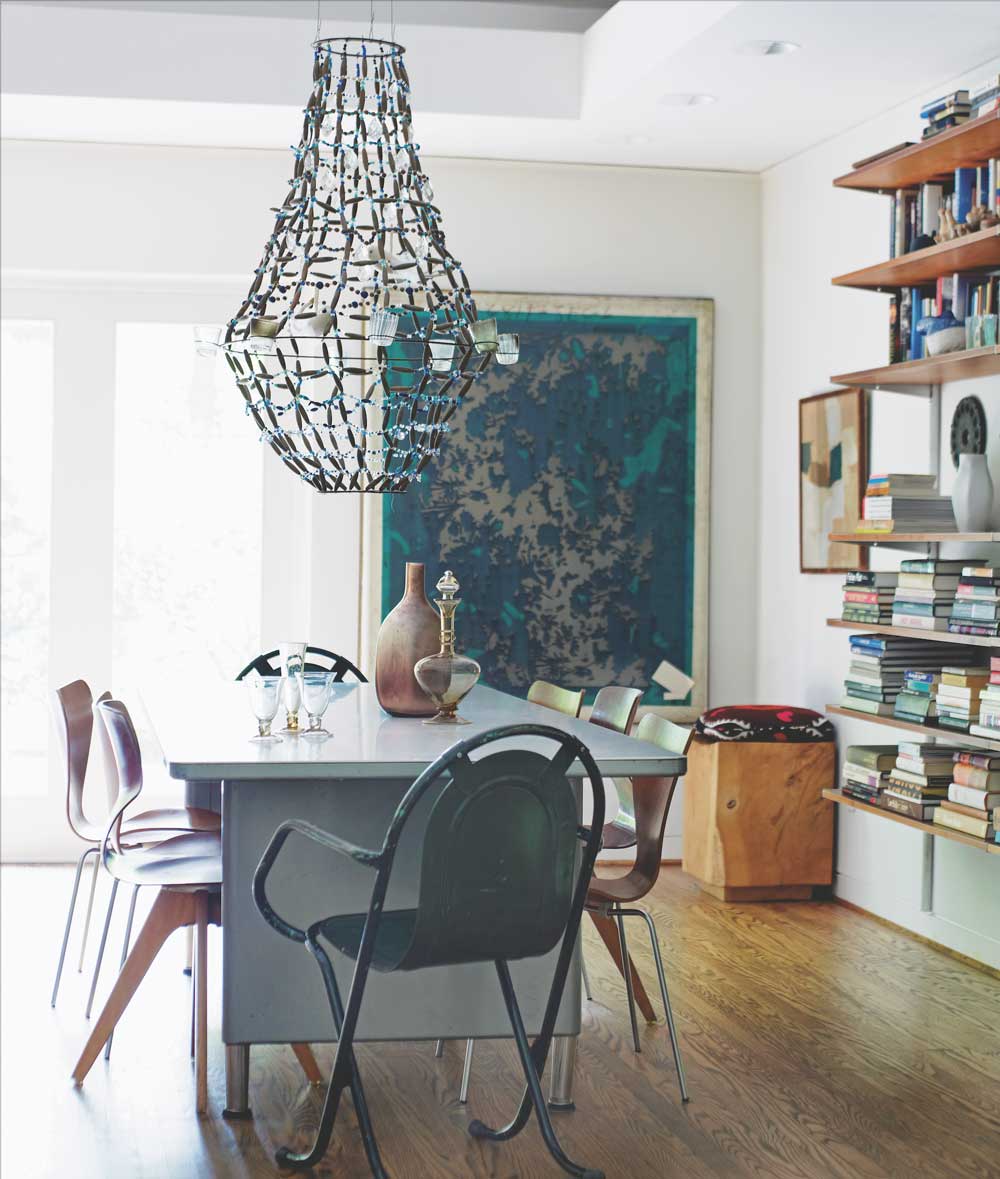
In this Philadelphia home, bookshelves on brackets reflect an informal and unpretentious practicality. The books on the lower levels lie sideways, while upper-level occupants stand vertical.
If you have a guest staying, compile a judicious selection of books based on what you know about their tastes and enthusiasms. For the scientist, for instance, try the essays of Stephen Jay Gould and Oliver Sacks’s The Man Who Mistook His Wife For A Hat. The genre should be commensurate with the length of the stay – so essays, letters and short stories are good and chunky riproaring thrillers – especially if you’d like to see something of your visitor – less so. Most people who find a customised library by their bedside will be bowled over by their hosts’ thoughtfulness.
Adapted from Books Make A Home: Elegant Ideas For Storing and Displaying Books by Damian Thompson, Cico Books.
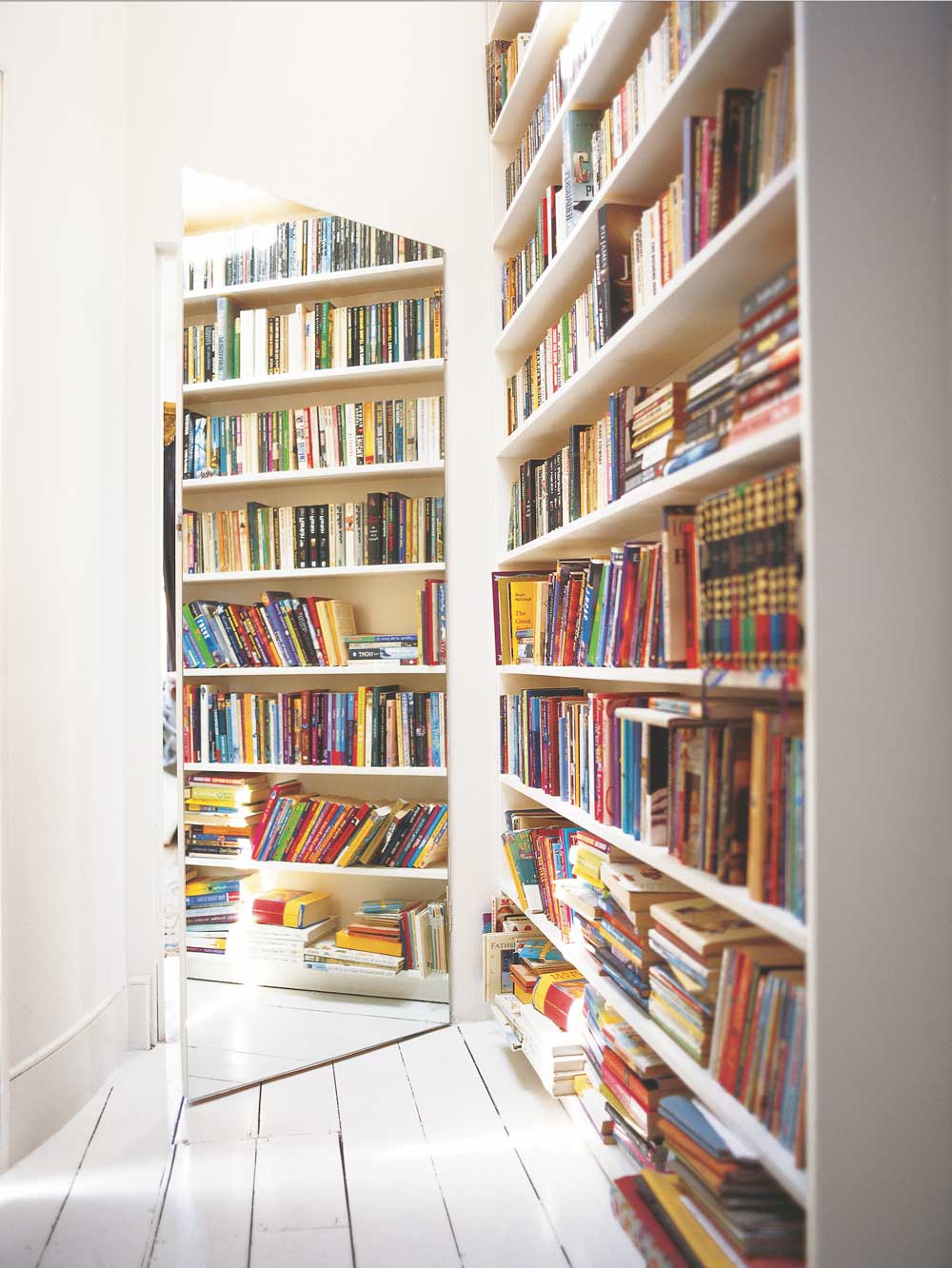
The long lines of floorboards and bookshelves mean that the eye can easily be foxed by a strategically placed mirror. This one turns a passage into a slightly surreal scene from Alice’s Adventures in Wonderland.
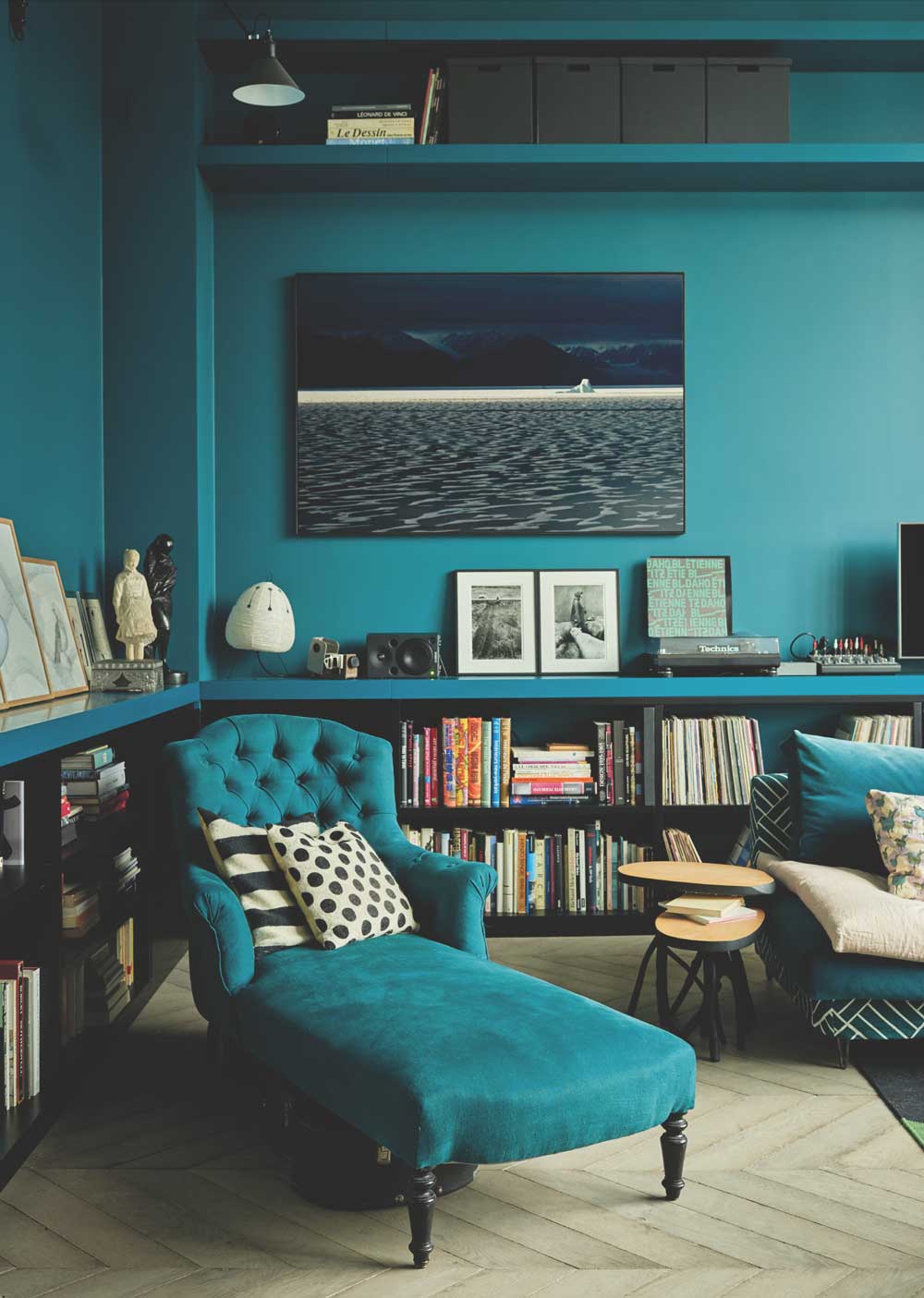
Two sets of shelves, low and high, double up as dado and cornice in interior designer Anne Geistdorfer’s townhouse in Montmartre. The shelf at sofa-back height serves as a reference point allowing variety above and below it.
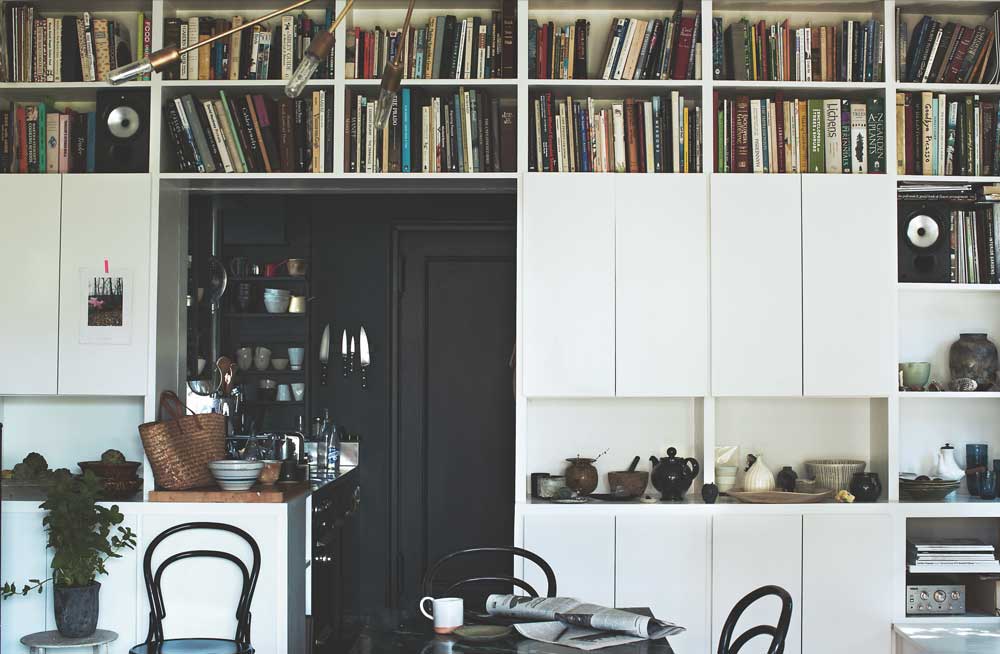
In this tiny penthouse in New York, a wall of open and closed shelving dramatically frames a galley kitchen.
BORROWER’S DREAD
Bibliomane Roger Rosenblatt feels anxious when he sees a friend peering at his shelves: “the eyes, dark with calculation, shift from title to title as from floozie to floozie in an overheated dance hall”. One aspect of displaying one’s collection that unites most bibliophiles in dread is “borrowers of books – those mutilators of collections, spoilers of the symmetry of shelves, and creators of odd volumes”. So wrote the social ecologist Peter F Drucker. The critic Anatole Broyard goes further: “I feel about lending a book the way most fathers feel about their daughters living out of wedlock.”
MAXIMISE NOOKS
Corridors, staircases and landings are often overlooked, yet artful lighting, ingenious shelving and the creation of reading nooks can turn these dead spaces into places worth lingering in. The space underneath a staircase also makes the ideal spot for a built-in ziggurat-style shelving unit. A neater solution, depending on the depth of your stairs (and your wallet), is to fashion drawers from the steps, openable with push fronts.