




Extolling the virtue of a solid ten hours of sleep for women …
I am of the opinion that whoever said: “You snooze, you lose,” hadn’t actually ever had a snooze. How could they? My experience of snoozing, indeed, of all forms of sleep – afternoon napping, full-blown extended night-time unconsciousness, advanced drowsiness by the side of the pool at a holiday rental villa, that first incredible drop into deep rest after a stomach bug finally relents, sleep on a plane, sleep on a train – has been flat-out delicious. Only ever a big, fat win.
I’ve always adored sleeping, even when I was young, even in the days when I could stay up past midnight effortlessly, and the concept of going to more than one venue in a night wasn’t an outright offence. Sleep was a valid alternative even to youthful carousing, for me.
Which is good, it transpires, because sleep is one of the fundamentals of health – for all of us, but especially for women. It is a reset and replenishment and a reinforcement of everything our body needs, from muscular repair, to an emotional reshoring, a rebuilding of mental resilience. While somewhere between seven to nine hours of sleep a night is generally recommended to all, women are believed to require more than men.
Sleep [comes] up time and again, as one of, if not the defining, pillar of decent health.
I knew of the merits of sleep instinctually, but it was while researching my book, How The Female Body Works, that I learned it intellectually. I also learned the full extent of those merits, which even I, with my historical love of sleep, had vastly underestimated. Sleep came up time and again, as one of, if not the defining, pillar of decent health. It was raised by the experts with whom I spoke in connection with everything from brain health to good hormonal health, to fertility, to not getting cancer – or Alzheimer’s (with which women are twice as likely to be diagnosed).
Good sleep means you are much more likely to do the other things which support good health, too: you’re less tired, so more likely to exercise, to make good nutritional decisions, to achieve and maintain a healthy weight; you’re less tired, therefore in possession of better emotional resilience, which means you’re better equipped to manage stress.
Hormonally speaking, sleep helps to regulate the relationship between your hypothalamus and your pituitary glands – the two small, yet incredibly important parts of your brain which serve together as the kind of overlords on your endocrine system, your hormonal system. They’re the conductors of its orchestra. Sleep deficiency disrupts that relationship, which disrupts how elegantly and appropriately your hormones are triggered.
Sleep is also fantastically neuroprotective – which is why it’s so useful in protecting our brains against poor mental health, and Alzheimer’s. “Sleep is the foundation all brain health is built on,” neuroscientist Dr Sarah McKay told me. “We go to sleep every night, our brains get kind of flushed out, cleansed out. It’s when our memories of the day get wired in. Sleep is my non-negotiable.” Dr McKay’s extensive studies have led her to believe that if women develop and maintain healthy, warm relationships (good social connections are vital throughout our lives) in combination with good sleep habits into older age, “You’re 80 per cent of the way there,” in terms of improved prospects on long term brain health.
Not only does sleep impact our hormones, but our hormones impact our sleep, making it of a lower quality in the last third of our menstrual cycles, and in perimenopause and menopause.
Which is great, right … Except that, good sleep can be so elusive! And understanding how desperately important it is is only going to stress you out more if you feel yours to be inadequate, which will, in turn – oh, irony! – prove yet more of a barrier to decent sleep.
Not only does sleep impact our hormones, but our hormones impact our sleep, making it of a lower quality in the last third of our menstrual cycles (when dropping oestrogen and rising progesterone raises our body’s core temperatures, interrupting our sleep) and in perimenopause and menopause (when our hypothalamus and pituitary go into furious, physiologically disruptive overdrive, attempting to drum up oestrogen our ovaries are no longer producing).
Women are also more prone to mental health issues, and shouldering the domestic burden at home – neither of which are conducive to better sleep. My sleep invariably goes haywire when life gets the better of me – most recently when I spent a week tossing and turning because I was so afraid of a looming MRI scan (I’m claustrophobic and a little hypochondriac; I was fine and IT was fine in the end). But the impact on my mood, and how well I felt, was dramatic – and bad.
For what it’s worth, here are the things I’ve learned, which enable my sleep. Regular going-to-bed and waking-up times, which rarely vary by more than half an hour. Phones left charging in other rooms. Early evening baths with Epsom salts, and a book (currently re-ploughing my way joyfully through Jilly Cooper’s back catalogue). Eating dinner before 7pm, which means my body will not be attempting to digest food and sleep, simultaneously. Minimal booze. Exercising regularly (it’s tiring in the best way), but not too late in the day. My latest classes end by 7.30pm. No coffee after midday. Yoga Nidras on YouTube – body scan meditations, which last anything from 15 minutes to two hours, and include breathing exercises – especially useful if you regularly wake up at 3am, then struggle to fall back to sleep. Yoga Nidras work well in combination with a weighted eye pillow. There’s some thought that the physical heaviness of an eye pillow communicates triggers to your optic nerve, and, in turn, the rest of your nervous system, insisting it relax; at the very least, sleep is demonstrably more likely in cool, deep, darkness (which weighted eye pillows provide).
Suck up any and all opportunities to find calm in the day, too. You want a massage? Get the massage! You want to sit on a park bench for ten minutes and feel the winter sun on your face? Do it! Peace, and the sleep it brings, is a dot-to-dot drawing. It’s a practice, and it is cumulative. The more of it you do, the easier and more accessible it becomes.
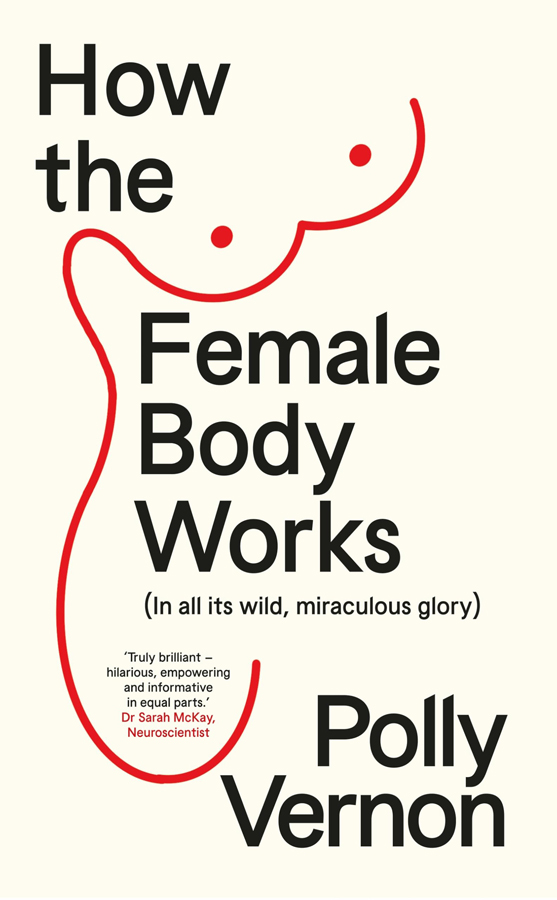
How The Female Body Works by Polly Vernon (New River) is out now.