



The award-winning singer-songwriter on family, success, style, holidays and hobbies …
David Gray’s 1998 multi-platinum album White Ladder won him a legion of fans worldwide, but particularly in Ireland. Raised in Manchester and west Wales, he now lives in London with his wife Olivia, and daughters Ivy and Florence.
How would you describe your parents? My father was very highly strung. He’d be diagnosed with ADHD now. He was unlucky with the family he was born into. His mother was his soulmate and she committed suicide when he was 17 which affected the rest of his life. He was a bundle of nervous energy, full of fun and humour and absurdity. My mother was very beautiful, intelligent, and I think their relationship was a project, where she would look after him and heal him.
Did you feel loved? They were the two great poles of my young life, and they loved me very deeply. I didn’t have a problematic relationship with either of them when they divorced [in the early 1990s] but things became more complicated and posed riddles that will never be answered.
You were very sick as a baby with pyloric stenosis, a narrowing of the muscle between the stomach and small intestine. How did that affect your childhood? If we want to get psychoanalytical, the first few months is the most important time of your life, and I was in great pain and distress. I couldn’t make myself understood. When I look at myself wailing into the microphone now, I think some of it must come from that.
Your family moved from Manchester to Wales. What impact did that upheaval have on your life? We moved to a tiny fishing village called Solva in Pembrokeshire. I was a complete nature freak and suddenly I was in this wonderful world of lizards, adders, birds, catching mackerel and trout. It was very formative. I revert back to these memories in my writing.
“I wanted to play for Manchester United, but art was more my draw.”
Did you like school? Just before we left Manchester, I was put into a posh prep school with a view to making the most of my academic talents and getting me into Manchester Grammar. Then we went to Wales and the village school in Solva was the sweetest place. It was like something out of a storybook. There was no ‘who’s got the most Lego or felt tips or whose dad’s got the biggest car’ … I was free of all that well-to-do middle-class English culture and that clean break had a big influence on me.
You’ve said you were tempted to quit music before your phenomenal success, is that true? Yeah, making White Ladder was a kind of back-to-the wall moment, and I think that’s one of the things that makes the record so alive and so unafraid to be what it is, whether you like it or not. I held nothing back.
How did you cope with that sudden success? It was shocking and I wasn’t very equipped for it. For a while, life became a bit like Being John Malkovich, where I was sort of looking out through the eyes of somebody else. But it’s still a stinging shock when suddenly it calms down and you come back to reality. I guess my whole life will be a renegotiation of what happened to me at that particular time.
Did Ireland feel like a special place for you at the time? From day one. There’s an earthiness, a connectedness to music, a willingness to let go. It’s all out there and that’s how I am, too.
“There’s not a moment of the day when a part of my brain isn’t trying to calculate a song, an idea, a lyric, working something out. That person’s off duty when I’m out in nature.”
How has Olivia kept you grounded? We’ve been through a lot together, but it wasn’t easy. I wasn’t there through the young lives of our children and I only really came to a reckoning with what I’d missed when Covid came. But I’m a no-regrets type of person. I was incredibly lucky to meet Olivia when I met her. She sees me completely, we’re honest and we laugh, and that’s how we’ve managed to survive.
How has your style evolved? My friend Tom does my styling. If I’ve got a new record, I’ll send him some music and we’ll start to make a wardrobe around it.
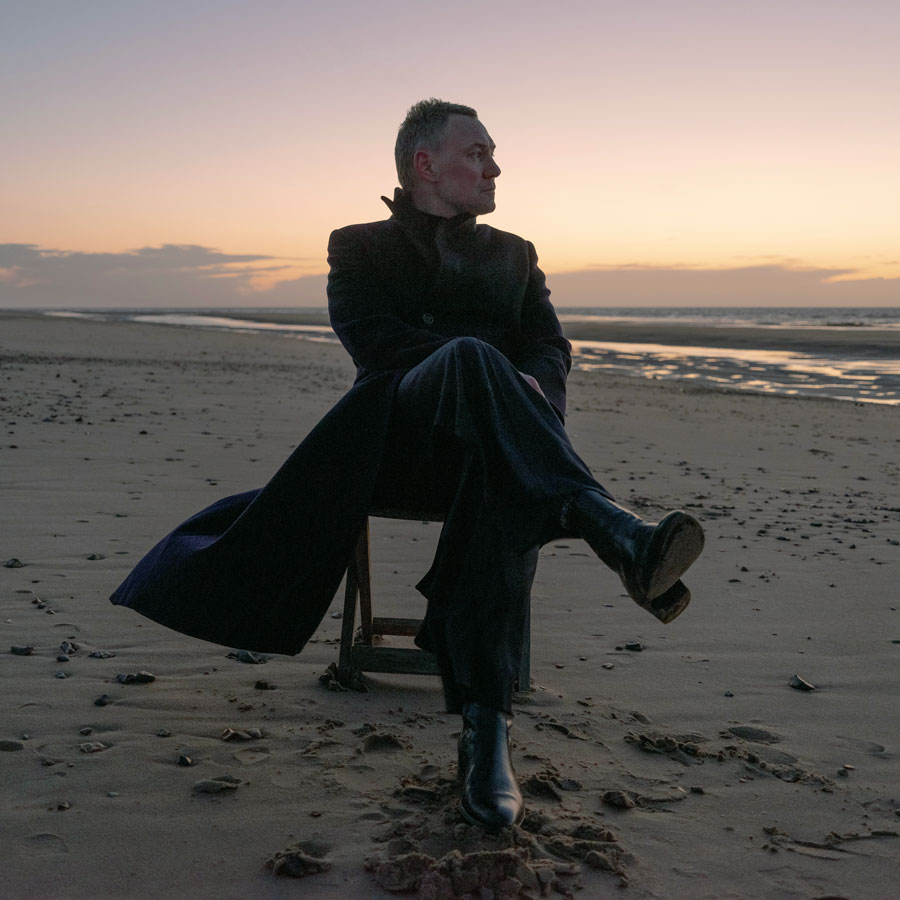
What’s your favourite footwear? These Saint Laurent short motorcycle boots. They’re incredibly soft and comfortable and give me a good two-inch boost. Not the full platform, but a bit of a heel, it changes your vibe. You lean forward. You’re a bit Jagger, darling.
What did you most recently read? Julian Cope’s The Modern Antiquarian. It’s a master work, about ancient sites in the UK, where the act of imaginative reasoning is added to deep research.
What did you most recently listen to? Heavy Metal by Cameron Winter and the new album by his band Geese called Getting Killed. They’re innovative and destructive all at once.
How do you deal with a setback? Generally pretty well because, like when a tree falls in the forest, that little space it creates will be exploited by something else.
What is a holiday you’d like to repeat? I’ve just been on the most astounding holiday to Chile with Olivia, but to repeat it wouldn’t be possible. We went to Atacama and Patagonia, and got face to face with a puma. The guides didn’t have guns. It wasn’t like “take your photos now”. We were in the utter stillness of the Patagonian mountains, out on these wild grasslands with birds singing and this incredible animal.
What’s your perfect weekend? It would contain several elements. One of them is a stupendous Manchester United victory over Liverpool. Then a night out with friends, Sunday dinner with the family and a long walk. It doesn’t matter when the Man U win comes, so long as it comes. It’s unlikely to happen imminently, but you never know.
David Gray brings his Past & Present tour to Dublin’s Fairview Park on June 17.