


Big Brother is always watching …
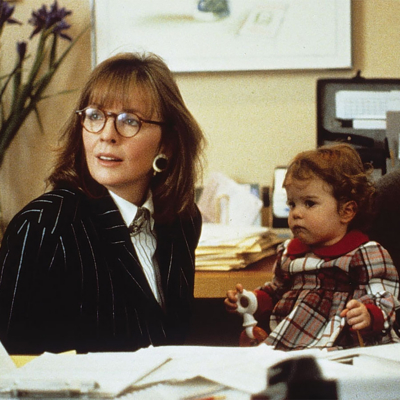
Throughout the first year of motherhood, I worked in fits and starts, writing occasional articles for newspapers and magazines, squeezing it in around the baby’s naps. And then, when my daughter was 14 months, I returned to the world of work properly. She was dispatched to a nearby childcare facility between the hours of 8.30am and 5pm – except, of course, when she was feverish or had a rash or a runny nappy, which was dispiritingly often – and I attempted to devote myself to corporate duties. Like many writers, my income comes from a mix of sources: I write for media, but I also create content for major corporations. Here I was – a little tired and sleep-deprived, sure, but a professional with more than 15 years of experience under my belt. I was back, baby! It was winter 2022.
Around the same time, in November 2022 OpenAI released ChatGPT. I remember trying it out for the first time one evening in January 2023, the baby upstairs in bed. The technology was fun and easy to use. You could enter simple instructions – laypeople weren’t calling this a “prompt” yet, but they soon would – and it would produce polished sounding words. You could type, “Write 1,000 words about encountering new technology when returning to work after maternity leave in the style of a magazine article” and it would do that for you. Instantly.
The article would likely contain errors, there would be clichés and hackneyed phrasing, the themes would be a little obvious, and the experience of reading it would feel somewhat dissatisfying. Still, it was instant! If you gave those instructions to a writer – even one with years of experience and you said “Don’t worry if it contains errors and clichés, just write the first thing that comes into your head!” – it would take that writer hours.
ChatGPT was like the best intern you ever had: fast, hardworking and obsequious (one update made it dangerously sycophantic, cheering on even hateful or harmful remarks, and had to be reversed).
You could ask it to rewrite your emails and do your research, usually quite well. And just like an ambitious underling, ChatGPT could unnerve a person. If you were, say, a woman heading for 40 combining writing and editing work with the all-consuming work of rearing a child, you might begin to feel a little obsolete …
It has become obvious that AI companies don’t want to simply replace entry-level jobs. The business model relies on replacing higher paid individuals, too. Doctors, software engineers, lawyers, therapists, experienced writers and editors – we’re all vulnerable. As for our kids? It’s not clear what they’re going to do in the AI-powered world that OpenAI’s CEO Sam Altman envisages.
2025 was supposed to be the year of the AI agent. We (those of us who anxiously consume the constant stream of podcasts and think pieces about how AI is going to replace us all) were told to expect a significant disruption of the labour market, as AI agents were rolled out as personal assistants, coders, writers, editors. So far, it hasn’t quite happened like that. So far, AI is … just sort of OK. When you strip back all the hype, what you have right now is a bunch of tools that enable you to do some of the tasks on your computer a little quicker than in 2021. It’s useful, but the gains are relatively modest so far.
“Lynn Enright engaged in a fragmented internal monologue,” Google Gemini told my colleagues.
One day, during Christmas break, I was working from home while my daughter pottered about. There was a meeting in my diary, but I realised I was the only person working that day. My daughter barged into the room and I carried on with my work while she played in the background.
More than a week later, I discovered (after a colleague pointed it out to me) that Google’s Gemini feature had taken notes in the meeting, and sent them to the invitees who hadn’t attended. “They’re quite funny,” my colleague remarked, somewhat cryptically. I clicked on the meeting notes frantically … what had I said that was so funny?
The notes weren’t just funny; they were utterly deranged. Google’s AI had picked up the witterings of my daughter, but instead of understanding that it was overhearing a preschooler playing and talking to her mother, who was only half-listening to her as she performed administrative tasks on her laptop, it had persevered with the notion that it was listening in on a meeting.
“Lynn Enright engaged in a fragmented internal monologue,” Google Gemini told my colleagues. “Throughout this, they spoke about finding the toilet and needing to wash their heart, transitioning into more playful and fragmented thoughts.” It went on to let them know that I “shifted to dealing with ‘bouncy balls’ blocking [my] way, indicating a need for organisation”. “No suggested next steps were found for this meeting,” it concluded.
The whole debacle was hilarious. My colleagues received a note that made it seem like I was having a dissociative identity disorder-related breakdown and they saw the funny side, thankfully. But it also underlined two major concerns about AI – it makes surveillance easy and continues to have some major limitations.
So, while AI continues to terrify me, it has lost its shiny promise somewhat. On the other hand, I continue to feel awe when I observe my daughter. To watch a child acquire language continues to feel genuinely miraculous, long after you see it happen the first time. When ChatGPT was released, my daughter could say six words: hiya, hat, more, mamma, dadda and shoe. Now, she uses metaphors and makes jokes that are genuinely original and properly hilarious.
Maybe she’ll grow up in a world of great abundance as AI automates our work and we all get to share the spoils. I doubt it. Maybe she’ll grow up amid ever increasing inequality, frustrated by the poor quality of the AI-generated services she encounters. It seems more likely. Or, maybe (and this is surely the truth), I can’t quite understand what role AI will play in her life and all I can do to help her prepare is to keep her as far away from it as possible, for as long as I can … For my sake, as well as hers. @lynnenright
SEE MORE: Why Difficult Women Matter