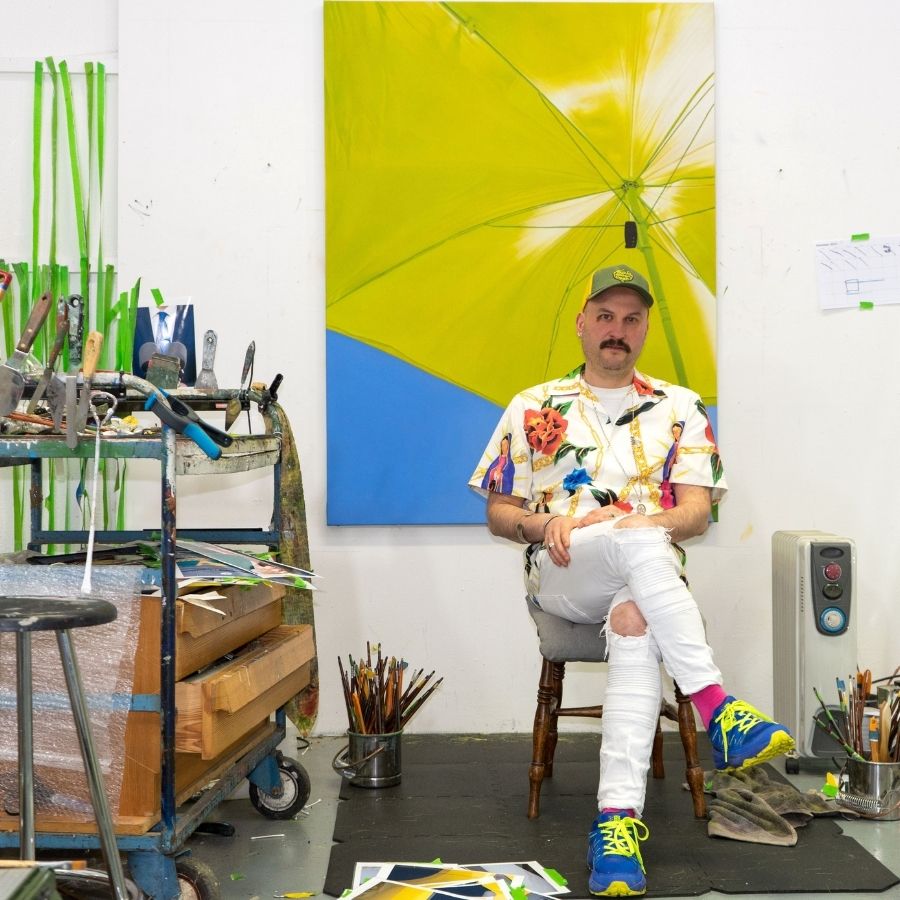
Irish contemporary artist Marcel Vidal is known for paintings and sculptures that explore representation in a hyper-saturated image culture …
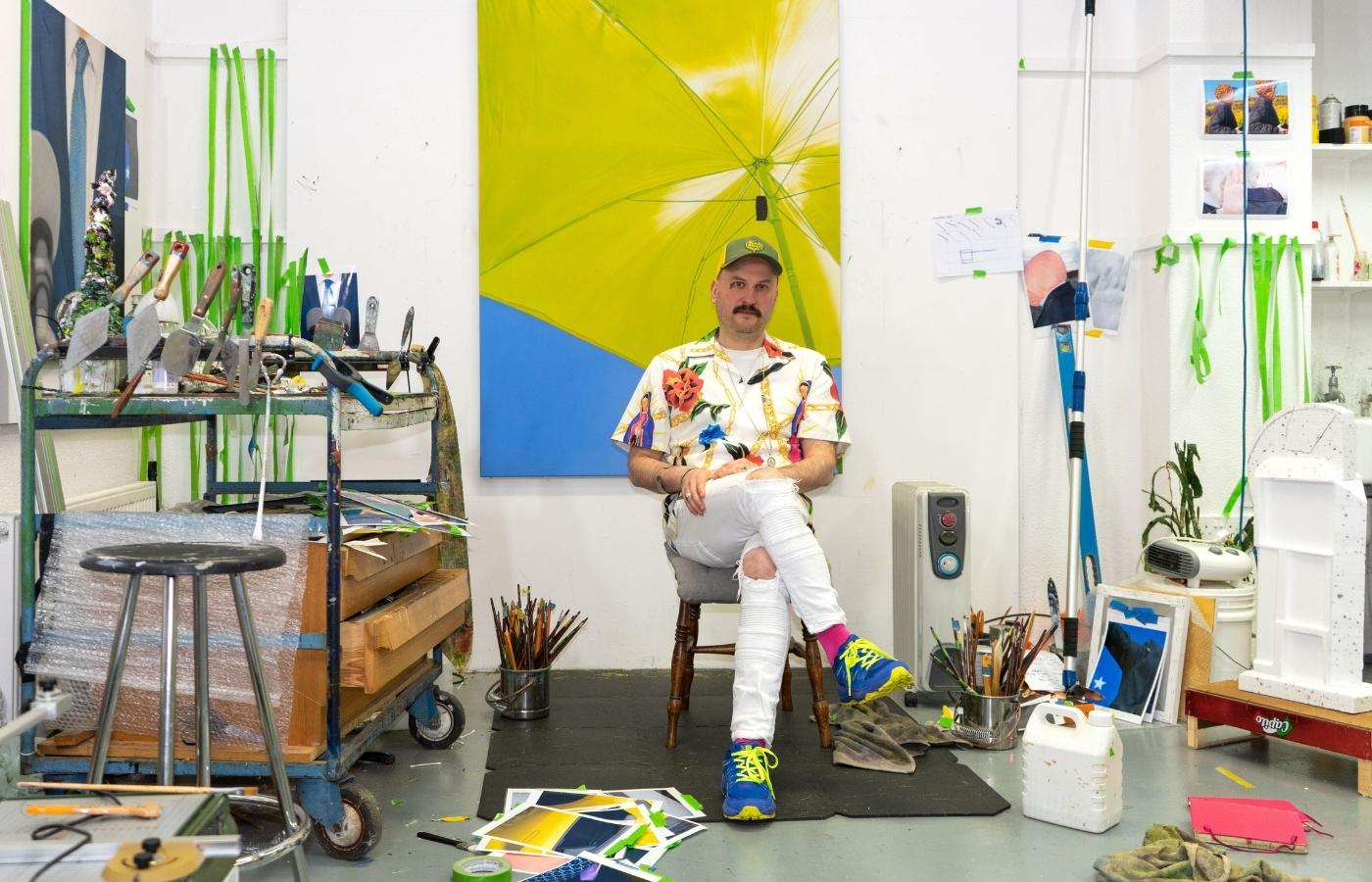
I grew up in a house with lots of art works, my dad Jean Marc was a painter and my aunt is Irish sculptor Cathy Carmen. My dad studied at Beaux Art de Paris, where he met his best friend and later my godfather, French painter Romain Suzzoni. My Dad maintained an art studio in Dublin for 30 years and another in Wicklow. The smell of oil painting and the mess of a sculpture studio always excited me. I’ve never felt more relaxed than in a well inhabited studio.
I spent many hours in Dad’s studio painting and drawing as a child. He guided a lot of what I learned early on, as did my aunt Cathy. It was always my expectation that being an artist would be a difficult pursuit from their experiences, but also that sustaining an art practice was possible.
I went on to graduate from the NCAD with a BA in Fine Art Painting in 2009. Post college, I had a large studio and its stability allowed me to experiment and to take risks early on. A lot of this work never got the opportunity to be exhibited, but it laid the foundational step for the painting and sculpture that I now make.
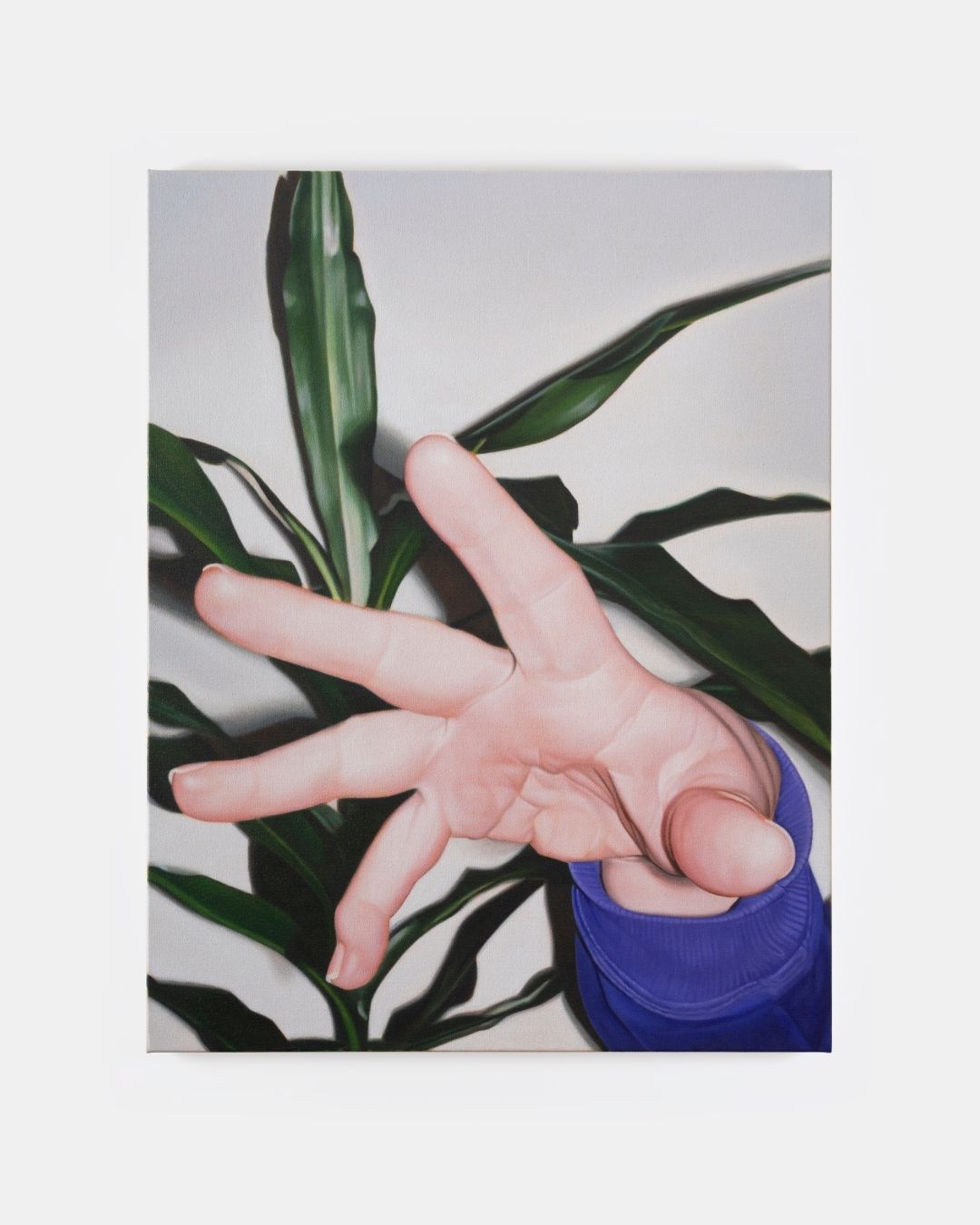
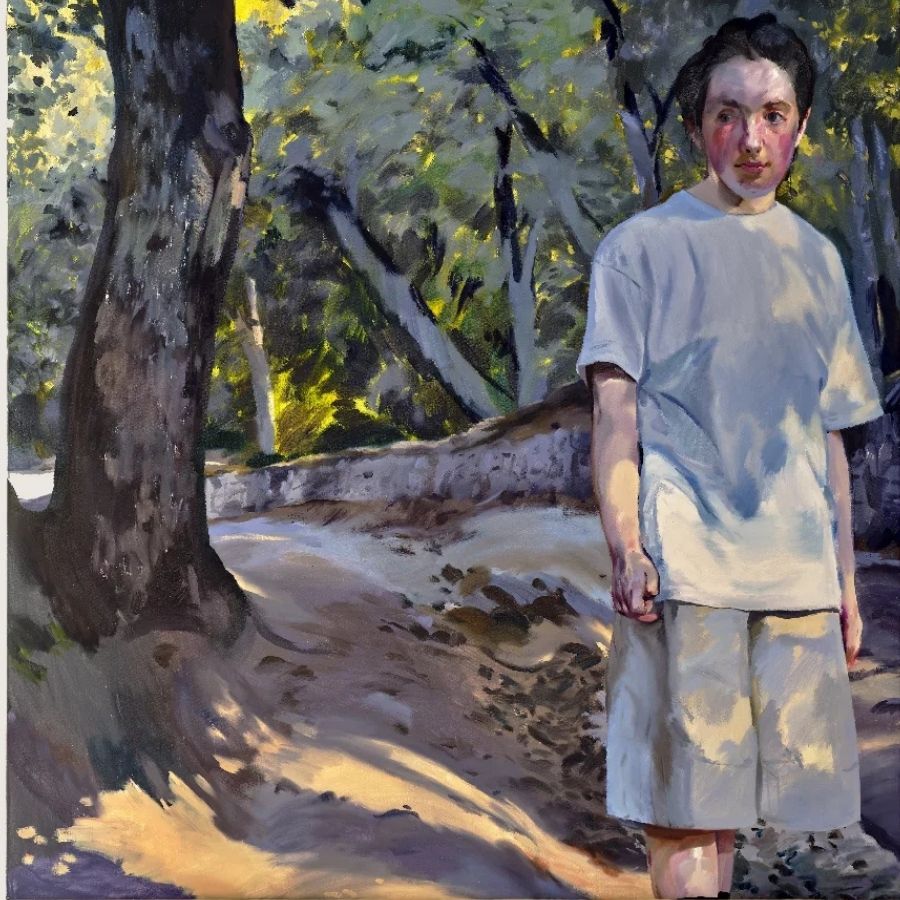
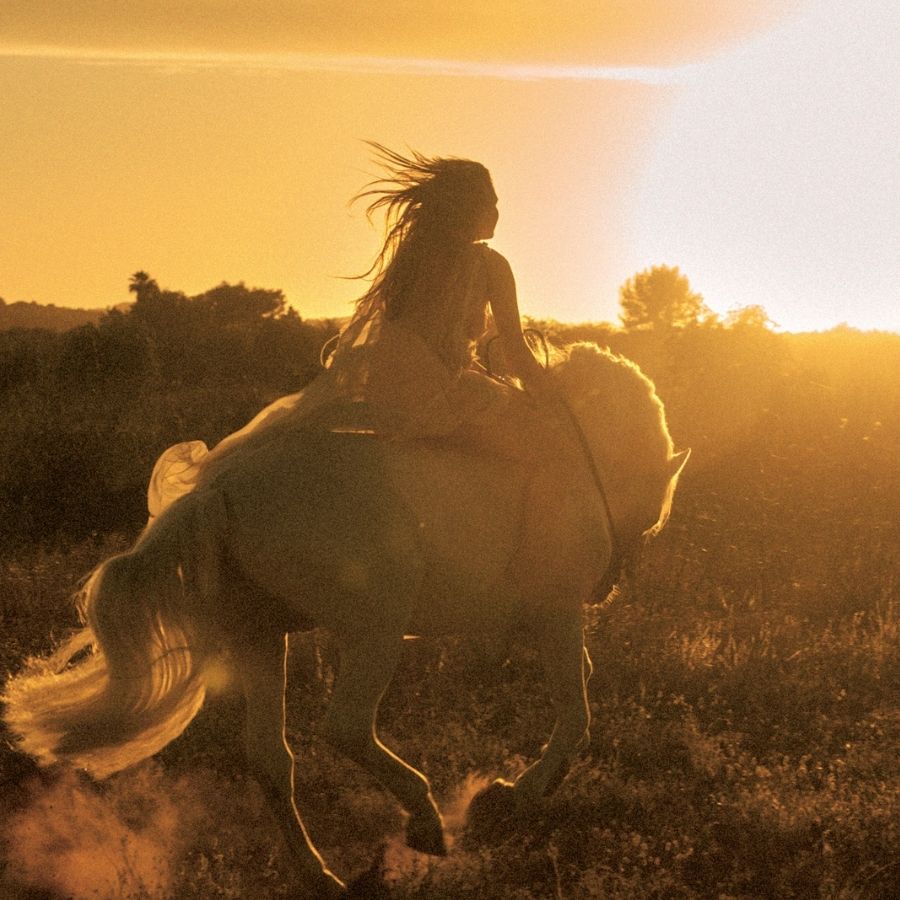
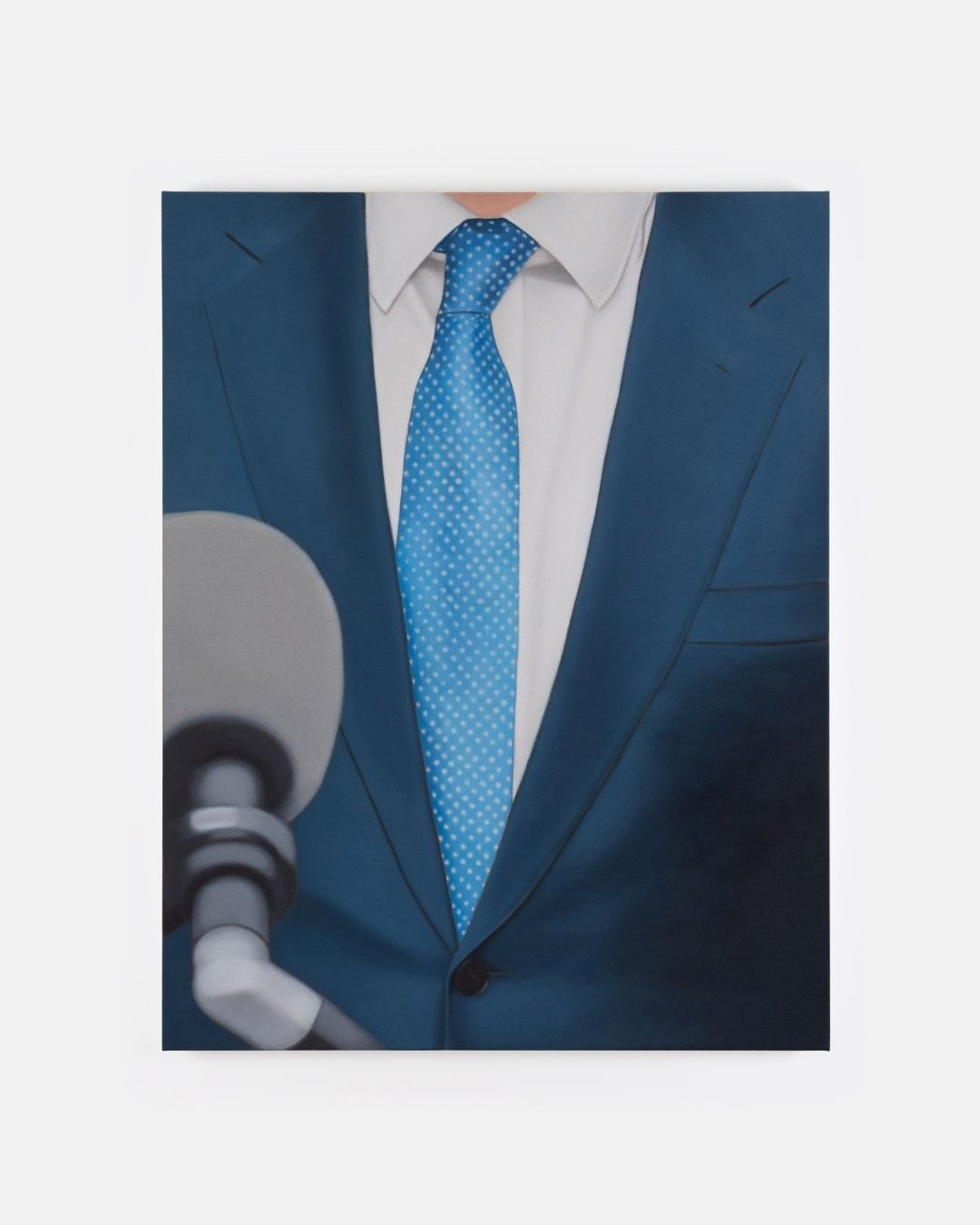
I work across painting and sculpture. My paintings are often derived from fragmented images: close-ups, cropped details or moments extracted from larger images. I’m interested in how composition and omission shape narrative. By restricting information and removing identifiable features, the paintings shift away from specific individuals and towards broader concerns around authorship, privacy and the construction of meaning in image culture.
Alongside painting, my sculptural practice brings together industrial and organic materials in assemblages that explore tension between control and instability, the constructed and the visceral. Across both strands, I’m concerned with how images and objects carry social and political coding, and how meaning is continuously negotiated through context and display.
I’m particularly drawn to the tension between control and uncertainty in the process: how an image can shift through cropping or translation into paint, and how meaning can remain open or unstable. That ongoing negotiation between intention and outcome is what keeps the work engaging.
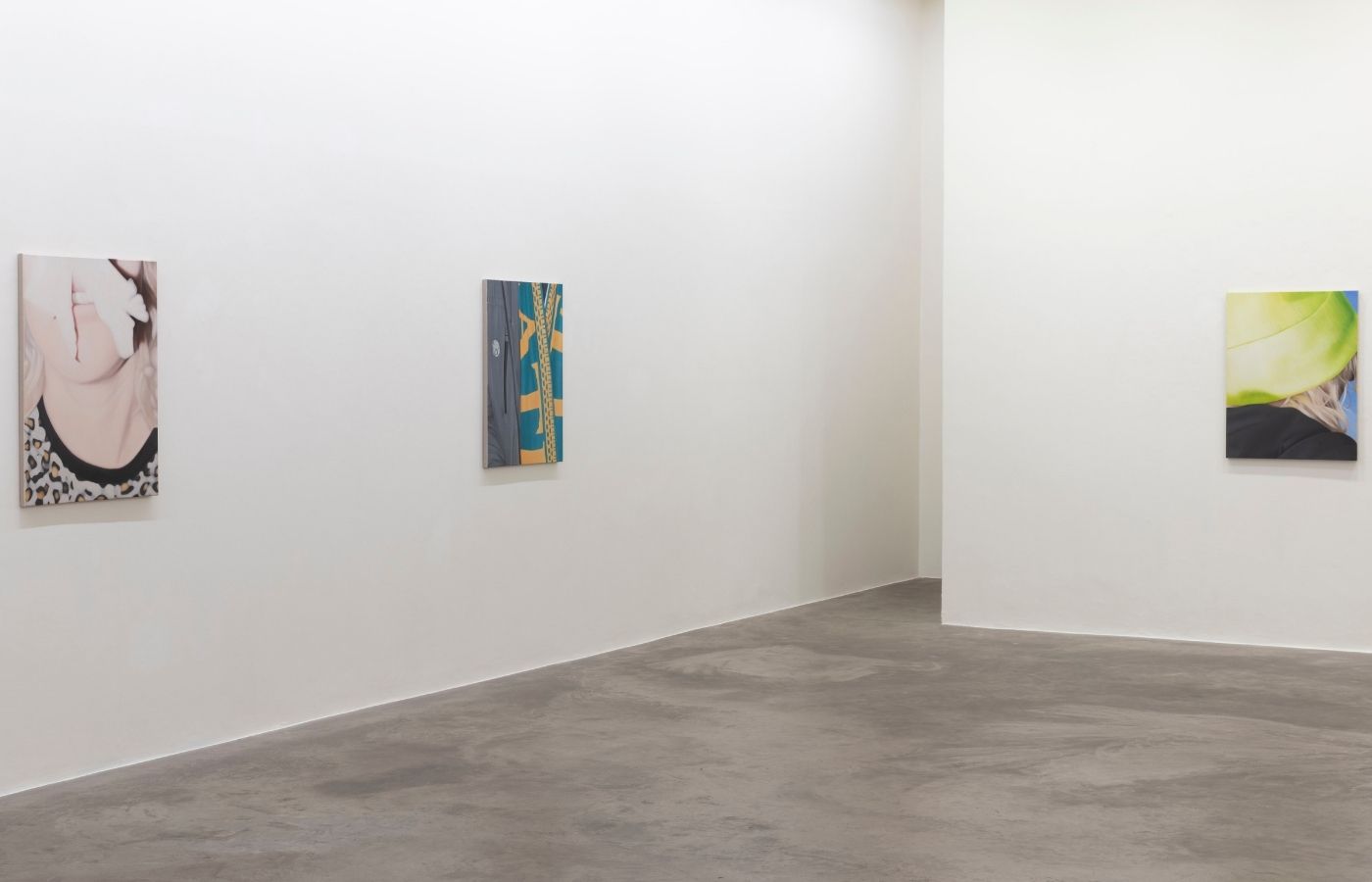
The starting point for my current exhibition at Kerlin Gallery was a series of close-up figurative photographic images, which I began working with during my residency at the RAH O’Malley Studios in Callan, Kilkenny. The exhibition continues my decade-long interest in painting composition and narrative, particularly how images can mislead, obscure, or suggest false readings depending on what is withheld. Translating digital fragments into painting allowed me to explore the shifting threshold between the virtual and the tangible. What began as a highly mediated image became something materially grounded, while still retaining a sense of ambiguity and surface illusion.
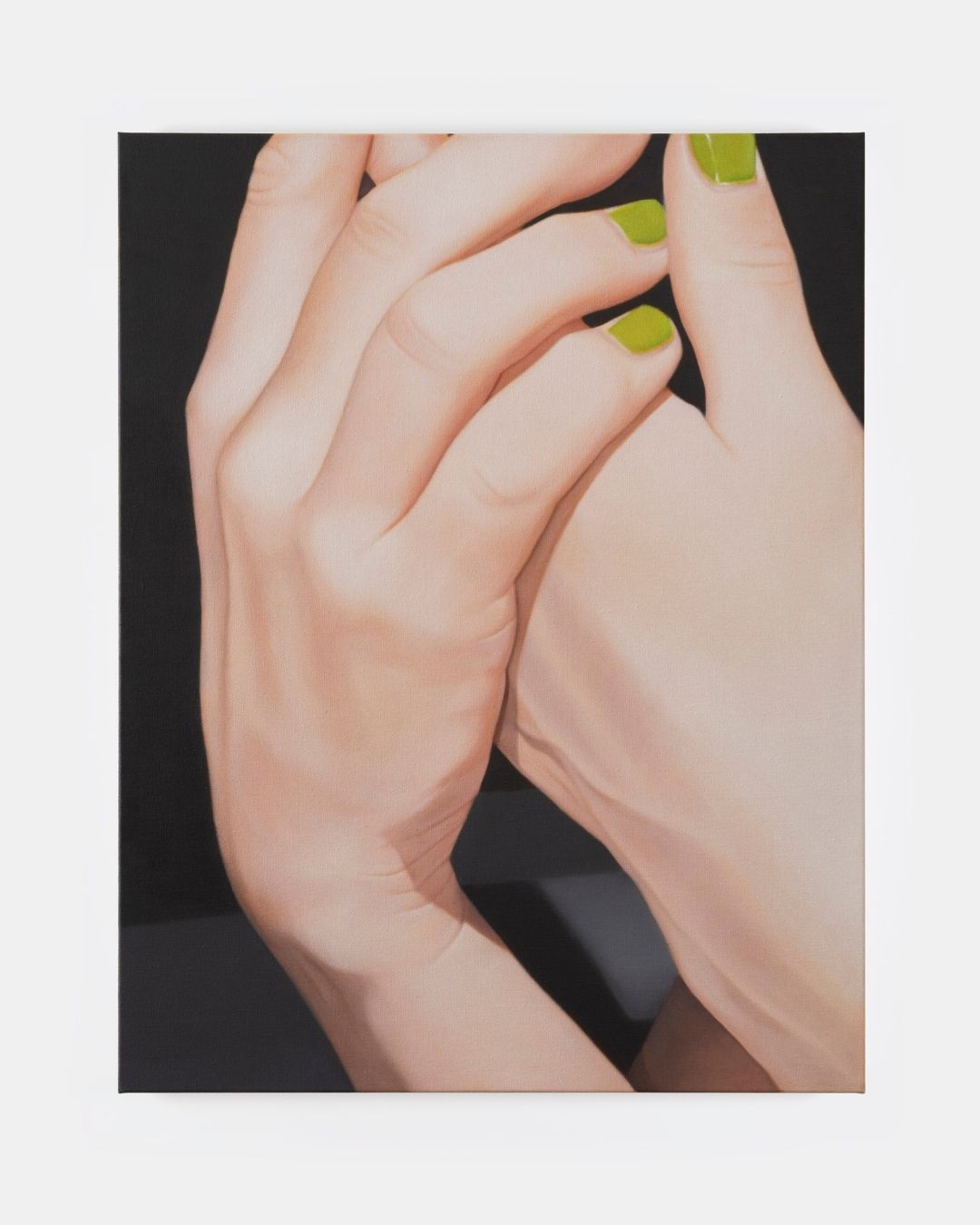
My process often begins with collecting images, both from personal photographs and digital archives sourced online. I use analogue and digital cameras, including point-and-shoots and vintage lenses on digital cameras. I work with these images using cropping, editing and digital manipulation rather than traditional sketching. In that sense, the “sketch” stage happens in camera or on screen. From there, I further develop my compositions through printing and selection before translating into painting. The studio becomes essential at this stage, it’s a space to test composition, and work through the physical and material decisions that can’t be resolved digitally.
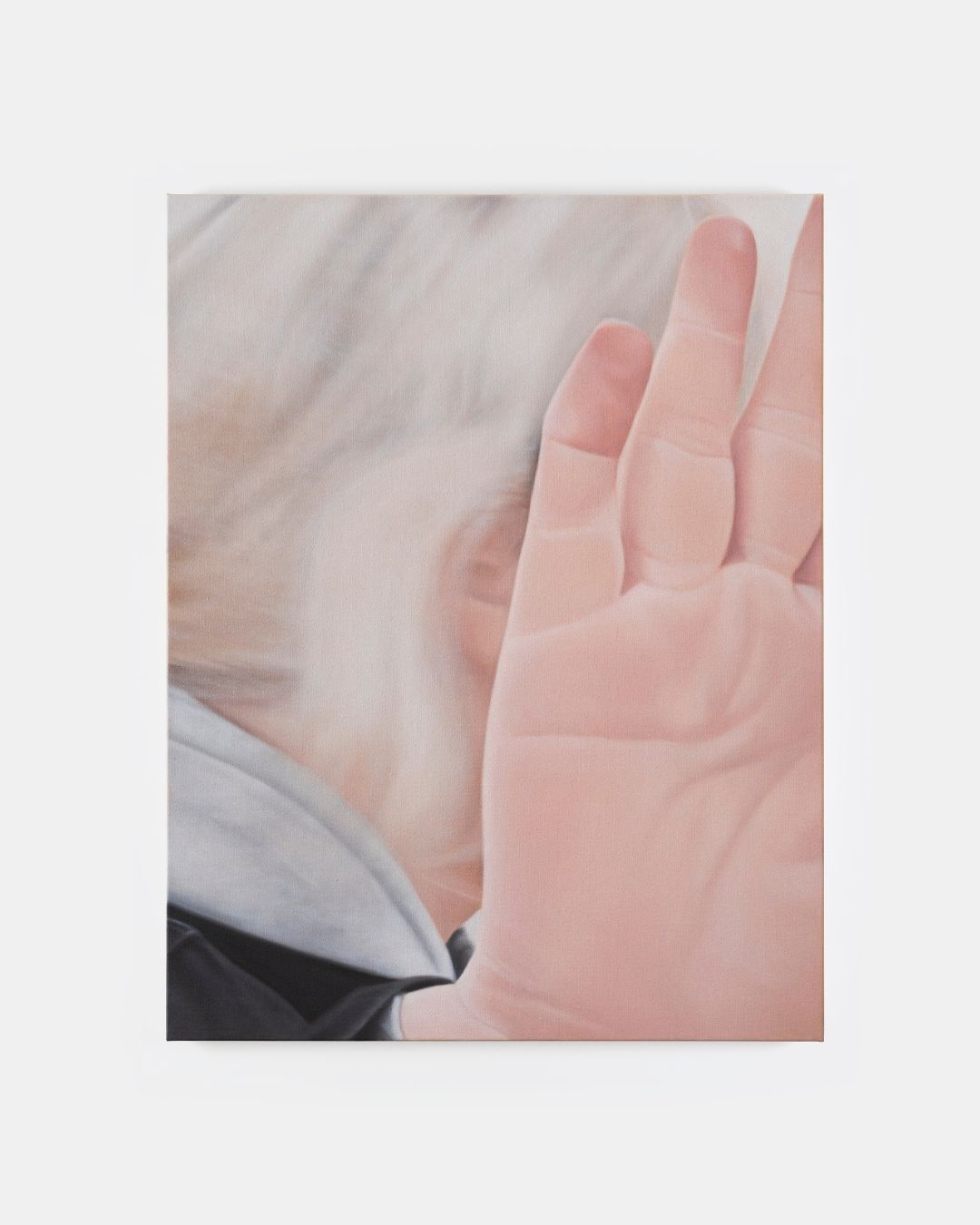
I value the independence of my studio practice. While my days can be quite structured, there’s a freedom in being able to listen to music, take walks when needed and set my own pace. That autonomy creates space to think about work and the world more broadly. I also enjoy the shift that happens when the work leaves the studio. You’re not the audience for your own work while making it; it’s only once it’s exhibited that a meaningful dialogue can begin. The work often reveals itself more fully in a public context through its encounter with viewers. As an artist, I feel like I live on the edge of societal structures, which is both freeing and terrifying.
For those contemplating a career in art, the work always has to come first. There’s no defined path and it’s not easy. What’s been important for me is maintaining the environment to keep working and protecting time. This is becoming increasingly hard to do with the lack of affordable housing and the closure of studios. Apply for everything: open calls, residencies, bursaries. Each application is an opportunity to present your work to a new panel, even if you’re not selected. Rejection is inevitable – where possible, ask for feedback and use it constructively. The key is to keep working and thinking.
Need to know: Marcel Vidal’s “Blue Moon Shadow” exhibition is at Kerlin Gallery in Dublin until April 18; @_marcelvidal