Writer’s Block with Louise Kennedy
Award-winning author Louise Kennedy reflects on the meaning of home, the places where her stories take shape and what true success means to her …
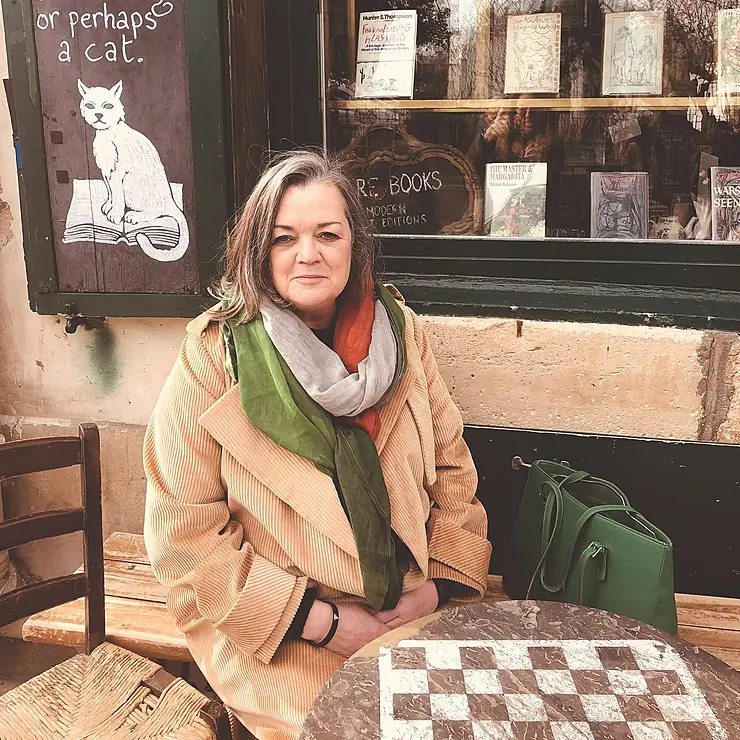
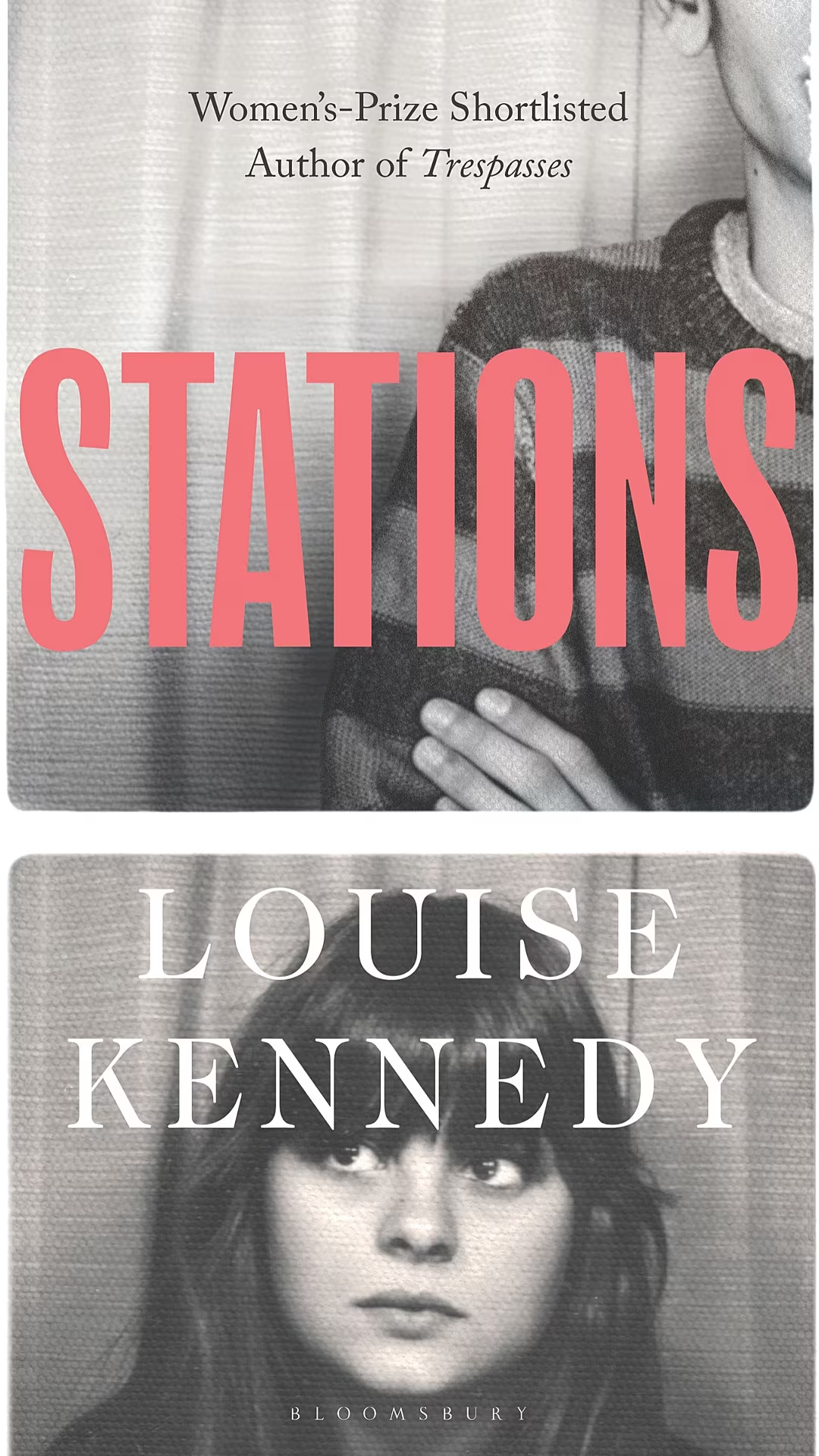
Louise Kennedy grew up a few miles from Belfast. She is the author of the acclaimed short story collection, The End of the World Is a Cul de Sac, which won the John McGahern Prize. Her debut novel Trespasses (2022) won numerous prizes and was made into a BAFTA award-winning limited TV series. Before starting her writing career, Kennedy spent nearly 30 years working as a chef. She lives in Sligo. Her second novel, Stations (Bloomsbury), is out now.
ON HOME I live in a ramshackle cottage and am gazing through a salt-slaked window at lashing waves and crashing sea. Kidding … I live on a cul-de-sac of 1970s semi-ds in Sligo town. During the hilariously named “downturn” it looked as though we might lose this house and I’m astounded and kind of proud that we managed to hang onto it. Aside from that, it is a five-minute walk to the bus and train station (ten to my local pub), a ten-minute drive to the beach and an even shorter ambulance ride to the hospital. Basically, I plan to be carried out of here in a coffin. But perhaps this answer is a bit too “bricks and mortar”. I’ll get philosophical about home below.
MY DESK I wrote The End of the World is a Cul de Sac and Trespasses at an Ikea desk in a shed in my garden. When I was sick I couldn’t handle the cold and it became a dumping ground for broken surfboards and half-empty paint cans. Now I have a tiny studio in a former bike shed up the town. My desk there is another Ikea that trembles when I type and is too small. There is an argument for getting a bigger one, but I stuffed a couch in there and don’t have room.
ON WRITING Like many of the big things in my life, writing arrived unexpectedly, when I was coerced into joining a writing group in January 2014. I left the meeting both mortified and exhilarated, with five weeks to write a short story. Within a couple of lines, I didn’t want to do anything else. At first, I carried a notebook around, trying to get away from my family to work on a story, fitting writing in between rearing children and cheffing. Now writing is my job, a fact that still surprises and delights me. That’s not to say I always enjoy it – much of the time I approach the laptop with dread – but my head goes off when I am not writing.
ON ROOTS I have friends with a deep connection to the place in which they grew up. Sometimes they have remained close to the family homestead, and sometimes there is a farm that ties them to a piece of land. We left the north when I was twelve and since then I haven’t had a sense of home or belonging. I do have a strong sense of where I come from. I think northerners have a particular sensibility and though mine is masked by the southern accent I quickly adopted to end the ceaseless slagging I got every time I opened my mouth in my new school, it is in my writing voice.
ON SUCCESS It isn’t easy for an Irish woman my age to talk about success! I’m grateful that readers have taken to my books and that I’ve had the chance to go around the world talking about them – and it is a relief not to be skint anymore. If I’m proud of anything it is that I managed not to go fully mad when my restaurant was going down the tubes; that I didn’t feel sorry for myself when I had cancer; that I managed to write Stations when the fatigue was so bad I kept falling asleep at my desk.
ON BOOKSHOPS I worked in a bookshop when I was a lonely schoolgirl, and it was a place of refuge for me. More than that, the reading I did there helped me envisage a life beyond the small town in which I’d found myself. I still love bookshops. Favourites include Liber, my local one in Sligo town, and No Alibis in Belfast. And I have never been in a bad branch of Waterstones.
SEE MORE: Travel Notes: Stylish New Stays In Scotland.