Rowing For Gold With Paul O’Donovan
By The Gloss
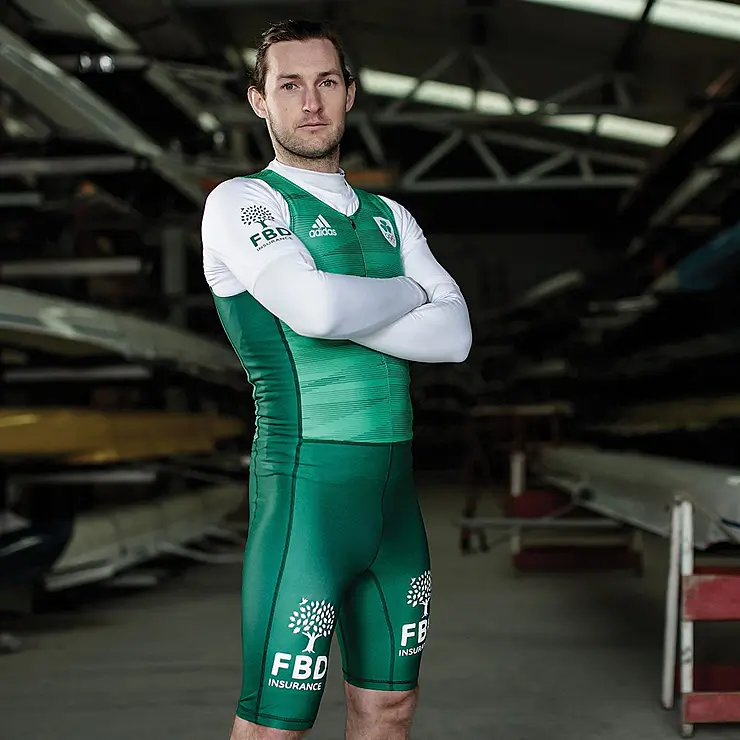
The Olympic champion rower is a qualified physiotherapist and medical doctor. From Skibbereen in Co Cork, he won silver in the Men’s Lightweight Double Scull at the 2016 Rio de Janeiro Olympics, with his brother Gary. In Tokyo and Paris, at the 2020 and 2024 Olympics, he won gold with Fintan McCarthy. He lives and works in Dublin …
How would you describe your parents? They were a big influence. Dad was a small dairy farmer, so he’d be out early in the morning milking the cows, then he’d go and work in the boat shed and back out to the farm in the evening to milk the cows. I suppose that instilled a lot of things in me and my brother Gary. Then Mom was driving us around, over and back to school and training, and cooking for us to support the training. We wouldn’t have achieved a quarter of the success we did without their influence. Because they were so hard working, we have tried to emulate that.
Did they play a big role in turning you into champion rowers? Dad was involved in rowing when he was younger and wanted to get into coaching and he got Gary and I involved and started coaching us from an early age. Dad would have been very strong from working on the farm, so he sort of helped build our strength for rowing that way, too. When we were kids, he’d have us chasing cows and sweeping the milking parlour for endurance and lifting bags of ration and manure for strength.
Was there a point in your childhood when you and Gary decided that rowing was serious and you wanted to go far? There wasn’t one point, but it was more like, when you’re six or seven and you have wild dreams and one of ours was that we’d go to the Olympics and win millions of medals. And then we never questioned that wild dream. We set ourselves that goal and every year was a stepping stone, one after the other.
We failed miserably at times, but from a young age, I always had the dream of going to the Olympics.
Did it add an extra emotional element to win that first silver Olympic medal with your brother in Rio? I wouldn’t say so. We didn’t bring that into it too much. We were just two guys with shared goals and trying our best and there was no guarantee it was going to be us, and either of us would have been happy to go and row with someone else. We never talked too much about the brotherly thing.
Did you ever wish that your first gold Olympic medal had been with Gary? I wish that every regatta I ever entered, I got a gold medal. We were maybe both a bit annoyed at the time but it was a good time and a good result for us.
Is there a magic to a first gold that cannot be matched by subsequent golds? I think you have to take each of them on their own merits. All wins are good. They’re all di?erent and there’s no point in trying to pick favourites. If you tried to pick one, a few weeks later, you’d have a new experience that would change your perception or criteria for which win is better or worse. So I don’t really see the point in trying to choose.
Did you like school or did sport matter more? I didn’t mind school. It was grand, but I didn’t really work that hard, so my results weren’t great. I was more interested in my training, but then aft r my first college degree and when I went back to college again I took more interest and made a much bigger e?ort. When I started to make more of an e?ort and see the results, I started to enjoy learning more. If I could go back, I might have made more of an e?ort in school, listened in class, made a better attempt at my homework, but it worked out okay.
Do you and Gary ever row together now, just for the fun of it? Not a huge amount, no. We’re living in di?erent places and doing di?erent things, but we do hang out together for the fun of it when we can.
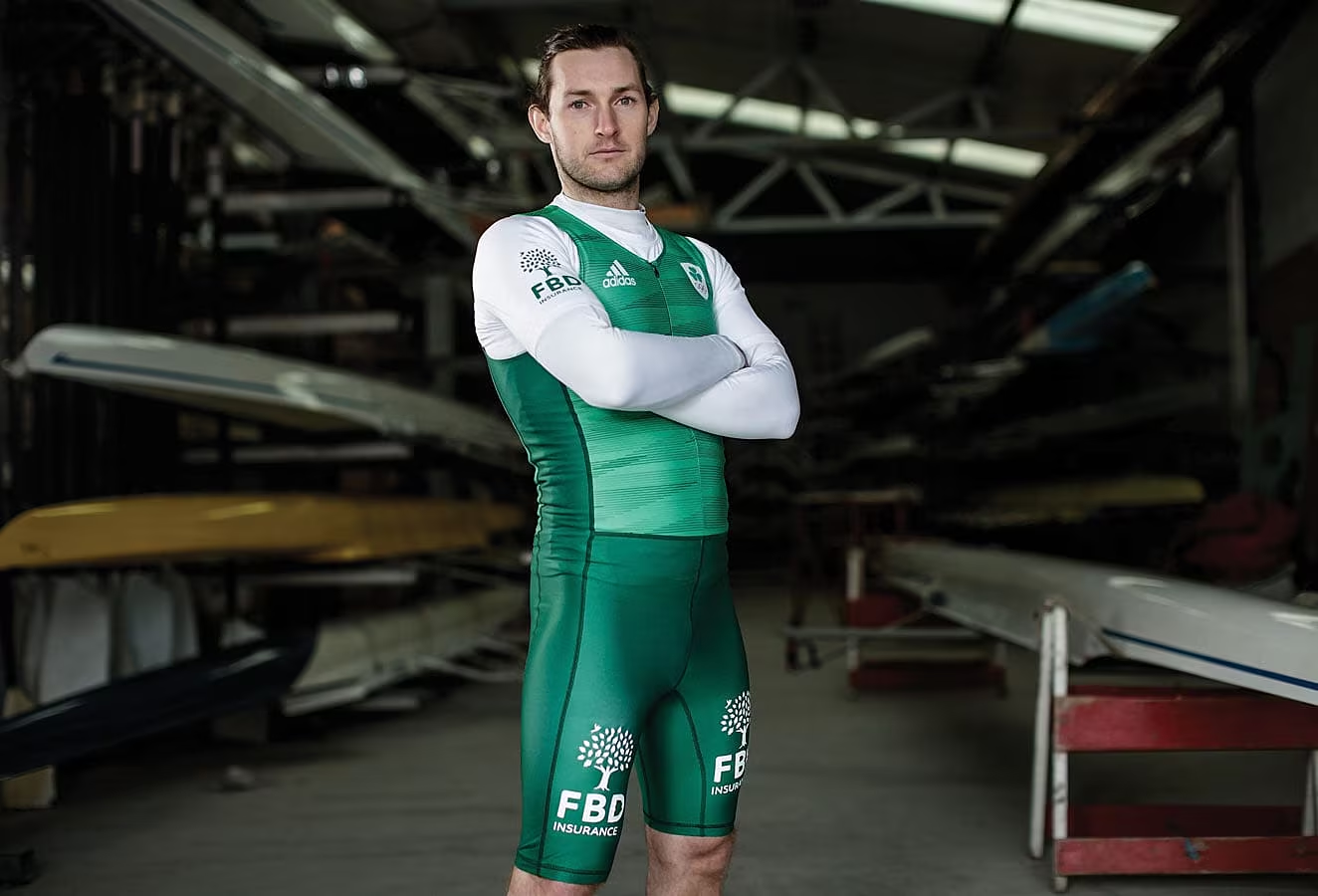
What is your style signifier? I don’t have one, but I’d probably be much cooler if I did.
You buy your clothes … Rarely and I get the most out of them.
Do you use skincare products? I always wear a very high-factor sun cream.
You most recently read … A book called Surfaces and Essences: Analogy as the Fuel and Fire of Thinking by Douglas Hofstadter and Emmanuel Sandler.
You like to listen to … Mostly classical music. Last night I was listening to Madame Butterfly.
Can you speak a foreign language? No. I went to Paris recently, so I got a book called French in Three Months and tried to do it in six weeks. It didn’t end well but they appreciated my e?orts in Paris all the same. I’ll have to go back and finish the second six weeks.
How do you deal with a setback? If you look at life, you have a lot more setbacks than non-setbacks, and it’s the setbacks that help you to get better. A setback lets you figure out what’s not working and how to correct it and remove those errors in future. So setbacks are a necessary evil and it’s important to have as many of them as you can.
What’s a holiday you’d like to repeat? What’s a holiday?
What do you do when you say you’re doing nothing? Fall asleep on the couch.
The perfect weekend includes … A good breakfast, something involving exercise, hanging out with friends and a nice early night.
What are your ambitions for the future, having achieved so much already? To win more medals in rowing.
Paul O’Donovan is an ambassador for the National Dairy Council’s “High-Performance Breakfast, Powered by Irish Dairy” partnership with Sport Ireland Institute ahead of the LA 2028 Olympic Games.
READ MORE: Beyond The Screen With Award-Winning Actor Andrew Scott